
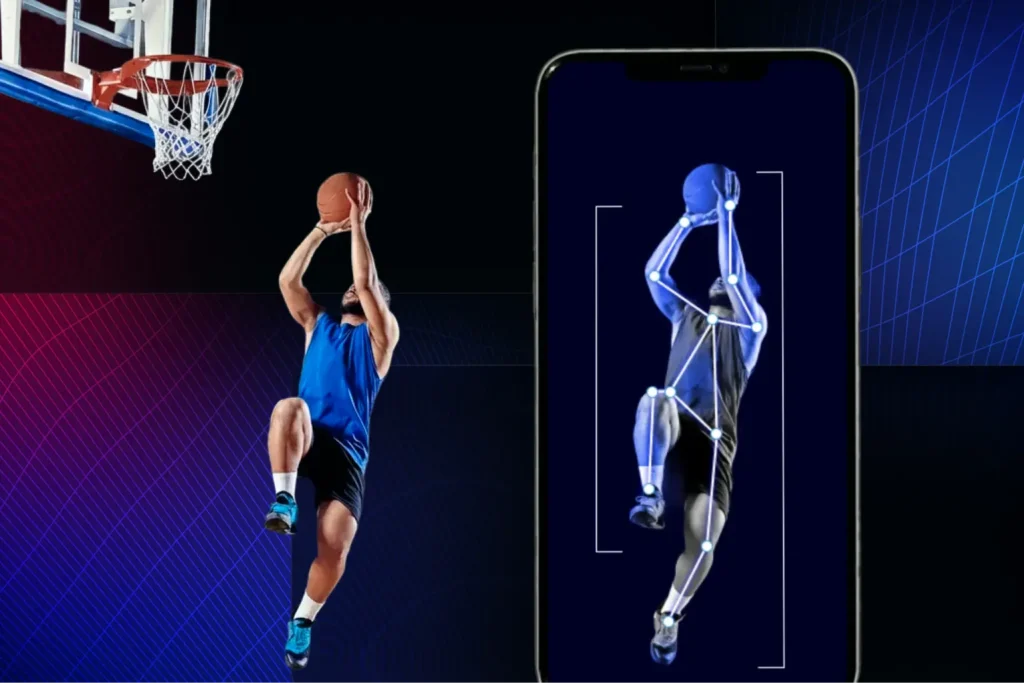
Beyond Smartwatches: Building AI Athlete Performance Apps with Pose Estimation

Wearable fitness trackers and smartwatches have become standard gear for athletes, collecting metrics like heart rate, speed, and distance. However, these devices often fail to provide insights into how the movement was performed. Enter pose estimation, a computer vision technique that extracts biomechanical data from video, opening up new frontiers in sports performance tracking, sports analytics, and sports analytics software.
From What to How: The Shift Toward Movement Understanding
Traditional tracking answers “what happened” such as steps taken, GPS distance, or calories burned. But high-performance training and injury prevention demand deeper insights into how the athlete moved. Pose estimation enables that by analyzing joint angles, symmetry, sequencing, and compensation patterns, offering new capabilities in sports analytics and sports analytics software.
Using just smartphone video, pose estimation software can turn visual input into a detailed map of joint movement without expensive motion capture labs. This opens up scalable applications in sports performance tracking, enabling remote coaching, video analysis, and rehab monitoring.
Why Pose Estimation Matters for Sports Training
Pose-based video analysis enables:
- Detailed Technique Analysis
Coaches can see exactly how an athlete moves, such as knee angle during squats, arm swing symmetry, and hip extension. This enables targeted feedback and performance optimization. - Injury Risk Detection
Pose tracking flags risky mechanics such as valgus knee movement and asymmetries that often precede injuries. This is critical for both elite athletes and youth programs. - Personalized Coaching and Rehab
Training programs can be tailored to individual biomechanics. In rehab, pose-based tracking ensures symmetry and progress through recovery. - Progress You Can See
Improvements in sprint angles, stroke straightness, or jump technique can be quantified and tracked over time, motivating athletes to train smarter, not just harder. - Remote and Scalable Coaching
Athletes can record practice on their phone, receive pose-driven feedback, and compare their form to elite models without requiring an in-person session.
Pose estimation complements wearables. Together, they deliver a 360-degree view of athlete performance.
Core Features of a Sports Performance Tracking App
Let’s break down what goes into a successful sports analytics software solution.
Key Features
- Video Capture and Upload
Easy-to-use camera interface with guidance for framing athletic movement. - Pose Estimation and Metrics Extraction
AI analyzes frames for biomechanical data such as knee angles, stride symmetry, and joint velocities. - Visualization and Feedback
Skeleton overlays, comparison videos, angle charts, and coach-style feedback like “Your landing angle is 12 degrees below optimal.” - Session History and Tracking
Progress tracking over time is ideal for athletes and coaches measuring training impact. - Multi-Athlete Coaching Interfaces
For teams or training platforms, coach dashboards allow reviewing, commenting, and planning across users.
Tech Stack Considerations
- Pose Estimation Engine
MediaPipe is a popular choice for MVPs thanks to efficient on-device inference. - Mobile App Development
Native iOS and Android apps offer tight performance, but cross-platform tools like Flutter or React Native are also viable depending on the team. - Backend Infrastructure
Cloud services such as Firebase support user management, video uploads, and session history. For heavier analysis or multi-angle processing, cloud-based inference pipelines using GPUs can be deployed alongside mobile apps. - Post-Processing Logic
Jitter filtering, confidence gating, and biomechanics-driven insights are essential for user trust. - Front-End Visualization
Clean, intuitive UI for displaying movement metrics, skeleton overlays, and progress graphs is key to user adoption.
What Strong Apps Do Differently in Sports Analytics
Apps that succeed in the market tend to:
- Prioritize post-processing and biomechanics, not just raw pose data.
- Implement sport-specific insights, going beyond generic joint tracking.
- Handle real-world camera variability including occlusion, angles, equipment, and lighting conditions gracefully.
Top developers understand that pose detection is infrastructure. The real value lies in the insight layer built on top.
Strategy: From MVP to Custom Models
A smart development path:
- Start with MediaPipe to validate product-market fit.
- Test real-world video conditions such as occlusion, body type variance, and sports equipment.
- Replace components as needed with custom-trained models or cloud inference once requirements mature.
Out-of-the-box tools like MediaPipe work best for:
- Single subject in frame
- Controlled camera distance and angle
- Minimal occlusion
They struggle with:
- Sports involving gear such as bats or rackets
- Partial-body or first-person inputs
- Medical-grade accuracy or neuro assessments
When you’re ready to scale beyond MVP, consult our MediaPipe Tech Review to understand performance trade-offs.
Choosing the Right Sports App Development Company
If you’re planning to build a next-generation sports analytics software app, choose a sports app development company with:
- Mobile deployment expertise with strong performance on iOS
- Computer vision and machine learning capabilities
- A track record converting noisy pose data into clean, actionable feedback
Whether your application demands lightweight edge processing on mobile or high-fidelity, multi-angle analysis in the cloud, your development partner should be equipped to handle both extremes.
The biggest challenge is not pose detection but creating consistent, trusted insights from variable video environments. That is why domain expertise and real-world UX testing are essential.
To explore our solutions, check out our full offering on the Sports Industry Page.
Final Thoughts
Pose estimation shifts the focus from activity tracking to true movement understanding. For startups, coaches, and sports tech brands, it enables scalable coaching, personalized feedback, and smarter training apps.
Whether you’re launching a niche product or building the next big coaching platform, combining pose estimation with biomechanics intelligence and mobile UX is your ticket to standing out.
Now is the time for fitness innovators and sports app developers to move beyond smartwatches and into the era of AI-enhanced sports performance tracking.