Custom Computer Vision Development Services & Solutions

Custom computer vision development services and solutions that work outside the lab. Get an honest estimate.

Abstract graphic: detection boxes with confidence labels around a central shape

Computer Vision Development Company for End-to-End AI Solutions

Custom computer vision development services are judged in the field, and the field has layers a demo never shows. On the surface the work looks simple: collect images, train a model, ship it. In practice the result depends on physics, optics, and camera placement as much as on the model. We learned this across dozens of delivered projects, many in environments where lab assumptions break rapidly. As a custom computer vision development company, It-Jim works across the whole stack, from sensor configuration to classical image processing blended with deep learning. Foundation models now handle generic cases; what separates a team that ships from one that demos is everything specific to your data.

Computer Vision Development Services we Provide

Some clients come to us with a raw idea, others with a running system that needs a rescue. Our services cover both ends of that spectrum.

  1. 01

    Computer Vision Consulting

    We assess technical feasibility on your actual data before model development starts, from data quality to model selection, and audit an existing architecture for weak spots. You get an honest engineering verdict and a deployment strategy you can plan around.

  2. 02

    Computer Vision Software Development

    This is our core: full-cycle custom computer vision software development services, from data collection and model training to a system running in production. It-Jim blends classical algorithms with deep learning, choosing whichever fits your task. The result is built around your constraints rather than a repackaged template.

  3. 03

    Computer Vision System Integration

    A vision model creates value only after it becomes part of your infrastructure, so our bespoke computer vision software development runs through to integration. We connect the system to the software your operations already use, and the output reaches the people who make decisions.

  4. 04

    Legacy Computer Vision Modernization

    Vision systems age fast, and CV models trained five years ago may already cost you accuracy. We migrate legacy logic to modern machine learning frameworks without stopping operations. Often the hardware stays; the intelligence behind it gets the upgrade.

  5. 05

    Computer Vision Model Optimization

    A model that works is one thing; a model that works fast on your hardware is another. It-Jim compresses neural networks and accelerates inference until your models meet their latency targets, whether the target is a workstation or an NVIDIA Jetson.

  6. 06

    Edge AI Computer Vision Development

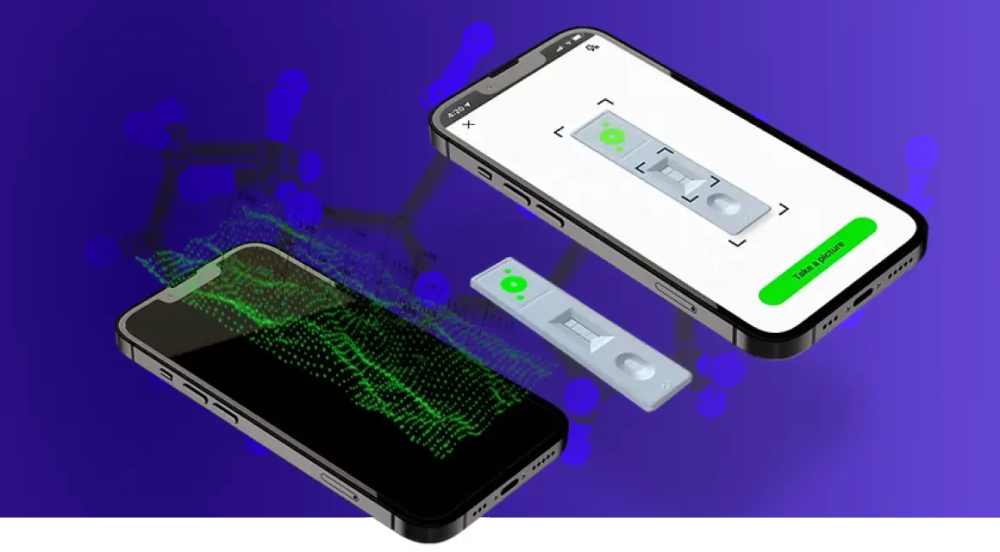
    Some tasks leave no room for a server round-trip, so edge computing moves data processing to the camera. Our computer vision development services cover edge deployment end to end, from smartphones to NVIDIA Jetson modules and industrial controllers. Our cortisol test reader, working on an ordinary phone camera, came out of this expertise.

  7. 07

    Data Strategy, Annotation & Synthetic Data

    Most stalled projects are data problems wearing a modeling costume, so we start with the data. We set up data management, run data annotation with quality checks, and use synthetic data generation where real examples are too rare to gather, validating every synthetic dataset against real samples.

Our AI-Powered Computer Vision Expertise

Computer vision turns visual data into measurable business outcomes, whether that means fewer manual reviews or a production line that runs faster. As a custom computer vision software development company, here is what we build:

01

Object Detection & Recognition

Object detection answers where things are in the frame; image classification answers what they are. Together they turn a camera into a counting and sorting tool that never gets tired, and they sit inside most of the systems we ship.

Use cases
  • Automated inventory management on shelves or in warehouses
  • Counting items on a production line
  • Object recognition that finds one product among hundreds of similar ones

Ideal forRetail, Manufacturing, Logistics, Construction

02

Image & Video Analysis

A single frame tells you a state; video tells you a story. We extract patterns from visual data over time, so behavior becomes measurable. Object tracking holds identities across frames, which is what separates video analytics from repeated image analysis.

Use cases
  • Smart surveillance that flags unusual behavior
  • Tracking worker activity across shifts
  • Measuring how long processes actually take

Ideal forManufacturing, Retail, Construction, Sports

03

Pose Estimation

The body's position tells you what a person is doing before any action completes. We map skeletal keypoints in images or video, with custom model training when your subjects wear equipment or move in ways generic models never saw, turning movement into data you can analyze.

Use cases
  • Analyzing athletic technique frame by frame
  • Detecting falls among patients or workers
  • Checking ergonomics at workstations

Ideal forSports, Healthcare, Manufacturing, Fitness

04

Action Recognition

Recognizing an action in visual data means putting a label and a time span on behavior: assembly step started, rep completed, fall occurred. Our AI computer vision development services report the actions that matter in your process as counts and durations, not footage for someone to review.

Use cases
  • Cycle times and bottlenecks measured across workstations
  • Technique and repetition scored in training video
  • Safety events flagged without anyone watching a live feed

Ideal forManufacturing, Sports, Logistics, Construction

05

Face Tracking

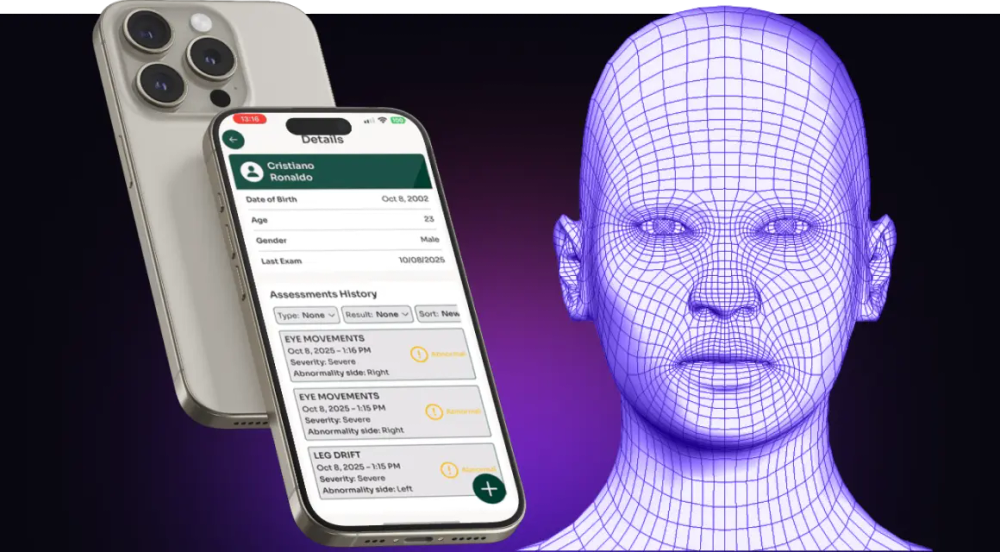
A face carries more measurable signals than any other part of the body. Our CV models track its landmarks frame by frame to read gaze and iris movement, capture expression, and reconstruct geometry in 3D past the detail consumer face meshes deliver. The same pipeline reads pulse and breathing from color changes in skin, with no contact and no wearable.

Use cases
  • Eye movement and gaze tests for neurological screening
  • Contactless pulse and breathing measurement from a phone camera
  • Expression capture and face reconstruction for avatars and post-production

Ideal forHealthcare, Entertainment, Education, Media, Automotive

06

Visual Inspection

A camera checks item ten thousand with the same attention as item one. Classical machine vision still wins on well-lit, repeatable parts, while deep learning anomaly detection handles defects too rare and varied to enumerate in advance.

Use cases
  • Surface defect detection on a moving line
  • Catching assembly errors before packaging
  • Verifying that labels sit where they should

Ideal forManufacturing, Pharma, Food Production, Electronics

07

Quality Control Solutions

Every inspection ends in a judgment: acceptable, repair now, or repair later. Our computer vision services hold that grading steady across thousands of assets and keep the record that explains it a year later.

Use cases
  • Defect detection and condition grading for pipes, welds, and solar arrays
  • Drone and crawler footage turned into ranked work orders
  • Findings tied to an asset history for audits and predictive maintenance

Ideal forEnergy, Utilities, Infrastructure, Heavy Industry

08

Medical Image Analysis

Medical imaging demands accuracy under conditions no other field tolerates, so labeled data quality matters more here than anywhere. We build systems that read diagnostic imagery and test results, including tools that run on an ordinary smartphone.

Use cases
  • Reading test strips via phone camera
  • Pre-screening medical images before specialist review
  • Measuring skin changes over time

Ideal forHealthcare, Wellness, Pharma, MedTech

09

3D Vision & Reconstruction

Flat images hide the dimension your task needs most: depth. Our computer vision solutions for 3D reconstruction turn indoor and outdoor environments into structured geometry a machine can measure and move through. Scene understanding sits on top of that geometry: what the objects are, where they sit relative to each other, and which surfaces a robot can actually use.

Use cases
  • Indoor and outdoor reconstruction and environment mapping
  • Visual localization and camera pose estimation in GPS-denied environments
  • 3D object detection and object pose for robot manipulation

Ideal forRobotics, Construction, Real Estate, Automotive

10

Visual Search

Some computer vision solutions need the camera to answer an open question rather than a fixed one. We build visual search on machine learning embeddings that match a photograph against a catalogue to find the same item or the closest alternative.

Use cases
  • Image-based product search in retail and marketplace apps
  • Catalogue matching against a reference library
  • Content-based retrieval across image archives

Ideal forRetail, E-commerce, Media, Manufacturing

11

Generative Vision & 3D Content

Not all computer vision solutions end in a measurement. Some end in an asset: a 3D model built from one photo, a product image generated instead of staged, a face rendered into an avatar. We build image-to-3D pipelines and fine-tuned generative models whose output goes straight into production.

Use cases
  • Photos turned into 3D models ready for manufacturing
  • Product and marketing imagery generated instead of photographed
  • Avatars and character assets produced at consumer scale

Ideal forE-commerce, Manufacturing, Digital Media, Gaming

12

OCR & Document Processing

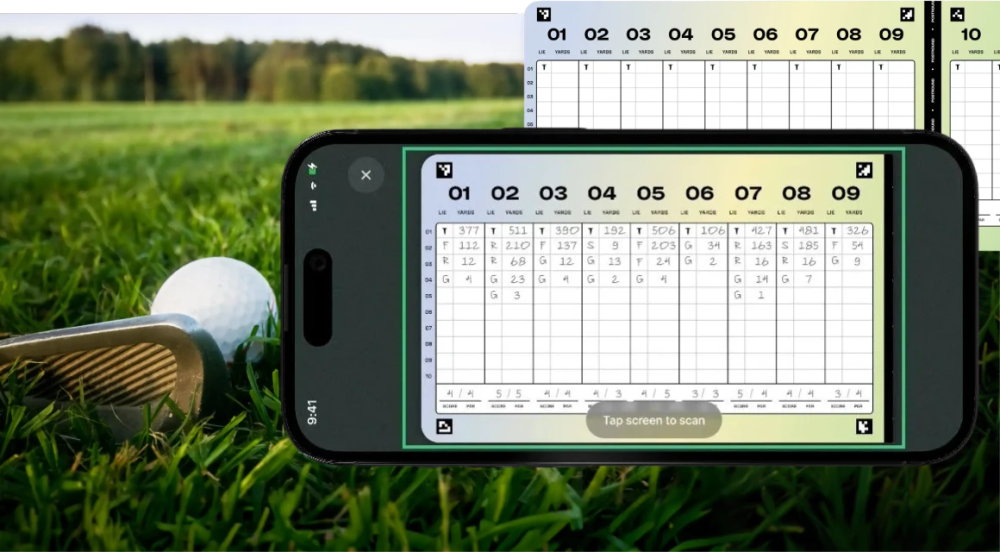
Modern optical character recognition reads clean text almost perfectly, so the engine is rarely what fails. The image is, and that is where our computer vision services do the work. We rectify curved surfaces, correct distortion, deblur, and lift contrast until characters are legible: on a tire sidewall that means unwrapping circular text and separating black lettering from black rubber before OCR runs.

Use cases
  • Curved and cylindrical labels unwrapped for recognition
  • Molded or engraved codes read with no color contrast
  • Document automation for serial numbers, forms, and invoices

Ideal forLogistics, Manufacturing, Automotive, Finance

Let's Build Your Computer Vision System

Maybe you are validating a first idea; maybe you are replacing a system that stopped keeping up. Either way, one conversation with our engineers will show you the shortest path to a working solution.

Camera & Sensor Expertise

Half of a vision system's accuracy is decided before any code runs, at the moment someone picks the camera. Our physics background helps us design around the hardware, including sensors that capture what light alone cannot.

Camera Types We Work With

There is no universally best camera, only the best one for your task, your budget, and the lighting changes it will face.

  • Surveillance and CCTV cameras
  • Mobile phone cameras
  • Industrial cameras
  • Zoom or macro cameras
  • Embedded cameras (Jetson, Raspberry Pi)

Camera & Projection Models We Support

Geometry differs as much as hardware does, and the projection model decides what the maths downstream has to correct for.

  • Pinhole cameras
  • Wide-angle and fisheye cameras
  • Omnidirectional and 360° cameras
  • Equirectangular projections
  • Multi-camera and panoramic setups

Sensor Types We Work With

When ordinary light does not carry enough visual data, these sensors capture what a standard camera cannot.

  • Time-of-Flight (ToF)
  • LiDAR (industrial or mobile)
  • Stereo cameras
  • RGB-D sensors
  • IR sensors
  • X-ray imaging systems
  • Hyperspectral sensors

Why the Right Camera and Sensor Setup Changes Everything

Camera placement decides what a model can ever see, and a poorly placed camera produces problems that no model can fully repair afterwards. The reverse also holds: clean input can make a modest model outperform an expensive one. So It-Jim builds computer vision solutions from the imaging setup up, for your real environment, with its harsh weather and the camera drift that sets in once hardware is mounted.

How our Computer Vision Development Process Looks Like

Typical computer vision software development services jump in once the data is ready. At It-Jim we start before the first image is captured and stay after the model goes live, with monitoring and retraining planned from day one.

  1. Stage 1

    Domain & Environment Analysis

  2. Stage 2

    Camera Placement & Sensor Setup

  3. Stage 3

    Data Collection & Annotation

  4. Stage 4

    Model Development & Training

  5. Stage 5

    System Integration & Deployment

  6. Stage 6

    Monitoring and Retraining

Technologies Behind Our Computer Vision Development Services

Image Processing
Image Features
Image Classification
Object Detection
Image Segmentation
Object Tracking
Human Pose Estimation
Anomaly Detection
Optical Character Recognition
Depth Estimation
Camera Calibration & Pose Estimation
Localization and Navigation
Visual (Inertial) Odometry (SLAM, IMU)
Scene Understanding & Reconstruction
Point Cloud Processing
Texture Mapping
Novel View Synthesis
Vision Foundation Models
Vision-Language Models
Image Generation
Image Inpainting & Outpainting
Style & Structure Transfer
Concept Injection
Synthetic Data Generation
Video Processing
Sensor Specific Processing
Custom Model Training
Model Optimization
Edge Deployment
Monitoring and Retraining (MLOps)

Key Benefits of Our Custom Computer Vision Development Services

  1. An honest feasibility verdict

    Before you invest in development, we tell you plainly whether the idea will work.

  2. Hardware-aware design

    Our CV development services account for your cameras and compute limits from day one, so you never buy equipment your task does not need.

  3. Production-ready delivery

    You receive a system tested under your real conditions, including odd lighting and strict reliability standards.

  4. Full ownership

    The code and the trained CV models are yours, with no licensing strings attached.

  5. Plain-language communication

    You always understand what we are building and why, whatever your technical background.

  6. A system that can grow

    We design with your next stage in mind, so scaling up means extending the solution instead of rebuilding it.

Why Choose It-Jim as Your Custom Computer Vision Development Company

200+

projects delivered

Proven track record in computer vision development with successful real-world deployments.

10+

years of expertise

A decade of experience in machine learning and computer vision services across industries.

  • Built by engineers, not hype

    Engineers founded this company, and engineers run it today. Every promise we make has passed through someone who will personally build the thing.

  • Problem-Solving Obsession

    The projects other teams turn down are the ones we ask for. Messy data or an unusual environment means the problem is finally interesting.

  • PhDs on the Team

    Our team comes from academia, with advanced degrees in computer vision and adjacent fields like physics. When a problem has no textbook answer, that depth is what produces one.

  • Innovation-Ready Mindset

    We treat every project as applied research, which shows in how fast our prototypes appear. The solution architecture we propose is often one nobody has tried, because your problem usually has not been solved before.

Computer Vision Solutions We've Delivered for Our Clients

Industries Where We Implement Custom Computer Vision

Different industries point cameras at very different problems, and the eight below are where our systems work most often. Find yours to see what visual data can do for it.

Make sites safer and measurements faster with 2D and 3D vision.

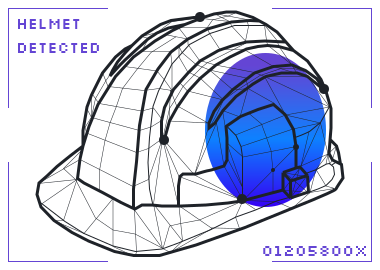
  • Track on-site workers and safety gear
  • Measure spaces using 2D or 3D data
  • Detect structural changes with computer vision applications

Deployment Options for Computer Vision Solution

A vision system should run wherever your constraints point, and infrastructure shouldn't be an afterthought. Our computer vision development services cover every deployment path, so the architecture bends to your reality instead of the other way around.

01

Edge Computer Vision

Edge computing means the automated analysis happens right on the device, with no round-trip to a server. Frames never leave your premises, which makes a real difference for data privacy.

Use cases
  • Real-time results with millisecond latency
  • Operation without internet dependency
  • Sensitive footage that stays local
  • Lower running costs at scale

Ideal for: Industrial Workflow Automation, Mobile Apps, IoT Systems, Healthcare

02

Cloud-Based Computer Vision

When your task involves heavy models or footage from hundreds of cameras, cloud platforms give you computing power that no single device can match. We build on AWS, Azure, or GCP and design cloud storage for growing data volumes.

Use cases
  • Processing high-volume video archives
  • Centralized analytics from distributed sites
  • Easy updates without touching hardware
  • Fitting into your existing infrastructure

Ideal for: Retail Chains, Logistics, Security, Media

03

Hybrid Deployment

Some tasks split naturally: instant decisions happen on the device while deeper analysis runs in the cloud. We design hybrid systems that draw this line where your latency and budget requirements meet.

Use cases
  • Edge alerts with cloud-based reporting
  • Local processing with centralized model updates
  • Resilience when connectivity drops
  • Cost balancing across workloads

Ideal for: Manufacturing, Smart Cities, Transportation, Agriculture

Engagement Models for Computer Vision Services

Committing to a full build on day one rarely makes sense, and our engagement models reflect that. Each format of our computer vision software development services matches a different stage of certainty, from the first question to a live product.

Need help deciding where to start?

  1. Step 1

    Strategic Consultation

    Quick, high-value sessions with our CEO or domain experts in computer vision, GenAI, or AI on edge development.

    You get
    • technical clarity
    • expert input
    • clear direction

    Best for: product teams, tech leads, or founders looking for fast answers before committing to development.

  2. Step 2

    Exploration & Technical Research

    A focused 2-week sprint to analyze your data and define a clear path to a Proof of Concept.

    You get
    • a technical report
    • concept architecture
    • an optional PoC roadmap
  3. Step 3

    Proof of Concept (PoC)

    A 2-3 month build of a functional demo tailored to your task and environment.

    You get
    • working prototype
    • validation of idea
    • delivery without risks

    Best for: startups, R&D teams, or innovation units validating a use case before scaling.

  4. Step 4

    Full Product or MVP

    We develop the complete system – from front‑end to back‑end to the custom computer vision core.

    You get
    • a deployable product
    • built for real users
  5. Step 5

    Post-Launch Optimization

    We help you refine, scale, and expand your solution across platforms and hardware.

    You get
    • smarter integrations
    • tuned performance
    • deployment across real-world hardware

    Best for: businesses evolving their AI product or preparing it for broader use in real environments.

Frequently

Asked

Questions

Custom computer vision development services are the design and engineering of software that extracts information from images or video, built from scratch for your task. It starts with your cameras, runs through custom model training, and ends with your accuracy requirements, covering cases where no ready product exists.

Cost depends on scope, which is why It-Jim offers entry points of different sizes. A two-week research sprint prices the rest of your project before you commit to it. Contact us with your task, and you'll get a concrete estimate in one day.

A technical research sprint takes two weeks, and a proof of concept typically takes two to three months. Full products and MVP development vary with scope, but you'll know the timeline before work starts.

Yes, and much of our work depends on it. Our AI computer vision development services include systems that process live video directly on edge devices. Model optimization for speed is one of our core specialties.

The three that end projects are poor data quality, a camera setup that cannot capture the signal, and an accuracy target no CV model has been shown to reach. We front-load all three into the research sprint. After launch, monitoring and retraining catch camera drift before it turns into missed detections.

We combine academic depth with a decade of production experience. Our PhDs in physics solve problems at the sensor level, such as glare and lighting changes, where most vendors don't look. And we tell you when an idea won't work, which clients tend to remember.

Often less than you'd expect. We work with small datasets using augmentation and synthetic data generation, and we can organize data collection and data annotation from scratch if you have nothing yet. Bring the data you have, even if that's zero.

Let's Talk About Your Project!

Have a challenge in mind or just exploring? Talk directly with an engineer. No pitch. No fluff.

Tell us about your project
Chat on WhatsApp
File upload (optional, up to 15 MB)

By submitting this form, you agree with our Privacy Policy

What Happens Next?
  1. Your message goes straight to our core team – not a sales department.
  2. You’ll talk directly with our CEO, CTO, or a domain expert for a consultation-style first call.
  3. We’ll ask the right technical questions to understand your challenge and scope.
  4. If we’re a fit, we’ll follow up with a proposed path forward.