Text to Speech Development Services

A voice that sounds like your brand and says your product names right. Speaking before the user notices a pause.

Wireframe headphones

Custom Text-to-Speech Solutions for Your Product

On a vendor slide, text-to-speech development services look like a model choice: pick an open model or a cloud voice, wire it to an API, ship. Listeners judge the result on what no leaderboard measures: whether the voice reads your abbreviations and prices correctly, and whether a cloned voice still sounds like the same person in minute ten. We learned this in music tech, where a single replaced word has to match the singer's timbre inside a finished track. It-Jim covers the whole span, from text normalization and pronunciation to fine-tuning and streaming inference in the cloud or on the device. That includes a license check: several popular open models forbid commercial use.

Our Text-to-Speech Development Services

Some clients arrive with a script and no voice yet; others with a cloud-based TTS bill that grew faster than their user base. Our developers cover both ends.

  1. 01

    Custom Text-to-Speech Software Development

    This is the full build: a speech engine designed around your content, languages, and hardware, from natural language processing of the input text to the neural networks that produce the waveform. The code and the trained models are yours.

  2. 02

    Text-to-Speech Model Development and Fine-Tuning

    Open models such as Qwen3-TTS, CosyVoice, and Kokoro are strong starting points, but none of them knows your vocabulary or your speaker. We fine-tune on your recordings, check intelligibility by running the output back through speech to text, catch phoneme errors, and test with listeners.

  3. 03

    Text-to-Speech API Development and Integration

    Sometimes the neural voices of a cloud speech service are the right answer. We put those text-to-speech services behind your own API architecture with SSML support, so you can swap in your own model later.

  4. 04

    Real-Time Text-to-Speech Development

    A voice that hesitates feels broken, whatever it says. We build streaming speech synthesis behind a streaming API that starts speaking from the first chunk of text in a request, often while a language model is still writing the reply.

  5. 05

    TTS System Optimization and Modernization

    Concatenative and formant synthesis TTS engines still run many phone menus, and early Tacotron 2 or FastSpeech stacks sit on frameworks nobody maintains. Moving them to current neural TTS often costs less than a rebuild, and model optimization then brings it to your speed and cost targets.

  6. 06

    Custom Voice Creation and Voice Cloning

    Custom voices are where text-to-speech development needs consent first: a signed release and studio recordings go into the voice cloning pipeline, then professional voice fine-tuning holds the timbre for hours. Our voice conversion platform for a US music startup lets artists license their voice and release tracks in new languages.

Text-to-Speech Applications We Develop

A voice becomes a product once it sits inside a real workflow. Below are the applications we build most often.

01

AI Voice Assistants and Voice Agents

In conversational AI, a language model decides what the agent says; the voice decides whether anyone keeps listening. We build the speech layer, which streams its output and keeps one consistent voice across a long session, even when the user interrupts.

Use cases
  • Speech for AI voice agents and voicebots in support and sales
  • In-app assistants that answer out loud
  • Spoken summaries and notifications

Ideal forSaaS, Retail, Fintech, Consumer Apps

02

Healthcare Voice Applications

Drug names, dosages, and abbreviations make pronunciation the first job of text-to-speech development in healthcare. We build medical pronunciation dictionaries and on-premises deployment, so patient data stays inside your infrastructure.

Use cases
  • Medication instructions and discharge notes read aloud
  • Communication aids for patients who cannot speak
  • Spoken medication schedules in remote care apps

Ideal forHealthcare, MedTech, Telemedicine, Pharma

03

E-Learning and Accessibility Solutions

On e-learning platforms, re-recording a narrator for every course edit does not scale. Generated narration renders new audio files whenever the text changes and reads formulas and foreign terms correctly.

Use cases
  • Course narration and audiobooks regenerated on every text update
  • The same lesson in several languages
  • Read-aloud features for accessibility compliance

Ideal forEdTech, Publishing, Government, Corporate Training

04

Automotive and IoT Voice Interfaces

Cars, appliances, and wearables cannot count on a network, so the voice has to live on the chip. We compress models until they run offline within a tight memory and latency budget.

Use cases
  • In-cabin prompts that work without connectivity
  • Spoken feedback on appliances and wearables
  • Voice output on low-power embedded boards

Ideal forAutomotive, Consumer Electronics, Smart Home, Industrial IoT

05

Customer Support and IVR Systems

Generic text-to-speech services stumble over order numbers, dates, and addresses, and customer experience ends with the caller hanging up. We build IVR voices that read live account data cleanly.

Use cases
  • Dynamic prompts generated from account data
  • Branded speech across every call flow
  • Clean output at 8 kHz telephony quality

Ideal forTelecom, Banking, Insurance, Utilities

06

Voice Synthesis for Music and Media

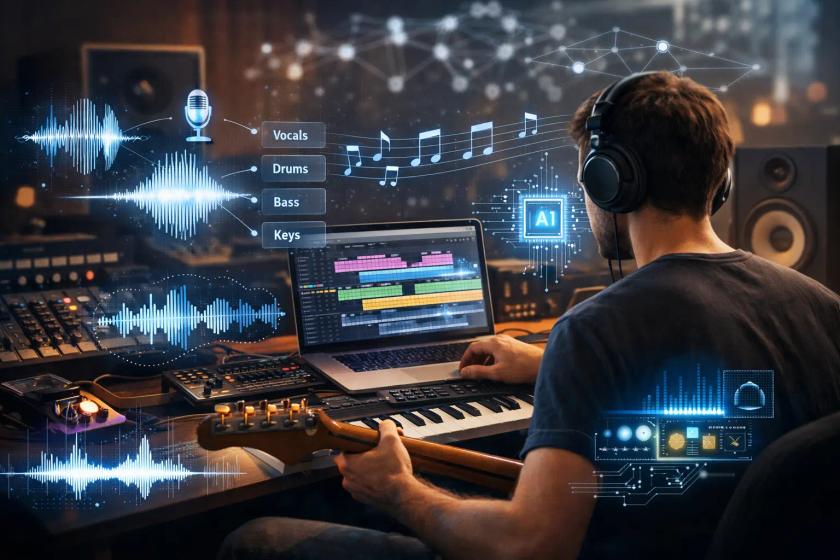
Listeners know the original singer, which makes music the hardest test for voice synthesis. We build voice conversion, voice cloning, and word replacement in an artist's own voice and rhythm, used on released tracks.

Use cases
  • Licensed artist voices for new tracks and languages
  • Clean versions with replaced words in the singer's voice
  • Dubbing that keeps the original timbre

Ideal forMusic Tech, Streaming, Media, Gaming

Build a Text-to-Speech Solution Around Your Requirements

Maybe you're testing whether a synthetic voice can front your product; maybe your cloud TTS invoice or your latency stopped making sense. Either way, one conversation with our engineers will show you the shortest path to a voice that works.

How Much Do Text-to-Speech Development Services Cost?

Nobody can honestly quote a fixed price without hearing your text and the voice you want first, so we start by providing a staged plan. Most of the range comes from two unknowns: how far an open model sits from your quality target, and what hardware it has to run on.

What Drives the Cost

The factors that set most of the budget:

  • A custom voice or a stock one
  • Number of languages and accents
  • Real-time streaming or batch generation
  • Target hardware: cloud GPU, phone, or embedded chip
  • Volume and quality of voice recordings
  • Domain vocabulary and pronunciation work
  • Licensing terms of the base model

Where to Start

Each entry point matches one stage of certainty:

  • Strategic consultation
  • Research sprint (two weeks)
  • Proof of concept (two to three months)
  • Full product or MVP
  • Post-launch optimization

Why Staged Budgets Protect Your Product

A text-to-speech development company that gives one quote for an unproven voice either pads it for every risk or breaks it at the first one. Staging asks the expensive question first: does the voice reach your quality and latency on your text? If it doesn't, you learn that for the price of a sprint.

Text-to-Speech Development Process with It-Jim

A typical text-to-speech solutions development company starts once a model is picked. We start earlier, with your text, your listeners, and the hardware the voice will run on, and stay after the voice ships.

  1. Stage 1

    Use Case & Feasibility Analysis

  2. Stage 2

    Voice Design & Hardware Targets

  3. Stage 3

    Speech Datasets & Corpus Building

  4. Stage 4

    Model Training & Fine-Tuning

  5. Stage 5

    Integration & Deployment

  6. Stage 6

    Post-Launch Optimization & MLOps

Our Technology Stack

Text Normalization
Grapheme-to-Phoneme Conversion (G2P)
Pronunciation Dictionaries & SSML (Speech Synthesis Markup Language)
Prosody & Duration Modeling
Mel Spectrogram Prediction
VITS & Flow-Based Acoustic Models
LLM-Based TTS with Neural Audio Codecs
Flow Matching & Diffusion Decoders
Neural Vocoders (HiFi-GAN, BigVGAN)
Zero-Shot Voice Cloning
Voice Conversion
Speaker Embeddings
Emotion & Style Control
Multilingual & Cross-Lingual Synthesis
Real-Time Streaming Synthesis
Long Audio Synthesis
Viseme Output for Lip Sync
Audio Watermarking
Speech Quality Evaluation (MOS, WER, Speaker Verification)
Model Quantization & Compression
On-Device Inference (ONNX Runtime, sherpa-onnx, Core ML)
Cloud TTS APIs (Amazon Polly, Google Cloud WaveNet voices, Gemini-TTS, Azure Speech)

Why Choose It-Jim as Your Text-to-Speech Development Company

200+

projects delivered

We are a text-to-speech software development company inside a broader AI lab, with 200+ delivered projects across audio and computer vision.

10+

years of expertise

A decade of machine learning and signal processing, from published research to audio products in daily use.

  • Built by engineers, not hype

    Engineers founded this company, and engineers run it today. Every promise we make has passed through someone who will personally build the thing.

  • Problem-Solving Obsession

    A voice that must sing, switch languages mid-sentence, or run on a chip with no network is the kind of project we ask for.

  • PhDs on the Team

    Our team holds advanced degrees in physics and signal processing. When a synthetic voice fails in a way no paper describes, that depth produces the fix.

  • Innovation-Ready Mindset

    We treat every project as applied research, so you hear the first samples early, not at the end of the build.

Discover our Case Studies

Text-to-Speech Development for Different Industries

Different industries point audio AI at very different problems, and the ones below are where our systems work most often. Find yours to see what audio data can do for it.

Tools that artists and labels use on real releases, not demos.

  • Live vocal effects at stage latency
  • Stem separation and lyrics cleanup for music production and licensing
  • Generative soundtracks matched to video

Music Technology

FAQs

Text-to-speech technology turns written text into natural speech, and developing it means engineering everything from the text processing that decides how each word is said to the model that produces the audio. Text-to-speech software development services cover the cases a stock voice cannot: custom voices, domain pronunciation, and deployment on your own hardware.

API integration connects your product to one of the vendor text-to-speech APIs, billed per character or per request. Text-to-speech development services build or fine-tune a model you own, which pays off with a custom voice, offline operation, strict data control, or volumes where per-character pricing outgrows your own model.

Yes, with the speaker's documented consent. Current voice cloning models work from a few seconds of reference audio, but a voice cloning system that holds up across hours of output still benefits from studio recordings and fine-tuning.

Yes. Multilingual TTS models cover dozens of languages, and cross-lingual cloning keeps one voice across all of them. Quality still varies by language, so we evaluate each one before it reaches users.

Yes. Deployment options run from your own servers, when data cannot leave your infrastructure, to phones and embedded boards, when there is no network or the latency budget rules out a round-trip. Compact neural AI models such as Kokoro, at 82 million parameters, run on a consumer CPU.

A research sprint takes two weeks, and a proof of concept typically takes two to three months. Full products vary with scope, but you'll know the timeline before text-to-speech development starts.

Let's Talk About Your Project!

Have a challenge in mind or just exploring? Talk directly with an engineer. No pitch. No fluff.

Tell us about your project
Chat on WhatsApp
File upload (optional, up to 15 MB)

By submitting this form, you agree with our Privacy Policy

What Happens Next?
  1. Your message goes straight to our core team – not a sales department.
  2. You’ll talk directly with our CEO, CTO, or a domain expert for a consultation-style first call.
  3. We’ll ask the right technical questions to understand your challenge and scope.
  4. If we’re a fit, we’ll follow up with a proposed path forward.