Image Recognition Software Development Services

Systems that know what they see. Far from stock-photo conditions.

Wireframe camera with a mesh lens

We Build Custom Image Recognition Software Designed for Your Needs

Most teams approach image recognition software development services expecting a model: collect images, train it, read the labels it returns. In practice, accuracy is decided long before training starts, by the camera, the optics, the lighting, and the training dataset itself. We have watched projects stall because a deep learning model was asked to repair what a poorly placed sensor had already lost. It-Jim provides custom image recognition software development services with that whole chain in mind, from sensor choice and data design to the model and the software around it. We blend classical computer vision with modern neural networks, so the system fits your conditions instead of clean stock photos.

Image Recognition Software Development Services We Offer

Some clients arrive with an idea and no data; others with a running system that stopped being accurate. Our custom image recognition software development services cover both ends of that spectrum.

  1. 01

    Custom Image Recognition Software Development

    General-purpose APIs such as Google Cloud Vision or Amazon Rekognition label common objects well, and they stop short when your classes, lighting, or accuracy targets are your own. Our custom image recognition software development starts from your images and your business requirements, and ships into the software development tools your team already uses. You keep full intellectual property rights over the models and the code.

  2. 02

    AI Image Recognition Model Development

    Model choice decides your accuracy and your compute bill for years. We train current deep learning algorithms, from compact convolutional neural networks to transformer-based models like RF-DETR and DINOv3. We tune hyperparameters on your data and validate every model against your conditions, not against benchmark leaderboards.

  3. 03

    Image Classification

    Classification assigns each image to a category: pass or fail, product type, document class. It is the simplest image recognition technology to put into production and often the highest-return one, because a reliable machine learning classifier removes an entire manual sorting step.

  4. 04

    Object Detection and Recognition

    Object detection answers where things are in the frame; recognition answers what they are. Combined, they hand a single camera the job of counting and identifying at a pace no human reviewer sustains.

  5. 05

    Visual Inspection and Defect Recognition

    Automated inspection holds the same standard at unit ten thousand as at unit one. We build quality control systems for lines where a missed defect costs a recall and a false alarm costs throughput, and we tune for that balance on your data.

  6. 06

    Image Matching and Visual Search

    Matching finds the same or similar item across large image collections. We build visual search for e-commerce catalogs: a shopper photographs what they want, Google Lens style, and gets your matching products back. Embedding models tuned to your catalog decide whether that customer experience ends in a sale or a dead end.

  7. 07

    OCR and Text Recognition

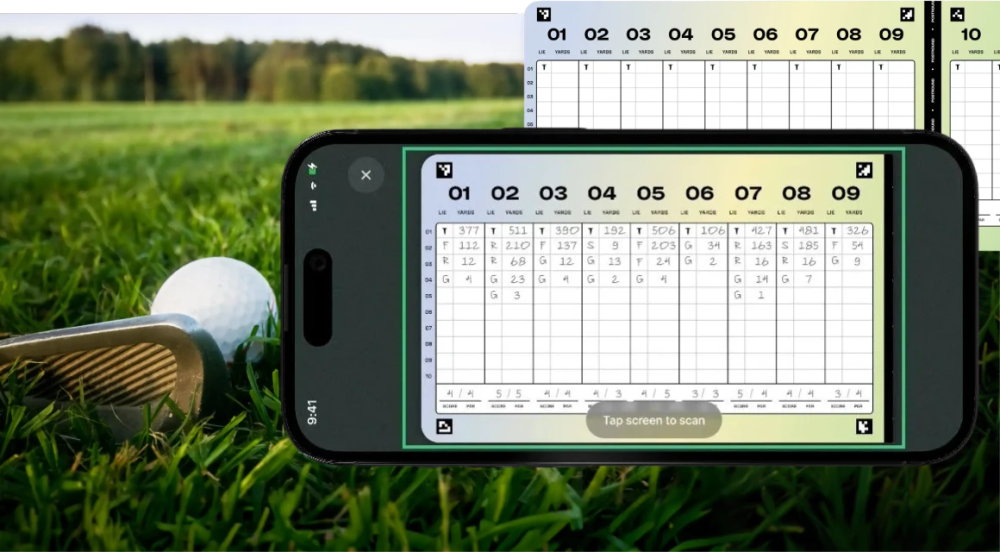
    Until its text is extracted, a photo of an invoice is just pixels to your software. Our optical character recognition reads printed and handwritten content from images taken in real conditions, including bad lighting, odd angles, and damaged labels. It already reads handwritten golf scorecards in the Postround app.

  8. 08

    Model Optimization and Edge Deployment

    Quantizing a finished model is a last step, not a strategy. We design the architecture around the target device from the outset, then apply parameter-efficient fine-tuning (PEFT) and compression: quantization, pruning, distillation, and adapter-based tuning. That is how a network meets its latency and memory budget for real-time processing on phones, embedded boards, and industrial controllers without losing the accuracy the task needs.

What Can Image Recognition Software Recognize?

Recognition is a broad word until you name the target. Below are the classes of visual content our systems identify most often, and the human-powered work each one replaces.

01

Objects and Products

An object recognition system tells one product from another among hundreds of similar items. It works where barcode scanning can't: items in motion, on shelves, or partially blocked.

Use cases
  • Shelf and planogram monitoring in retail
  • Inventory management on shelves and in warehouses
  • Automated checkout that recognizes loose, unlabeled products
  • Counting and identifying items on production lines

Ideal forRetail, Manufacturing, Logistics, E-commerce

02

People and Faces

Face and body detection turns a camera into a counter and a monitor. Our systems track how many people are in a space, how they move through it, and signals like attention or fatigue that someone would otherwise have to watch for manually.

Use cases
  • People counting and flow analysis for store layouts
  • Crowd density and queue length estimation
  • Driver fatigue and distraction monitoring
  • Attention measurement for displays and signage

Ideal forRetail, Automotive, Media, Events

03

Text and Documents

OCR turns printed or handwritten text into structured data. Clean scans are the easy part; most of the image recognition software development effort goes into crumpled labels, glare, and camera angles no scanner ever meets.

Use cases
  • Extracting data from invoices and forms
  • Reading serial numbers and labels on the line
  • Reading license plates and VINs in vehicle yards

Ideal forLogistics, Finance, Government, Manufacturing

04

Defects and Anomalies

A machine learning model trained on good parts learns what normal looks like and flags deviations, with reliable consistency across shifts. That is how it catches flaw types nobody predicted.

Use cases
  • Spotting surface defects on a moving line
  • Catching assembly errors before packaging
  • Flagging visual anomalies in equipment state

Ideal forManufacturing, Pharma, Electronics, Food Production

05

Patterns and Shapes

Some tasks hinge on geometry rather than category: a crack's contour, a weave's regularity, the registration of a printed label. For these, our image recognition software development combines classical pattern recognition with learned features.

Use cases
  • Alignment and positioning checks in assembly
  • Print and counterfeit verification
  • Marker detection for measurement and scoring

Ideal forManufacturing, Printing, Retail, Sports

06

Scenes and Environments

Scene recognition classifies the whole frame rather than the objects in it: a construction site, an empty aisle, an unsafe situation. Its output feeds advanced analytics that turn raw footage into decisions.

Use cases
  • Content moderation and tagging for media libraries
  • Site condition monitoring from progress photos
  • Video analytics that flag unsafe conditions on site

Ideal forMedia, Construction, Real Estate, Retail

07

Medical Images

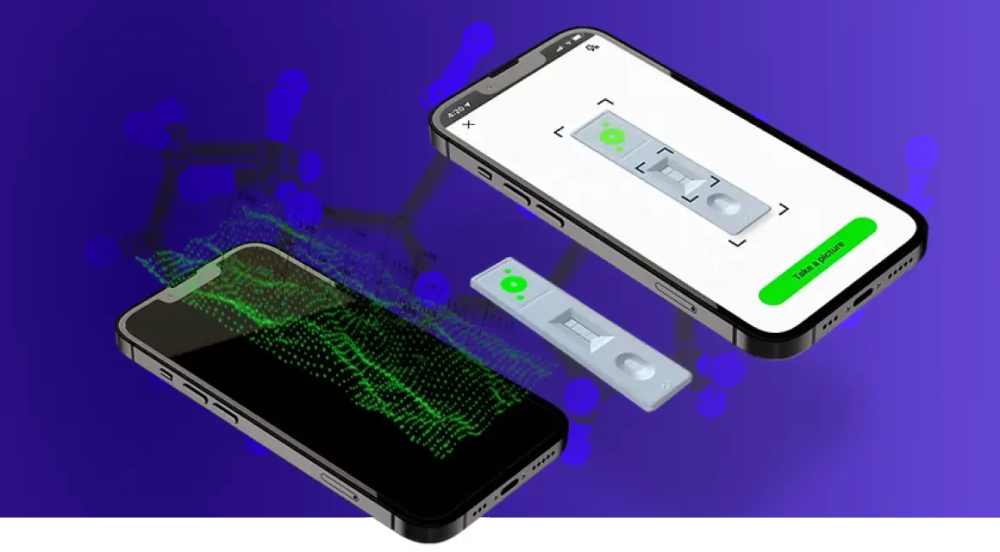
Medical image recognition is held to a stricter standard than any other domain, because a missed finding costs more than a slow one. We build medical image analysis for diagnostic test strips and skin, often as healthcare software that runs on an ordinary smartphone.

Use cases
  • Reading test strips and rapid diagnostics via phone camera
  • Pre-screening medical images before a specialist review
  • Measuring skin changes over time

Ideal forHealthcare, Wellness, MedTech, Pharma

Build Custom Image Recognition System With It-Jim

Maybe you're validating a first idea; maybe you're replacing a system that stopped keeping up. Either way, one conversation with our engineers will show you the shortest path to working image recognition.

Our Image Recognition Software Development Process

Typical vendors jump in once the data is ready. We start earlier, translating business requirements into measurable accuracy targets before choosing AI algorithms or collecting the first image, and we stay on after the model goes live.

  1. Stage 1

    Domain & Environment Analysis

  2. Stage 2

    Camera & Data Source Setup

  3. Stage 3

    Dataset Preparation & Annotation

  4. Stage 4

    Image Recognition Model Development

  5. Stage 5

    System Integration & Deployment

  6. Stage 6

    Post-Launch Optimization & MLOps

Image Recognition Technologies We Use

Image Processing
Image Classification
Object Detection
Image Segmentation
Anomaly Detection
Video Analytics
Optical Character Recognition (OCR)
Visual Search & Image Matching
Convolutional Neural Networks
Vision Transformers (ViT, Swin)
YOLO-Family Detectors
RF-DETR
DINOv3 Visual Embeddings
SAM-Family Segmentation
Multimodal Recognition (CLIP-Style Models)
Open-Vocabulary Detection (YOLO-World, Grounding DINO)
Transfer Learning & Fine-Tuning
Data Augmentation
Synthetic Data Generation
Quantization & Pruning
PyTorch
TensorFlow
OpenCV
ONNX Runtime
TensorRT
OpenVINO
Core ML
LiteRT

Why Choose It-Jim as Your Image Recognition Software Development Company?

10+

years in AI development

A decade of machine learning and computer vision work across industries, with 200+ projects delivered and running outside the lab.

  • Deep computer vision expertise

    Our team comes from academia, with PhDs in physics and artificial intelligence. When a recognition problem has no textbook answer, that depth produces one.

  • Edge and cloud deployment capabilities

    We ship models to phones and embedded boards for edge computing, and to AWS, Azure, or GCP when the workload needs cloud connectivity and scale.

  • Custom models instead of one-size-fits-all solutions

    Every model is trained and validated on your own images, against the accuracy your business needs. Image recognition technology that demos well on stock photos often fails on a real line, and testing on your images catches that before launch.

  • End-to-end development from PoC to production

    End-to-end image recognition software development means the engineers who test your idea in a research sprint are the ones who ship it to production. Nothing gets lost in a handover.

  • Long-term model optimization and support

    Models drift as cameras, lighting, and products change. We monitor accuracy after launch and retrain before the drift reaches your results.

Projects We've Delivered to Our Clients

Image Recognition Software Development Services for Different Industries

Different industries point cameras at very different problems, and the ones below are where our systems work most often. Find yours to see what visual data can do for it.

Catch defects and process drift before they reach your customers.

  • Inspect products directly on the line
  • Monitor equipment state through visual cues
  • Verify assembly steps in real time

Frequently

Asked

Questions

Image recognition software development is the engineering of artificial intelligence systems that identify objects, text, defects, or patterns in images and act on the result. The work spans data collection, the choice of algorithms for image recognition, model training, deployment, and integration with your software development tools. Custom work means the system is built around your images and your goals, not a generic dataset.

Image recognition technology is one task inside computer vision: assigning a label or category to what appears in an image. Computer vision is the broader field, covering measurement, tracking, 3D reconstruction, and scene understanding as well. Most real projects combine recognition with several of these, and the same deep learning algorithms often serve both.

Cost depends on scope, which is why It-Jim offers entry points of different sizes. A consultation costs a fraction of a full build, and a two-week research sprint prices the rest of the project before you commit to it. Contact us with your task, and you'll get a concrete estimate in one day.

A technical research sprint takes two weeks, and a proof of concept typically takes two to three months. Full products vary, but our software developers map the development process and its timeline before any code is written.

Yes, and edge computing is where much of our work runs. We compress models until they fit the device, so the app answers instantly and the user experience never waits on a network. Keeping images on the device also settles privacy concerns in healthcare apps: our cortisol test strip reader works fully offline on an ordinary phone camera.

High enough for production, but the honest number depends on your data and conditions. A medical imaging recognition task and a shelf counter carry very different error budgets, so we measure accuracy on your images during a research sprint instead of promising a figure upfront. After launch, monitoring and timely updates keep it from drifting.

Ask for a feasibility verdict on your own images before any build is priced, and ask how the team will validate its AI algorithms on your hardest samples. A good partner tells you plainly when an idea won't work yet. We do, and our proof of concept stage exists to find that out cheaply.

Let's Talk About Your Project!

Have a challenge in mind or just exploring? Talk directly with an engineer. No pitch. No fluff.

Tell us about your project
Chat on WhatsApp
File upload (optional, up to 15 MB)

By submitting this form, you agree with our Privacy Policy

What Happens Next?
  1. Your message goes straight to our core team – not a sales department.
  2. You’ll talk directly with our CEO, CTO, or a domain expert for a consultation-style first call.
  3. We’ll ask the right technical questions to understand your challenge and scope.
  4. If we’re a fit, we’ll follow up with a proposed path forward.