Computer Vision Consulting Services

Straight answers about what cameras and AI can do for your business.

Wireframe eye with a mesh iris

Computer Vision Consulting for Real-World AI Challenges

Most teams hire computer vision consulting services expecting a model recommendation: pick a network, train it on your images, ship it. In practice, the outcome is decided earlier, by whether the camera can physically capture the signal, whether your visual data reflects the real environment, and whether the accuracy you need is reachable within your budget. We learned this across projects where lab assumptions collapsed within a week. So we answer those questions first, while changing the answer is still cheap. As a computer vision consulting company, It-Jim advises across the whole stack, from optics and sensor selection to model architecture, deployment, and audits of systems already in production. And when the honest verdict is "don't build this," you will hear it from us first.

Our Computer Vision Consulting Services

Some clients arrive with an idea and no way to judge it; others arrive with a system that underperforms and no diagnosis. Our computer vision consulting services cover both ends of that spectrum.

  1. 01

    Computer Vision Strategy & Feasibility Assessment

    Before you commit a development budget, we test whether the task is solvable on your actual data and in your actual environment. You get a written verdict with the expected accuracy range and the main risks; if current AI technologies are not mature enough for your case, we say so plainly.

  2. 02

    Computer Vision Technology Consulting

    The model landscape changes every few months, and the right answer is rarely the newest paper. We compare current options against your constraints, from compact detectors in the YOLO family to transformer models like RT-DETR and promptable foundation models like SAM for image segmentation. As a computer vision consulting company with no licenses or hardware to sell, we stay vendor-neutral.

  3. 03

    Computer Vision Architecture Consulting

    A vision system is more than a model: it is cameras, lighting, compute, data pipelines, and the software around them. We design that end-to-end architecture, including what runs on the edge and what runs on cloud platforms like AWS, Azure, or GCP, and hand over a blueprint your team, or ours, can build against.

  4. 04

    Computer Vision Data & Model Assessment

    We audit existing datasets and models the way an engineer audits a bridge: label quality, class balance, evaluation methodology, and the drift between training data and production reality. Most underperforming systems we see fail in the data, not in the network. The audit tells you which fix is worth paying for: better data labeling, synthetic data for the rare cases, or a different model.

  5. 05

    Computer Vision Proof of Concept

    When feasibility looks promising but unproven, a PoC settles the question with a working prototype built on your visual data. It typically takes two to three months and gives you measured accuracy instead of projected accuracy, which is the kind investors believe.

  6. 06

    Computer Vision Deployment Consulting

    The distance between a model in a notebook and a model in production is where many projects stall. We advise on model optimization (pruning, quantization), hardware selection, and the MLOps workflows that handle monitoring and model retraining, so the system meets its latency targets on hardware you can afford.

What Can a Computer Vision Consultant Help You With?

Consulting is only useful when it maps to a real application. These are the problem classes where our computer vision consultants advise most often, and where our own teams have shipped working systems.

01

Object Detection & Recognition

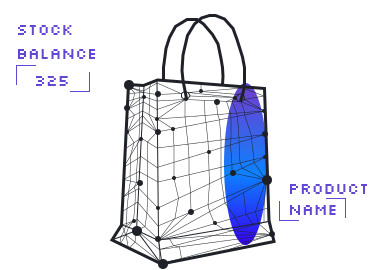
Object detection tells you where things are in the frame; image classification tells you what they are. Our job is to match your task to the lightest model that meets the accuracy bar, because detection that needs a GPU per camera rarely scales.

Use cases
  • Counting products, parts, or people in live video
  • Automated inventory management on shelves and in warehouses
  • Object recognition that finds one item among visually similar ones

Ideal forRetail, Manufacturing, Logistics, Construction

02

Image & Video Analysis

A frame captures a state; a video stream captures behavior. We help you decide what to measure across hours of footage, which models can extract it reliably, and how to feed the results into your predictive analytics. Object tracking holds identities across frames, which is what separates video analytics from repeated image analysis.

Use cases
  • Video analysis of process duration and bottlenecks
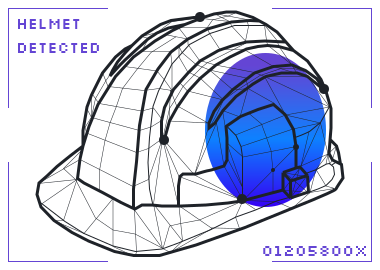
  • Safety compliance monitoring from live feeds
  • Customer behavior analysis in physical spaces

Ideal forManufacturing, Retail, Construction, Security

03

3D Vision & Reconstruction

Depth is the dimension flat images hide, so we advise on when stereo cameras, LiDAR sensors, or 3D reconstruction from ordinary photos is the right way to recover it. The harder question is the scene understanding that sits on top of the geometry: what the objects are, where they sit relative to each other, and which surfaces a robot can actually use.

Use cases
  • Indoor and outdoor reconstruction and environment mapping
  • Visual localization and camera pose estimation in GPS-denied environments
  • Measurement and planning from reconstructed spaces
  • 3D object detection and object pose for robot manipulation

Ideal forRobotics, Construction, Real Estate, Automotive

04

Visual Inspection

Defect detection is the classic case for automated inspection: a camera that checks item ten thousand with the same attention as item one. Classical machine vision still wins on well-lit, repeatable parts, while anomaly detection handles the case where defects are too rare and too varied to enumerate in advance. Which of the two you need is worth settling before the budget is, because the wrong choice shows up later as defect escapes and rework costs.

Use cases
  • Surface defect detection on moving lines
  • Assembly verification before packaging
  • Anomaly detection for rare or novel flaws

Ideal forManufacturing, Pharma, Electronics, Food Production

05

Face Tracking

A face carries more measurable signals than any other part of the body. We track its landmarks frame by frame to read gaze and iris movement, capture expression, and reconstruct geometry in 3D past the detail consumer face meshes deliver. The same pipeline reads pulse and breathing from color changes in skin, with no contact and no wearable.

Use cases
  • Eye movement and gaze tests for neurological screening
  • Contactless pulse and breathing measurement from a phone camera
  • Expression capture and 3D reconstruction of faces for avatars and post-production

Ideal forHealthcare, Media, Education, Automotive

06

Pose Estimation

Skeletal keypoints turn human movement into measurable data. We advise on camera placement and on which deep learning models hold up outside the demo video.

Use cases
  • Technique analysis in sports and fitness apps
  • Fall detection for patients and workers
  • Ergonomic assessment at workstations

Ideal forSports, Healthcare, Manufacturing, Fitness

07

OCR & Document Processing

Modern optical character recognition reads clean text almost perfectly, so the engine is rarely what fails. The image is. Most of our computer vision consulting on OCR concerns the preprocessing that makes characters legible: unwrapping curved surfaces, correcting distortion, deblurring, and lifting contrast where molded lettering carries no color difference at all.

Use cases
  • Curved and cylindrical labels unwrapped for recognition
  • Molded or engraved codes read with no color contrast
  • Serial numbers, documents, and invoices digitized across the supply chain

Ideal forLogistics, Manufacturing, Automotive, Finance

08

Edge Computer Vision

Some tasks cannot afford a round-trip to a server: latency, connectivity, or privacy rules it out. We advise on edge deployment end to end, from platforms like NVIDIA Jetson and Hailo accelerators to the quantization that makes a model fit them.

Use cases
  • Predictive maintenance on the device, with no cloud dependency
  • Video analytics on smart cameras at remote or bandwidth-limited sites
  • Mobile apps running models locally, with no lag in the user experience

Ideal forManufacturing, Sports, Automotive, Healthcare

Let's Discuss Your Computer Vision Questions Now

Maybe you're weighing a first vision AI idea; maybe an existing system stopped meeting its numbers. Either way, one conversation with our engineers will show you the shortest path to an answer.

Classical Computer Vision, Deep Learning & Hybrid Approaches

Not every vision problem needs the latest deep learning model, and the wrong default is expensive in both directions. Choosing the approach is half of what a computer vision consulting firm is for.

Classical Computer Vision

Classical machine vision methods (image processing algorithms, geometry, pattern recognition on engineered image features) need no training data, run on a CPU, and produce results you can explain line by line. In controlled environments, like a fixed camera over a conveyor, they still beat trained models on cost and reliability.

Deep Learning for Computer Vision

Where variability is high, deep learning earns its cost. Convolutional neural networks remain the workhorse for classification and detection, transformer architectures now lead many benchmarks, and sequence models (from recurrent neural networks to temporal transformers) handle what single frames can't. The question is whether your data volume and hardware budget justify them.

Hybrid Computer Vision Systems

Our favorite systems are hybrids: traditional computer vision techniques handle geometry and preprocessing, while a compact neural network handles the part that genuinely needs learning. The result is machine learning where it pays and deterministic code where it doesn't, which usually means less data, less compute, and easier debugging.

Why the Choice of Approach Decides Your Budget

Pick a heavier approach than the task needs, and you pay for data collection, GPUs, and maintenance that classical machine vision would have skipped. Pick a lighter one than the task allows, and you ship a system that fails in the field. Getting this decision right early is the cheapest optimization available in a vision project.

Computer Vision Consulting Process with It-Jim

Typical consultants deliver a slide deck and leave. We start with your physical environment and stay until your team knows exactly what to build, how, and at what cost.

  1. Stage 1

    Problem & Domain Analysis

  2. Stage 2

    Data & System Audit

  3. Stage 3

    Feasibility Assessment

  4. Stage 4

    Architecture & Technology Roadmap

  5. Stage 5

    Proof of Concept

  6. Stage 6

    Deployment Support & MLOps

Technologies & Expertise of Our Computer Vision Consultants

Image Processing
Image Features
Image Classification
Object Detection
Image Segmentation
Object Tracking
Human Pose Estimation
Depth Estimation
Video Processing
Optical Character Recognition (OCR)
Anomaly Detection
Vision Foundation Models
Vision-Language Models
Synthetic Data Generation
Localization and Navigation
Visual (Inertial) Odometry (SLAM, IMU)
Camera Calibration & Pose Estimation
Scene Understanding & Reconstruction
Point Cloud Processing
Novel View Synthesis
Image Generation
Model Quantization & Acceleration
Edge & Embedded Inference

Why Choose It-Jim as Your Computer Vision Consulting Company?

10+

Years of AI Experience

A decade of machine learning and computer vision work across industries, long enough to have seen most failure modes before your project meets them.

200+

AI Projects Delivered

A proven track record with real-world deployments behind every recommendation we make.

  • PhD-Level Computer Vision Expertise

    Our team comes from academia, with advanced degrees in computer vision, artificial intelligence, and adjacent fields like physics. When your problem has no textbook answer, that depth is what produces one.

  • Real-World, Not Just Laboratory AI

    Our systems run in factories, stores, and clinics, not only in benchmark tables. Our advice reflects bad lighting, dirty lenses, and data that never looks like the training set.

  • From Consulting to Production

    If the verdict is "build it," the same team that assessed your project can take it through our computer vision development services. Our computer vision AI consulting and our engineering are the same people, so nothing gets lost in a handover and the consultants answer for their own advice. The code and models stay your intellectual property.

Case Studies

Expert Computer Vision Consulting Services for Your Industry

Different industries point cameras at very different problems, and the eight below are where our systems work most often. Find yours to see what visual data can do for it.

Catch defects and process drift before they reach your customers.

  • Inspect products directly on the line
  • Monitor equipment state through visual cues
  • Verify assembly steps in real time

When Should You Hire a Computer Vision Consultant?

The best moment is before the first dollar of development spending, because that is when advice is cheapest to act on. In practice, clients come to us at four points:

  • Before committing a budget, to learn whether the idea is feasible at all
  • After a pilot underperforms, to find out whether the fault lies in the visual data, the model, or the camera
  • When choosing between vendors, or between building and buying
  • When moving a working cloud prototype to edge hardware with real latency and cost limits

Good computer vision consulting services do not always end in a build: a meaningful share of the ideas we assess change shape after the first analysis, and some stop entirely. The companies involved usually consider that money well spent.

Address Your Computer Vision Challenges to Us

Frequently

Asked

Questions

Computer vision consulting is expert guidance on whether and how to use camera-based artificial intelligence in your product or operations. It covers the computer vision services that come before a build: feasibility assessment, technology selection, architecture design, and audits of existing systems. The goal is to replace guesses with an engineering verdict before you spend serious money.

A consultant analyzes your task, your data, and your physical environment, then recommends the AI algorithms and hardware with the best chance of hitting your accuracy and cost targets. At It-Jim, that includes hands-on work: we run experiments on your data rather than reasoning from slides.

Cost depends on scope, which is why we offer entry points of different sizes. A consultation session costs a fraction of a full build, and a two-week research sprint prices the rest of your project before you commit to it. Contact us with your task, and you'll get a concrete estimate in one day.

A consultation takes days, a technical research sprint takes two weeks, and a proof of concept typically takes two to three months. You will know the timeline for the next step before it starts.

Yes. With quantization and hardware-aware model selection, modern networks run on platforms from NVIDIA Jetson modules to ordinary smartphones. We advise on the full edge deployment path: choosing the device, compressing the model, and verifying that accuracy survives the compression.

We combine academic depth with a decade of production experience, and we tell you when an idea won't work, which clients tend to remember. Because we also build what we recommend, the advice is grounded in systems that survived contact with the field.

Let's Talk About Your Project!

Have a challenge in mind or just exploring? Talk directly with an engineer. No pitch. No fluff.

Tell us about your project
Chat on WhatsApp
File upload (optional, up to 15 MB)

By submitting this form, you agree with our Privacy Policy

What Happens Next?
  1. Your message goes straight to our core team – not a sales department.
  2. You’ll talk directly with our CEO, CTO, or a domain expert for a consultation-style first call.
  3. We’ll ask the right technical questions to understand your challenge and scope.
  4. If we’re a fit, we’ll follow up with a proposed path forward.