Pose Estimation Software Development Services

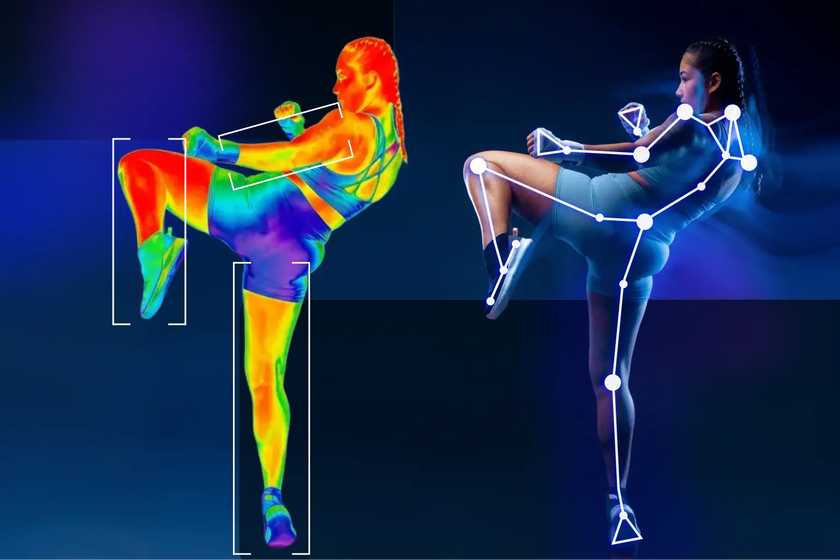
Movement, measured. Frame by frame, without a motion capture suit.

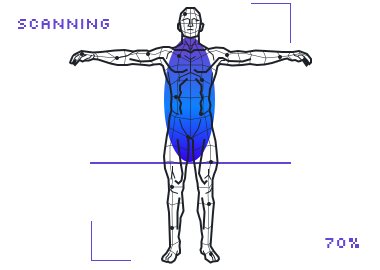
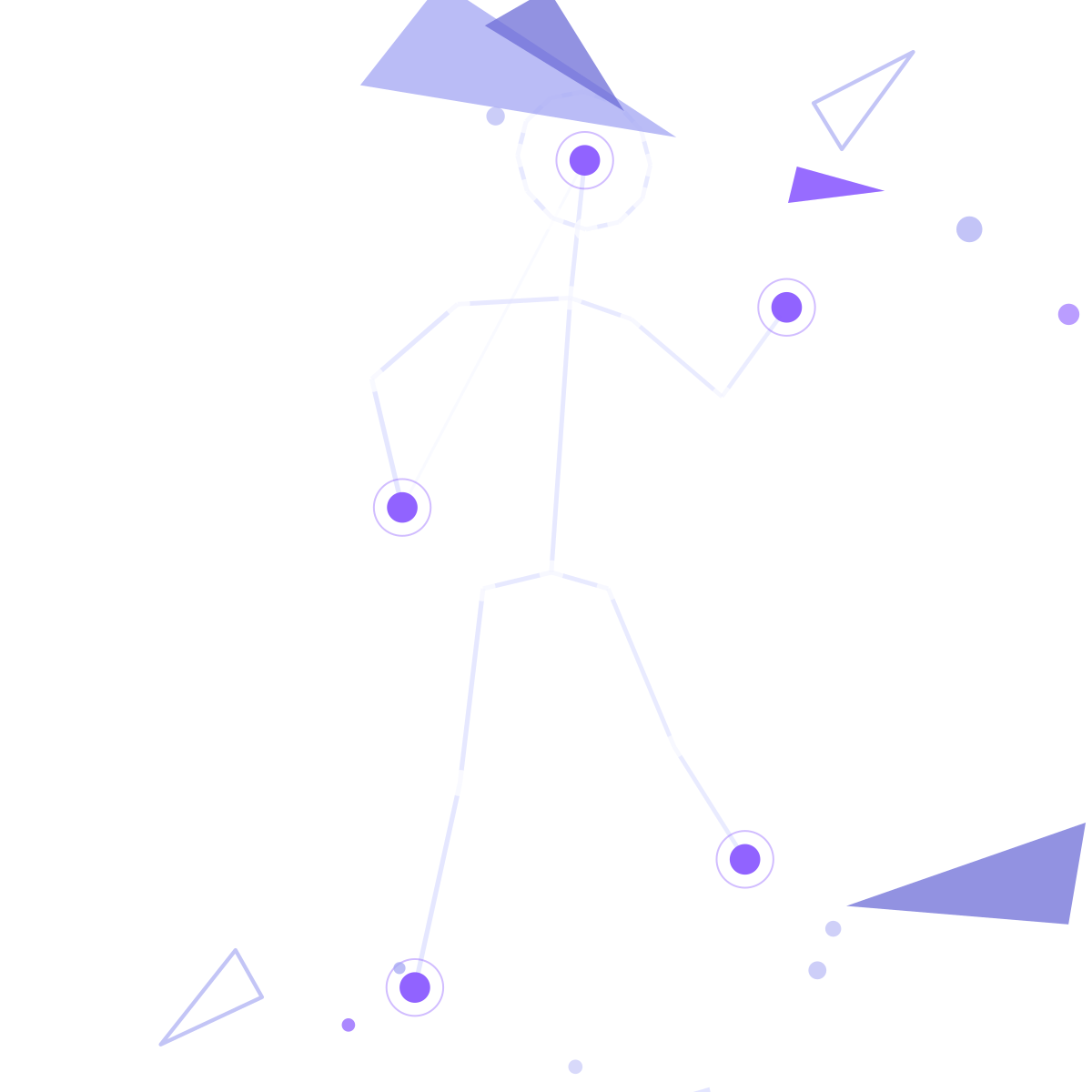
Human skeleton of keypoints and joints

Custom Pose Estimation Software for Your Business

Custom pose estimation software development services start where open-source demos stop. Pretrained pose estimation models detect keypoints out of the box, and a demo comes together in an afternoon. The difficulty starts when the camera sits at an angle nobody planned for, two people overlap, or a clinician needs joint angles accurate enough to act on. We learned this across a decade of computer vision and artificial intelligence projects, many of them on footage shot far from lab conditions. It-Jim covers the distance between that demo and a human pose estimation system that holds up on your footage, at your frame rate, on hardware you can ship.

Our Pose Estimation Software Development Services

Some clients bring a research prototype, often an OpenPose pipeline, that falls apart on real users. Others bring a camera, a use case, and nothing else. Our human pose estimation software development services cover both starting points.

  1. 01

    Custom Pose Estimation Software Development

    We build the full pipeline: person detection, keypoint estimation, tracking, and the analysis layer that turns coordinates into something your product can use. Custom work pays off when your subjects are occluded, unusually positioned, or wearing equipment generic deep learning models never saw in training. You own the code and the trained models.

  2. 02

    Human Pose Analysis Software Development

    Keypoints alone answer nothing. Human pose analysis software development is the layer above them: the angles and velocities of joints and limbs, movement phases, symmetry, and activity recognition that labels what the person is doing. This is where a coordinate stream becomes a metric your users trust.

  3. 03

    Pose Estimation System Integration

    A model earns its value once it sits inside your product. We integrate it into mobile apps, desktop tools, cloud services, and existing video pipelines, and take on the mobile app development ourselves when you have no team for it. The output lands in the dashboards where decisions happen.

  4. 04

    Pose Estimation Model Optimization & Deployment

    A model that runs at 30 FPS on a workstation may manage 4 FPS on a phone. Pose estimation on the edge means compressing and accelerating through quantization, pruning, and runtime selection until the model hits your latency target on mobile devices or embedded boards. Then we verify that keypoint accuracy survived the process.

  5. 05

    Custom Keypoint Schemas & Dataset Work

    Standard models predict a fixed set of keypoints, rarely the set a specialist application needs. We design custom keypoint schemas for objects no public dataset covers, such as golf clubs, tennis rackets, and baseball bats, and we unify the differing skeleton topologies of COCO, MediaPipe, and MMPose into one format. When the data does not exist yet, we design the capture and annotation protocol behind it and generate synthetic data for the poses real footage cannot cover.

AI Pose Estimation Solutions we Develop

Custom human pose estimation solutions development starts from one question: which movement matters, and what decision follows from measuring it. These are the systems we are asked for most.

01

Human Motion Analysis Systems

We break continuous movement into phases and measure each one, markerless and from ordinary video. The output is human movement analytics: a timeline of what the body did, with the joint angles and velocities behind it.

Use cases
  • Gait analysis from a single camera
  • Posture and movement screening against a reference pattern
  • Range-of-motion measurement over time

Ideal forHealthcare, Sports, Research, Insurance

02

Rehabilitation Monitoring Applications

Recovery happens between appointments, where nobody is watching. We build privacy-preserving applications that check exercise form at home on the patient's phone and give the clinician a record of what took place.

Use cases
  • Home exercise verification and adherence tracking
  • Progress measurement across a treatment plan
  • Alerts when a movement pattern regresses

Ideal forHealthcare, Physiotherapy, Wellness, MedTech

03

Sports Analytics Platforms

Coaching by eye misses what happens in a tenth of a second. Our pose estimation solutions capture technique at frame rate and turn it into numbers in the cloud, comparable across athletes and sessions.

Use cases
  • Technique breakdown with frame-level feedback
  • Swing reconstruction for club, racket, and bat sports
  • Kick and stroke classification through activity recognition
  • Multi-player tracking for a digital twin of the game

Ideal forSports, Fitness, Broadcast, Athletics

04

Workplace Ergonomics Systems

Injury risk builds through repetition nobody logs. We build systems that score the posture of the back and limbs against ergonomic standards and flag the tasks generating the most exposure.

Use cases
  • Posture scoring on repetitive tasks
  • Lifting technique assessment
  • Workstation layout evaluation from video

Ideal forManufacturing, Logistics, Insurance, Occupational Health

05

Manufacturing Safety Applications

A camera watches a work cell continuously, which no supervisor can do. We build systems that recognize unsafe posture and the proximity of limbs to moving parts in real time.

Use cases
  • Detecting entry into hazardous zones
  • Recognizing falls and prolonged inactivity
  • Verifying both hands on the controls of a press

Ideal forManufacturing, Construction, Energy, Warehousing

06

Driver Monitoring Solutions

Attention is visible in head position and gaze before it becomes a driving error. The in-cabin systems we build run onboard and are privacy-preserving: no video leaves the vehicle.

Use cases
  • Drowsiness and distraction detection
  • Seatbelt and posture compliance
  • Hands-off-wheel detection

Ideal forAutomotive, Fleet, Logistics, Insurance

07

Fitness Coaching Platforms

Feedback after the workout is a report. Feedback during the rep changes the movement. We build real-time form checking with AI pose estimation software that runs on the phone in front of the user, often starting from MediaPipe or MoveNet pose estimation models and tuned from there.

Use cases
  • Rep counting and form correction on device
  • Personalized exercise progression
  • Movement scoring against a coach's reference

Ideal forFitness, Wellness, Consumer Apps, Sports

08

Robotics Vision Applications

Machines that work near people need to know where those people are, what posture they hold, and where they are about to be. We build human pose estimation that runs onboard and feeds the control loop directly.

Use cases
  • Human-aware navigation and safe stopping
  • Hand gesture control and human-computer interaction
  • Teleoperation and motion imitation

Ideal forRobotics, Manufacturing, Logistics, Research

Don't See the Right Solution for You?

Maybe you have a movement nobody has measured yet; maybe an existing human pose estimation model stopped holding up on real users. Either way, one conversation with our engineers will tell you whether video can measure it.

Our Pose Estimation Development Expertise

2D & 3D Pose Estimation

2D pose estimation locates human body joints in the image plane and covers most applications at the lowest cost. 3D recovers the pose in space, which is what you need for true joint angles and any measurement where the subject is not side-on to the camera. We will tell you when 2D is enough.

Monocular & Multi-Camera Pose Estimation

Most products get a single camera, not a calibrated rig. We recover 3D pose from one RGB or RGB-D stream using body priors, and when accuracy demands it, we move to multi-view capture and triangulate several synchronized cameras. We help you make that cost and accuracy decision before hardware is bought.

Single Person Tracking

With one person in frame, pose estimation effort moves from detection to precision and temporal stability. We tune for jitter-free keypoints on every joint, since an angle that flickers between frames is unusable for measurement.

Multi-Person Tracking

Crowded scenes break naive pipelines: keypoints get assigned to the wrong body, and skeletons swap when people cross. We build multi-person pose estimation with pose tracking on top, so each skeleton stays attached to the right person across the whole clip, and activity recognition can run per person.

Real-Time Pose Estimation

Real time means different things at different budgets. We target your actual constraint, whether that is 60 FPS on a cloud GPU or 15 FPS on a phone without draining the battery.

Temporally Consistent & Kinematically Correct Pose Estimation

Per-frame deep learning detection produces poses that flicker, and flicker ruins measurement. We enforce temporal consistency so joint trajectories stay smooth across a video, and we go beyond keypoint positions to kinematically correct output: joint rotations that respect how a human body actually bends, fitted to a volumetric model such as SMPL-X that also carries body geometry.

Markerless Motion Capture

Markerless motion capture removes the suit, the markers, and the studio. Recent research puts multi-view markerless systems within a couple of millimeters of marker-based capture, which makes multi-view capture viable for biomechanics labs and for media and entertainment production alike.

Skeleton Tracking

Skeleton tracking follows a consistent joint structure over time, turning per-frame detections into movement you can analyze. The structure is usually a skeleton-based model of joints and limbs, and a contour-based model of the body outline where silhouette matters more.

Hand, Face & Whole-Body Keypoints

Body-only human pose estimation misses detail some applications depend on. We build whole-body estimation covering hands, fingers, feet, and facial keypoints for sign language, fine motor assessment, and gesture-driven human-computer interaction. Head pose and gaze estimation add where a person is looking, which drives attention analysis in driver monitoring.

Animal & Object Pose Estimation

The same methods apply to any subject with joints: livestock monitoring, veterinary assessment, sport implements such as golf clubs, bats, and rackets tracked alongside the athlete, and 6-DoF object pose for robotic manipulation.

Technologies We Use

RTMPose
ViTPose and ViTPose++
HRNet
YOLO-Pose
MediaPipe Pose
MoveNet
OpenPose
Meta Sapiens
SMPL and SMPL-X body models
Human mesh recovery
PyTorch
MMPose
ONNX Runtime
LiteRT (formerly TensorFlow Lite)
NVIDIA TensorRT
Core ML
OpenVINO
OpenCV
Temporal smoothing and filtering
Quantization and pruning
Multi-view triangulation
Synthetic data generation

Our Pose Estimation Software Development Process

Most pose estimation software development vendors start once the data is labeled and the camera is fixed in place. We start earlier, because both of those decisions constrain the accuracy you can reach.

  1. Stage 1

    Movement & Requirements Analysis

  2. Stage 2

    Camera Setup & Feasibility Study

  3. Stage 3

    Data Collection & Annotation

  4. Stage 4

    Model Development & Fine-Tuning

  5. Stage 5

    Optimization & Integration

  6. Stage 6

    Validation & Post-Launch Support

Why Businesses Choose It-Jim

200+

projects delivered

Proven track record in computer vision development with successful real-world deployments.

10+

years of expertise

A decade of experience in machine learning and motion analysis across industries.

  • Built by engineers, not hype

    Engineers founded this company, and engineers run it today. Every promise in our human pose estimation software development services has passed through someone who will personally build the thing.

  • Problem-Solving Obsession

    The projects other teams turn down are the ones we ask for. Occlusion, unusual camera angles, or a movement no custom pose estimation software has modeled yet means the problem is finally interesting.

  • PhDs on the Team

    Our team comes from academia, with advanced degrees in computer vision and adjacent fields like physics. When a measurement problem has no textbook answer, that depth is what produces one.

  • Innovation-Ready Mindset

    We treat every project as applied research, which shows in how fast our prototypes appear. The approach we propose is often one nobody has tried, because your movement usually has not been measured before.

Pose Estimation Projects We've Delivered

Industries We Build Pose Estimation Solutions For

Different industries point cameras at very different problems, and the ones below are where our systems work most often. Find yours to see what visual data can do for it.

Support non-invasive assessment and monitoring across mobile, clinical, and remote care.

  • Analyze movement and gait for neurology and rehabilitation
  • Estimate heart rate and other vital signs from video
  • Read test strips and rapid diagnostics via smartphone
  • Run anomaly detection in medical imaging before a specialist review

Frequently

Asked

Questions

Pose estimation software development is the engineering of systems that locate human body joints in images or video and turn those coordinates into usable measurements. It combines computer vision and deep learning: model selection, fine-tuning on your footage, tracking across frames, and the analysis layer that converts keypoints into joint angles or scores. We cover that whole cycle, from feasibility check to post-launch support.

The first finds the keypoints of a body, or of another articulated subject, and follows its skeleton over time. The second answers a different question: where a rigid object sits relative to the camera in 3D, expressed as six degrees of freedom. One measures movement, the other localizes things, and robotics work often needs both. We build both kinds of system.

Yes. 2D covers most applications at the lowest cost and runs comfortably on a phone. 3D gives you true joint angles and works when the subject is not aligned to the camera, using either markerless multi-view capture or a single camera with a body prior. We recommend the cheaper option whenever it meets your accuracy requirement.

We work with RTMPose, ViTPose, HRNet, YOLO-Pose, MediaPipe, and SMPL-X based mesh recovery, chosen against your accuracy and latency targets rather than by preference. Deployment runs through ONNX Runtime, TensorRT, LiteRT (TensorFlow Lite), or Core ML, depending on the hardware.

Yes, and much of our work depends on it. Modern models reach real-time performance on phones after optimization, and keeping footage on the device is the simplest answer to privacy and security questions when the video shows people.

Cost depends on scope, which is why we offer entry points of different sizes. A consultation costs a fraction of a full build, and a two-week research sprint prices the rest of the project before you commit. Send us the movement you need measured and your target platform, and you'll get a concrete estimate in one day.

A technical research sprint takes two weeks. A proof of concept on your own footage typically takes two to three months. Full products vary with scope, and you will have the timeline before development starts.

Yes. Pose models drift when cameras move, lighting changes, or users start doing something the training data never contained. We monitor field accuracy, retrain against new footage, and extend the system as your product grows.

Let's Talk About Your Project!

Have a challenge in mind or just exploring? Talk directly with an engineer. No pitch. No fluff.

Tell us about your project
Chat on WhatsApp
File upload (optional, up to 15 MB)

By submitting this form, you agree with our Privacy Policy

What Happens Next?
  1. Your message goes straight to our core team – not a sales department.
  2. You’ll talk directly with our CEO, CTO, or a domain expert for a consultation-style first call.
  3. We’ll ask the right technical questions to understand your challenge and scope.
  4. If we’re a fit, we’ll follow up with a proposed path forward.