Object Recognition Software Development Services

Objects found, named, and counted in milliseconds. On a phone, a smart camera, or a server.

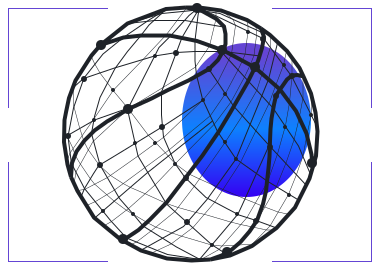
Abstract graphic: 3D point cloud of a scanned object

Custom Object Recognition Software Development for Real-World Applications

Most teams shopping for object recognition software development services expect to buy a model: take a pretrained network, show it your images, read the labels. In production, the result is decided by details the demo never mentions. Lighting shifts, cameras sit at awkward angles, objects overlap, and the classes you care about differ by a few pixels. We learned this across dozens of delivered computer vision software development projects, many in environments where lab assumptions collapse within the first week. That's why It-Jim covers the whole stack: camera and sensor selection, dataset design, machine learning model training, and the integration that turns detections into decisions your software can act on.

Object Recognition Software Development Services we Provide

Some clients arrive with an idea and no data; others have a working detector that stopped being accurate enough. Our service line covers both ends of that spectrum.

  1. 01

    Custom Object Recognition Development

    We build custom computer vision software around your specific objects, cameras, and accuracy targets rather than adapting a generic template. That includes the unglamorous parts: collecting visual data, labeling it well, and testing against the conditions your system will actually face. You own the code and the trained models outright.

  2. 02

    Object Detection Software Development

    Detection answers where objects are in the frame; recognition answers what they are. Our object detection software development services deliver both. We train and fine-tune current architectures, from compact convolutional networks to transformer-based models like RF-DETR and DINOv3, and validate them on your data rather than on benchmark leaderboards.

  3. 03

    Video Object Recognition and Detection

    Single frames only take you so far. We build video analysis pipelines that recognize objects across time, so appearance, movement, and interaction all become measurable, and video analytics can report on them without anyone watching the footage.

  4. 04

    Real-Time Object Detection

    Some decisions can't wait for a server round-trip. We optimize YOLO-family and transformer-based detectors until they meet your latency budget, from high frame rates on a server GPU to real-time decisions on edge hardware.

  5. 05

    Object Tracking

    Knowing it's the same object ten seconds later matters as much as finding it. Our object tracking maintains identity through occlusion, crowding, and camera handoffs, which is what turns detections into counts, paths, and dwell-time analytics.

  6. 06

    Image Recognition Software Development

    Not every task involves boxes. Image classification assigns a whole image to a category, and fine-grained deep learning models tell nearly identical products, parts, or specimens apart, at a level of detail where human inspectors start to disagree.

  7. 07

    Training Data Collection and Annotation

    Most accuracy problems start in the dataset. We write annotation guidelines before anyone labels a frame, use active learning so annotators spend their time on the images the model finds hardest, and fill rare classes with synthetic data. Dataset versioning ties every model back to the exact data it was trained on.

What Can Object Recognition Software Identify?

Anything you can photograph consistently, you can usually recognize. The categories below cover most of what clients ask for, and the last one covers everything else.

01

Industrial Equipment and Components

On a production line, object recognition is machine vision with a strict job description: the right part, in the right place, in the right state. Automated visual inspection holds the same standard at unit ten thousand as at unit one.

Use cases
  • Assembly verification before packaging
  • Spotting surface flaws on moving parts
  • Sorting components by type and grade
  • Flagging anomalies in equipment state

Ideal forManufacturing, Electronics, Automotive, Pharma

02

Products and Inventory

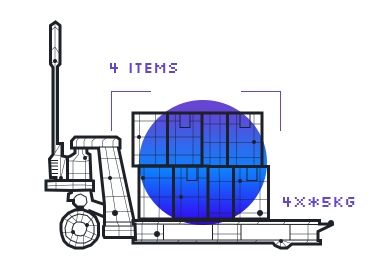
In retail and warehouses, object recognition software development is mostly a problem of scale: hundreds of near-identical SKUs, told apart reliably. Systems recognize products on shelves, count stock, and read labels with optical character recognition, because every wrong match shows up in the customer experience.

Use cases
  • Shelf and planogram monitoring
  • Checkout that recognizes loose, unlabeled products
  • Stock counts in warehouses
  • Data extraction from labels and price tags

Ideal forRetail, E-commerce, Logistics, Food Production

03

Vehicles and Vehicle Parts

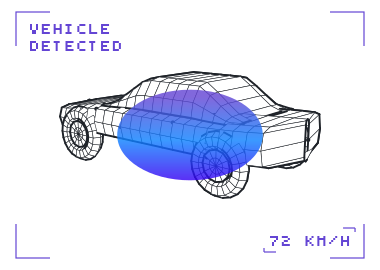
Vehicles are large, reflective, and usually photographed outdoors, which makes them harder to recognize than their size suggests. We build systems that identify vehicles and parts, read the codes printed on them, and monitor the driver from inside the cabin.

Use cases
  • Reading VINs and license plates in yards and lots
  • Visual inspection of vehicles and parts on the line
  • Monitoring driver attention and fatigue with in-cabin smart cameras

Ideal forAutomotive, Logistics, Manufacturing, Transportation

04

People and Safety Equipment

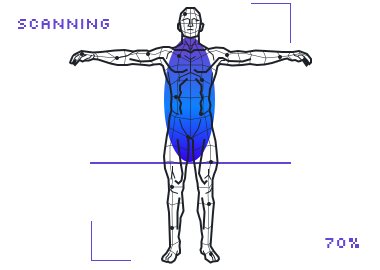
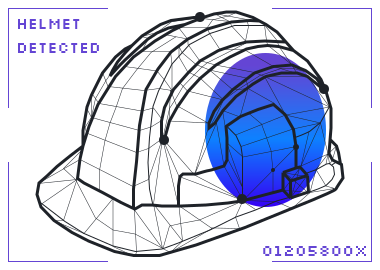
AI-powered computer vision turns existing cameras into safety monitors by recognizing people, poses, and protective gear. Combined with behavior analysis, the same footage flags falls, restricted-zone entries, and missing helmets before an incident report gets written.

Use cases
  • Hard hat and vest compliance checks
  • Restricted-zone entry alerts
  • Fall detection for workers and patients
  • People counting and flow analysis

Ideal forConstruction, Manufacturing, Logistics, Healthcare

05

Medical and Scientific Objects

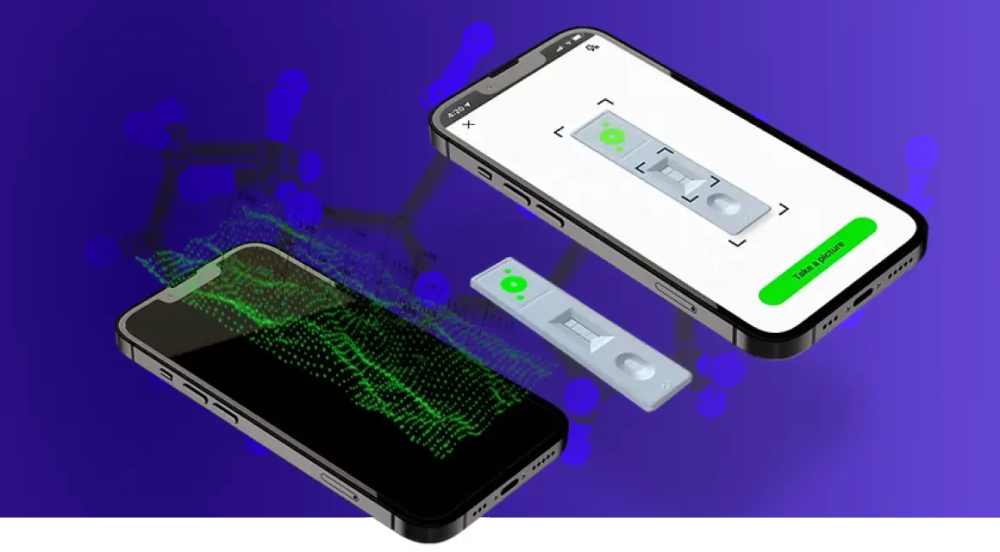
In medical imaging and diagnostics, recognition supports specialists rather than replacing them. Accuracy requirements here tolerate nothing, so our object recognition software development starts with validation. Our cortisol test strip reader runs on an ordinary phone camera.

Use cases
  • Reading test strips and rapid diagnostics via smartphone
  • Pre-screening medical images before a specialist review
  • Tracking body and eye movement in neurological assessments

Ideal forHealthcare, MedTech, Biotech, Wellness

06

Custom Object Categories

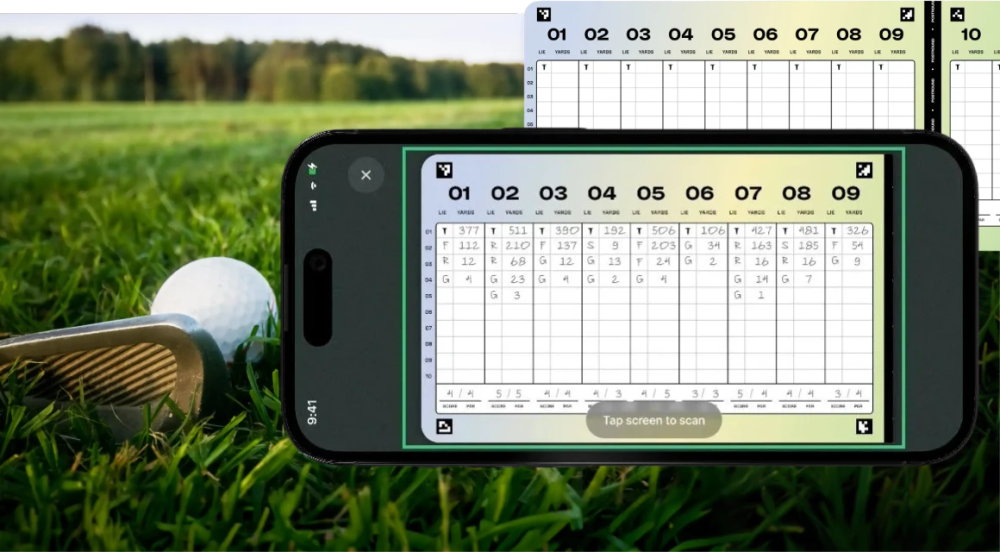
Public datasets like COCO cover 80 everyday classes. Most of our object recognition development services start with objects none of them has seen. If you can supply examples, or let us collect them, we can train a machine learning model to recognize them, from niche industrial parts to handwritten golf scorecards in the Postround app.

Use cases
  • Quality inspection of niche industrial parts and tools
  • Marker detection for measurement and scoring
  • New products that join a catalog every week

Ideal forManufacturing, Sports, Retail, Biotech

Discuss Your Project with CV Expert

Maybe you're testing whether recognition is feasible for your objects; maybe an existing system needs to get faster or more accurate. One conversation with our engineers will show you the shortest path to a working solution.

How Much Does Object Recognition Software Development Cost?

It depends on scope, and anyone quoting a price before seeing your task is guessing. The budget is set less by the model than by the conditions around it, and those can be measured before you commit to a build.

What Drives the Cost

Most of the budget comes down to these factors.

  • Number of object classes and how alike they look
  • Accuracy target and the price of a missed object
  • Training data you have, or need collected and annotated
  • Target hardware and latency budget
  • Integration with your existing software

Where to Start

Each entry point has a fixed shape, so you can start small.

  • Strategic consultation
  • Two-week research sprint on your data
  • Proof of concept in two to three months
  • Full product or MVP

Why Staged Budgets Protect Your Project

A budget fixed before feasibility is known either pads for risks that never show up or runs out halfway through the ones that do. Each of our steps prices the next one, so you never commit money the evidence doesn't support yet. When the evidence is good, the proof of concept becomes the first version of the product instead of a throwaway. Hold any object recognition software development company to that standard, ours included.

Our Object Recognition Software Development Process

Typical vendors start once the dataset is ready. We start earlier, at the camera and the environment it will face, and stay involved after the model goes live.

  1. Stage 1

    Domain & Environment Analysis

  2. Stage 2

    Camera & Sensor Setup

  3. Stage 3

    Dataset Preparation & Annotation

  4. Stage 4

    Algorithm Selection & Model Training

  5. Stage 5

    System Integration & Deployment

  6. Stage 6

    Post-Launch Monitoring & MLOps

Object Recognition Technologies We Use

Image Processing
Image Classification
Object Detection
Semantic Segmentation
Instance Segmentation
Object Tracking
Video Analytics
Optical Character Recognition (OCR)
Anomaly Detection
3D Object Recognition
Convolutional Neural Networks
Vision Transformers
YOLO-Family Detectors
RF-DETR
DINOv3 Visual Embeddings
SAM-Family Image Segmentation
Open-Vocabulary Detection (YOLO-World, Grounding DINO)
Active Learning
Synthetic Data Generation
Transfer Learning & Fine-Tuning
Quantization & Pruning
LiDAR, Stereo Cameras & RGB-D Sensors
PyTorch
TensorFlow
OpenCV
ONNX Runtime
TensorRT
NVIDIA Jetson
OpenVINO
Core ML
LiteRT

Why Choose It-Jim as Your Object Recognition Software Development Company?

10+

Years in AI and Computer Vision

A decade of artificial intelligence and machine learning work behind our computer vision services, with 200+ projects delivered and running outside the lab.

  • From Camera and Sensor to Production Software

    Half of a recognition system's accuracy is decided before any code runs, when someone picks and places the camera. We design that part too, including the edge hardware the model will run on.

  • PhD-Level Computer Vision Expertise

    Our team comes from academia, with PhDs in physics and artificial intelligence. When a recognition problem has no textbook answer, that depth is what produces one.

  • Built for Real-World Conditions

    Difficult lighting, dirty lenses, moving platforms: our computer vision software development tests every system against the environment it will live in, not the dataset it was born in.

  • Research-Driven Engineering

    We treat every project as applied research, which shows in how fast prototypes appear. The algorithms we propose are often ones nobody has tried on your problem, because your problem usually hasn't been solved before.

  • End-to-End Development

    End-to-end object recognition software development means the engineers who test your idea in a research sprint are the ones who handle model development, ship it, and run MLOps after launch. Nothing gets lost in a handoff, because there isn't one.

Object Recognition Development Cases

Object Recognition Software Development Services for Different Industries

Different industries point cameras at very different problems, and the ones below are where our systems work most often. Find yours to see what visual data can do for it.

Catch defects and process drift before they reach your customers.

  • Inspect products directly on the line
  • Monitor equipment state through visual cues
  • Verify assembly steps in real time

Object Recognition Deployment: Edge, Cloud or Hybrid

A vision system should run wherever your constraints point, and infrastructure shouldn't be an afterthought. Our computer vision development services cover every deployment path, so the architecture bends to your reality instead of the other way around.

01

Edge Object Recognition

Edge computing means the automated analysis happens right on the device, with no round-trip to a server. Frames never leave your premises, which makes a real difference for data privacy.

Use cases
  • Real-time results with millisecond latency
  • Operation without internet dependency
  • Sensitive footage that stays local
  • Lower running costs at scale

Ideal for: Industrial Workflow Automation, Mobile Apps, IoT Systems, Healthcare

02

Cloud-Based Object Recognition

When your task involves heavy models or footage from hundreds of cameras, cloud platforms give you computing power that no single device can match. We build on AWS, Azure, or GCP and design cloud storage for growing data volumes.

Use cases
  • Processing high-volume video archives
  • Centralized analytics from distributed sites
  • Easy updates without touching hardware
  • Fitting into your existing infrastructure

Ideal for: Retail Chains, Logistics, Security, Media

03

Hybrid Object Recognition Systems

Some tasks split naturally: instant decisions happen on the device while deeper analysis runs in the cloud. We design hybrid systems that draw this line where your latency and budget requirements meet.

Use cases
  • Edge alerts with cloud-based reporting
  • Local processing with centralized model updates
  • Resilience when connectivity drops
  • Cost balancing across workloads

Ideal for: Manufacturing, Smart Cities, Transportation, Agriculture

Frequently

Asked

Questions

Object recognition software development is the engineering of software that identifies which objects appear in images or video. It covers data collection, the choice of algorithms and deep learning architectures, model training, testing, and deployment into your product. Custom development targets objects and conditions no off-the-shelf tool handles well.

Object detection locates objects in an image and draws boxes around them; object recognition identifies what those objects are. Most practical systems do both in one pass. If you also need to follow objects across video frames, that's tracking, and our computer vision development services cover all three.

Yes, and that's the standard path for custom objects. We audit your data first, since labeling quality and coverage decide more than volume does. If you have little or no data, we organize collection and annotation, or generate synthetic samples to fill the gaps.

Accurate enough for production on well-defined tasks, but the honest figure depends on your data and conditions. A quality control system hunting visual defects and a shelf counter carry very different error budgets, so we measure accuracy on your images during a research sprint instead of promising a number upfront.

Yes, and edge AI is a large part of our work. We compress models with quantization and pruning, then compile them for the target device, for example with TensorRT on NVIDIA Jetson modules or Core ML on iPhones. On-device recognition answers in milliseconds and keeps images off the network, which matters for medical and factory data alike.

Yes. We deliver recognition as an API, an SDK, or a module inside your existing pipeline, whichever fits your architecture. A model creates value only after its output reaches the software your operations already run on, so integration, and the automation it makes possible, is part of the project.

Let's Talk About Your Project!

Have a challenge in mind or just exploring? Talk directly with an engineer. No pitch. No fluff.

Tell us about your project
Chat on WhatsApp
File upload (optional, up to 15 MB)

By submitting this form, you agree with our Privacy Policy

What Happens Next?
  1. Your message goes straight to our core team – not a sales department.
  2. You’ll talk directly with our CEO, CTO, or a domain expert for a consultation-style first call.
  3. We’ll ask the right technical questions to understand your challenge and scope.
  4. If we’re a fit, we’ll follow up with a proposed path forward.