Edge AI Development Services & Custom Solutions

Inference in milliseconds on a chip the size of a postage stamp. No server bill, no signal required.

Wireframe chip with signal pins

Edge AI Development Company for Production-Ready AI Systems

Edge AI development services are usually scoped as a compression problem: take the model that already works in the cloud, quantize it, and ship it to the device. In practice the constraint arrives much earlier. Thermal envelope, memory bandwidth, and the sensor pipeline decide which architectures are worth training at all, and we learned that on projects where the target was a battery-powered board with a few megabytes of RAM. Edge computing moves the cost from the monthly cloud invoice into the engineering that makes a model fit. As an edge AI development company, It-Jim works across that whole stack, from camera selection and ISP configuration through the quantized model to the update mechanism that keeps a deployed fleet current.

Our Edge AI Development Services

Some clients arrive with a cloud model that costs too much to run and needs to move onto a device. Others have a hardware budget and a product idea and nothing else yet. Our edge AI software development services cover both ends of that range.

  1. 01

    Custom Edge AI Solution Development

    We build edge AI solutions around one target device: the model, the inference pipeline, and the firmware integration. The work starts from your power and latency budget rather than from a model zoo, because on constrained hardware the budget eliminates most of the options before accuracy is even discussed.

  2. 02

    Embedded & On-Device Computer Vision

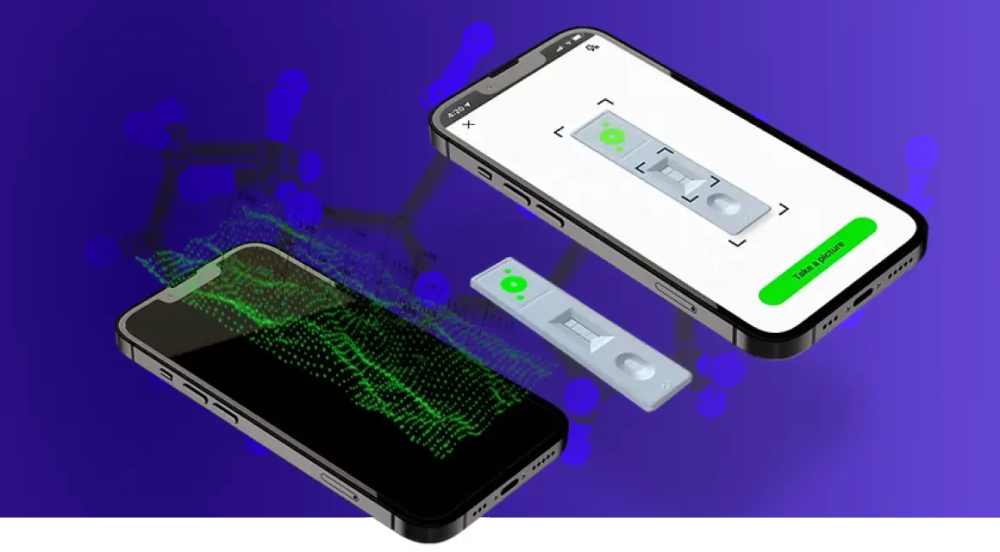
    Vision is where edge constraints bite hardest, since every frame has to be captured, preprocessed, and inferred inside a fixed time slot. We build detection, segmentation, tracking, and pose estimation that run on the device itself, from machine vision on embedded systems in a factory to a cortisol test reader that works on an ordinary phone camera.

  3. 03

    Edge AI Consulting

    We assess whether your idea survives contact with the hardware you have in mind, using your data and your target board. If the honest answer is that your accuracy target does not fit in your power budget, you hear it before system design starts.

  4. 04

    Edge AI Model Development & Optimization

    Training a deep learning model that hits your accuracy target is the first half. Model compression takes it the rest of the way: quantization, pruning, and knowledge distillation until it meets the latency and memory limits of the board. Then we verify that the accuracy survived the process on your own validation data.

  5. 05

    Edge Device Deployment

    A model that runs in a notebook is not yet a product. We handle the export path, the runtime integration, the hardware delegate configuration, and the on-device benchmarking and performance optimization that prove the numbers hold on the production board.

  6. 06

    MLOps for Edge

    Fleets drift. Cameras get repositioned, lighting changes with the season, and the data your model sees in month six is not what it was trained on. Edge MLOps covers over-the-air updates with signed packages and device authentication, versioned rollouts, security patches, and monitoring that tells you when field accuracy has started to slide.

  7. 07

    Edge & On-Device Video Analytics Deployment

    Streaming every camera to a server gets expensive fast, and most of those frames contain nothing worth storing. We deploy video and data analytics directly on cameras and gateways, so only events and metadata travel to the cloud.

  8. 08

    On-Device Audio and Acoustic AI

    Audio models fit the edge well: they are small, they run continuously, and their raw data is often the most privacy-sensitive thing a device captures. We build keyword spotting, acoustic event detection, and audio classification that run on microcontrollers and IoT devices without a network connection.

  9. 09

    Camera and Sensor Pipeline Design

    Half of an embedded vision system's accuracy is decided by the imaging setup, before any model runs. Our physics background lets us specify sensors, optics, and ISP parameters alongside the model. On constrained hardware that often buys more than a larger network would, because cleaner sensor data costs nothing at inference time.

  10. 10

    Cloud-to-Edge Model Migration

    Moving AI workloads from the cloud onto a device is one of the most frequent requests we get for edge AI services, and it is rarely a straight port. We re-architect models whose operators have no hardware support, replace layers that collapse under low-precision inference, and rebuild the preprocessing that quietly ran on a server before.

Edge AI Solutions We Build

Edge AI solutions earn their place when the network is the bottleneck, the response has to arrive within milliseconds, or the data is too sensitive to leave the device. These are the products we are asked for most often.

01

Smart Camera Systems (Raspberry Pi & Jetson)

We turn a camera and a compute module into a self-contained analytics unit that makes decisions locally and reports only what matters. Platform choice ranges from a Raspberry Pi with an accelerator HAT up to an NVIDIA Jetson module when the workload needs a real GPU.

Use cases
  • Visual inspection systems that run on the production line
  • Equipment monitoring without a video backhaul
  • Occupancy and flow counting inside retail spaces

Ideal forIndustrial Automation, Retail, Agriculture, Construction

02

On-Device Mobile Vision Apps

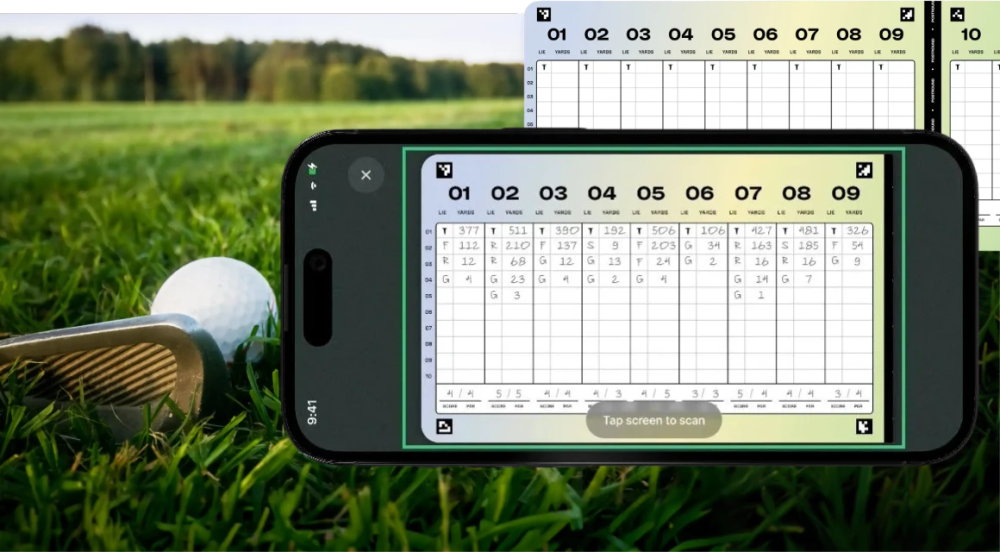
A phone is already an edge device with a decent camera, an NPU, and a user holding it. We build vision features that run inside the app, so every interaction stays instant in a basement, on a plane, or anywhere connectivity drops.

Use cases
  • Measurement and scanning from the phone camera
  • Test strip and label reading in the field
  • Document capture that never uploads the image

Ideal forHealthcare, Logistics, Insurance, Consumer Apps

03

Real-Time Sports & Motion Tracking

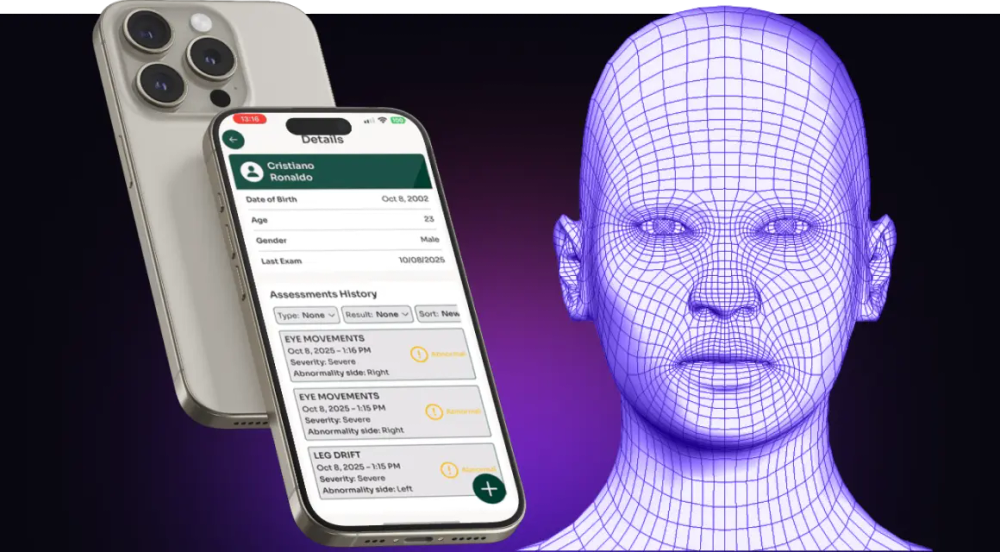
Motion analysis only helps an athlete if the feedback arrives while they are still moving. We build pose estimation and tracking that process every frame on a phone or a compact device at the side of the court.

Use cases
  • Technique analysis with immediate on-screen feedback
  • Ball and player tracking during play
  • Rep counting and form assessment in fitness apps

Ideal forSports, Fitness, Healthcare, Media

04

Offline & Privacy-First Vision Systems

Some deployments have no usable connectivity, and others have footage that legally cannot leave the building. Both end up with the same architecture: inference on the device and nothing sensitive on the wire, which also shortens the security review.

Use cases
  • Sites with no reliable network coverage
  • Systems under GDPR or HIPAA constraints
  • Facilities where video retention is restricted

Ideal forHealthcare, Medical Devices, Utilities, Public Sector

05

Wearables & Battery-Powered Sensor AI

When the whole device runs on a coin cell, the model has to fit in kilobytes and wake only when something happens. We build TinyML models that stay always on inside a sensor hub, where the power budget shapes the architecture more than accuracy does.

Use cases
  • Activity and gesture recognition on wearables
  • Predictive maintenance from vibration signatures
  • Anomaly detection on remote IoT sensors

Ideal forHealthcare, Manufacturing, Sports, Energy

06

Drone & Robotics Perception

A machine that moves cannot wait for a server to tell it what it is looking at. Our edge AI solutions for drones and robots run perception and navigation onboard, including visual localization in environments where GPS is unavailable or unreliable.

Use cases
  • Obstacle detection and avoidance in flight
  • Visual navigation in GPS-denied spaces
  • Automated inspection of infrastructure

Ideal forConstruction, Energy, Agriculture, Logistics

Turn Your Edge AI Concept into a Production-Ready Product

Maybe you have a model that works in the cloud but not on the hardware you can afford to ship. Maybe you have a device and no idea what it can run. One conversation with our engineers will tell you which of the two problems you actually have.

AI Models We Deploy at the Edge

The model that tops a public benchmark is rarely the model that ships on a device. Edge AI development means choosing AI models that survive quantization, export cleanly to your runtime, and keep their accuracy when the input comes from your camera rather than from a curated dataset.

Vision Models for Real-Time Inference

Detection and segmentation carry most embedded vision workloads.

  • YOLO26 and YOLO11 for detection, segmentation, and pose
  • RT-DETR and D-FINE where transformer accuracy justifies the cost
  • MobileNet and EfficientNet-Lite backbones for classification
  • MobileSAM and EdgeSAM for promptable segmentation
  • MoveNet and RTMPose for keypoint estimation
  • ByteTrack and BoT-SORT for multi-object tracking

Audio and Time-Series Models

These run continuously on hardware that a vision model would overwhelm.

  • Keyword spotting and wake word models
  • Acoustic event and anomaly detection
  • Distilled Whisper variants for on-device speech
  • Vibration and IMU classification for predictive maintenance

Small Language and Vision-Language Models

On-device generative AI became practical once accelerators started shipping with enough memory bandwidth to feed it.

  • Llama 3.2 1B and 3B, Gemma, and Phi-4 Mini class models, adapted from Hugging Face checkpoints
  • Compact vision-language models for scene description and document reading
  • Natural language processing and retrieval over local data, with nothing sent to an external service

Edge Hardware Platforms We Support

Every edge AI development company lists hardware logos. What matters is whether your operators are supported by that vendor's compiler, because anything unsupported falls back to the CPU and takes your latency budget with it.

GPU and NPU Modules

For AI workloads that need real throughput at the edge.

  • NVIDIA Jetson modules, from Orin Nano to Jetson Thor
  • Add-on AI accelerators for cameras and gateways
  • Embedded boards and industrial PCs with built-in NPUs

Mobile and Application Processors

Where the device is a phone or a tablet.

  • iPhone and iPad, through Core ML and the Apple Neural Engine
  • Android phones and tablets with on-device NPUs, including Qualcomm Snapdragon

Microcontrollers and TinyML Targets

Milliwatts instead of watts, kilobytes instead of gigabytes.

  • Microcontrollers with built-in neural accelerators
  • Low-power wireless chips for always-on sensing
  • Raspberry Pi with an accelerator HAT for prototyping

Why Hardware Selection Comes Before Model Selection

A TOPS number on a datasheet describes a best case where every layer maps to the accelerator. In practice one unsupported operator sends part of your graph back to the host processor, and the measured frame rate lands nowhere near the marketing figure. We benchmark candidate boards with your actual model early, when switching platforms still costs a week instead of a redesign.

Our Edge AI Development Lifecycle

Most vendors start edge AI solutions development once the model exists and the hardware has already been bought. Our process starts with the constraints, because both of those decisions are hard to reverse later.

  1. Stage 1

    Constraint & Hardware Analysis

  2. Stage 2

    Feasibility Study & Model Selection

  3. Stage 3

    Data Collection & Preparation

  4. Stage 4

    Model Development & Optimization

  5. Stage 5

    Firmware Integration & On-Device Deployment

  6. Stage 6

    Fleet Monitoring & Edge MLOps

Technologies Behind Our Edge AI Development Services

PyTorch
TensorFlow
Scikit-learn
Hugging Face Transformers
ONNX and ONNX Runtime
LiteRT (formerly TensorFlow Lite)
LiteRT for Microcontrollers
ExecuTorch
NVIDIA TensorRT
Intel OpenVINO
Apache TVM
Core ML
CMSIS-NN
Edge Impulse
Post-Training Quantization
Quantization-Aware Training
Structured and Unstructured Pruning
Knowledge Distillation
Operator Fusion and Graph Optimization
OpenCV and GStreamer
FreeRTOS and Zephyr
Yocto and Buildroot
Docker and OTA Update Pipelines

Why Build AI at the Edge?

  1. Response in milliseconds

    Inference runs next to the sensor, so no network round trip or busy server sits between the event and the decision.

  2. Works without connectivity

    A device that decides on its own keeps running in a basement, in a field, or through a network outage.

  3. Raw data stays on the device

    Video and audio are processed where they are captured and only events leave, which keeps privacy and security reviews short.

  4. Lower bandwidth bills

    Edge computing sends metadata upstream instead of continuous raw streams from every camera and microphone.

  5. Predictable cost at scale

    You pay for the hardware once per unit rather than for cloud compute on every inference.

  6. Growth without a bigger backend

    Each new unit brings its own compute, so a larger fleet does not mean a larger server bill.

  7. The right split with the cloud

    Most of our edge AI services end in a hybrid, with inference on the device and retraining and fleet analytics in the cloud, where the device's compute ceiling does not apply.

Why Choose It-Jim as Your Edge AI Development Company

200+

projects delivered

Proven track record in AI development with successful real-world deployments.

10+

years of expertise

A decade of experience in machine learning, computer vision, and embedded deployment across industries.

  • Built by engineers, not hype

    Engineers founded this company, and AI engineers run it today. Every promise we make has passed through someone who will personally build the thing.

  • Problem-Solving Obsession

    The projects other teams turn down are the ones we ask for. A tight power budget or an unusual sensor means the problem is finally interesting.

  • PhDs on the Team

    Our edge AI developers come from academia, with advanced degrees in computer vision and adjacent fields like physics. When a model hits a limit without a textbook answer, that depth is what produces one.

  • Innovation-Ready Mindset

    We treat every project as applied research, which shows in how fast our prototypes appear. The architecture we propose is often one nobody has tried before, because your constraints usually have not been solved before.

Case Studies

Industries We Serve

Different industries point cameras at very different problems, and the ones below are where our systems work most often. Find yours to see what visual data can do for it.

Catch defects and process drift before they reach your customers.

  • Inspect products directly on the line
  • Monitor equipment state through visual cues
  • Verify assembly steps in real time

FAQs

about

Edge

AI

Development

Services

It puts artificial intelligence on the device that captures the data, instead of sending that data to a server. The work covers model design, compression, runtime integration, and the firmware around it. It differs from ordinary machine learning work because the hardware limits are fixed before the project starts.

Edge AI runs the model on the device that captures the data, while cloud AI sends the data to a server and waits for the answer. Edge wins on latency, offline operation, privacy, and bandwidth cost. Cloud wins on raw compute and on updates, since a model changes in one place instead of across a fleet.

Yes. Full-cycle development runs from feasibility assessment and hardware selection through model training, model optimization, on-device integration, and the update mechanism that maintains the fleet afterwards. Clients can also engage us for a single stage, most often optimization of a model they already have.

Yes, and most of our work looks like this. We integrate inference into an existing firmware stack or IoT deployment and connect its output to the systems your operations already use. Where your hardware is already chosen and fixed, that constraint becomes the starting point of the design.

Cost depends on scope, which is why we offer entry points of different sizes. A consultation costs a fraction of a full build, and a two-week research sprint prices the rest of the project before you commit to it. A proof of concept on your target hardware then takes two to three months. Send us your task and target hardware, and you will get a concrete estimate.

Off-the-shelf tools assume standard hardware, a standard camera, and a standard problem. Custom edge AI solutions are worth building when your constraints are specific: an unusual sensor, a power budget that rules out the obvious platform, or an accuracy target no generic model reaches on your data. If a ready product does cover your case, we will tell you that instead of quoting a build.

Ask whether they have shipped on hardware similar to yours, and ask what they measured. An edge AI developer who has been through a deployment will talk about frame times on a specific board and what happened to accuracy after quantization. Vague answers about scalability usually mean the work stopped at the prototype.

We combine academic depth with a decade of production experience, and on constrained hardware that mix matters more than it does in the cloud. Our physics background means we treat the sensor and the model as one system. We also tell you when an idea will not fit inside your power budget, which clients tend to remember.

Let's Talk About Your Project!

Have a challenge in mind or just exploring? Talk directly with an engineer. No pitch. No fluff.

Tell us about your project
Chat on WhatsApp
File upload (optional, up to 15 MB)

By submitting this form, you agree with our Privacy Policy

What Happens Next?
  1. Your message goes straight to our core team – not a sales department.
  2. You’ll talk directly with our CEO, CTO, or a domain expert for a consultation-style first call.
  3. We’ll ask the right technical questions to understand your challenge and scope.
  4. If we’re a fit, we’ll follow up with a proposed path forward.