
03 · Proof
AI proof of concept on your own data
An AI proof of concept on your data: a model trained on your recordings and a working demo your pilots can use. Converted and timed on an average phone where on-device is the target. Six to twelve weeks, at a price set by the research.
Who it is for
Is this the right step for you?
- Pilots were sold on automatic measurement and the current model fails on real data.
- You are raising and need a demo with numbers behind it.
- You are adding a new sport, a new test or a new measurement to a product that already ships.
What you get
Proof of concept: the deliverables
- 01
A model trained on your data.
- 02
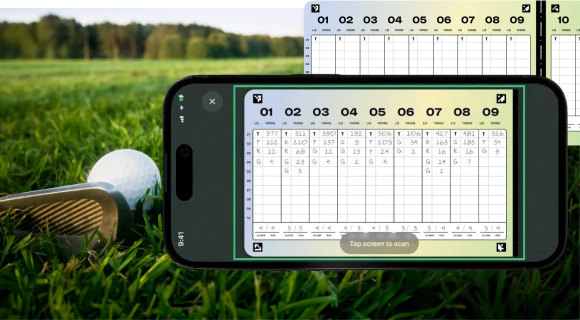
A working demo, as a web tool or a test app, that your pilot users can try.
- 03
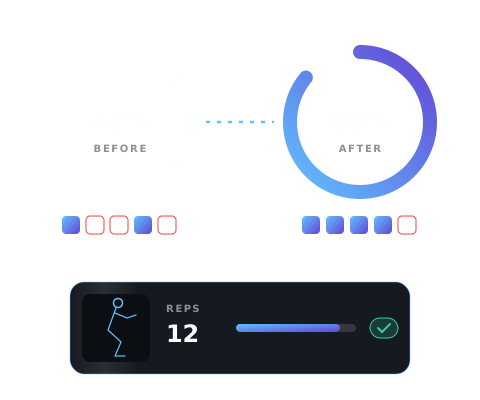
An accuracy report, before and after, on a test set fixed before training started.
- 04
Where the device is the target: the model converted and timed on an average phone.
- 05
Code and trained weights. All IP is yours.
- 06
A one-page technical memo you can put in an investor deck.
- 07
A roadmap and a price estimate for the first product version.
How it works
From first message to done
- 1
Weeks 1 to 2: labelling guidelines, labelling, and a held-out test set that nobody trains on.
- 2
Weeks 3 to 8: training and iteration against the failure catalogue from the research. A demo call every week.
- 3
Final weeks: conversion to the device, the demo build, the report.
The team is a tech lead, one or two engineers and a project manager, all in-house.
A demo your pilots can use and an accuracy report on your test set that shows where the model works and where it does not yet.
Compared with the alternative
An SDK demo shows you the vendor's data. A PoC shows you yours, with a test set you can audit and a number you can quote. If the number is bad, you have learned it for a fixed price, with the failure analysis and the code in hand.
Questions
What teams ask about proof of concept
Some ideas need more than one round. You keep the code, the weights and the failure analysis, and we suggest what would close the gap: more data, a narrower scope or a different approach.
It stays yours and is used only for this project. We delete it on request when the work ends.
It is a demo build. The first product version adds the capture flow, the screens and the backend that users need.
How we work
What you can count on
Who owns the model?
You do. Model, weights and code are yours by default, and the contract says so.
Will it go over budget and timeline?
The scope is fixed and each milestone has a defined deliverable. If something slips, you hear before the deadline.
How do we judge the result without an ML engineer?
The acceptance test is a number on a test set you can audit.
Next step
Send what you have. Verdict in a day.
Start with the free assessment. The research sets the PoC price. If you already have a research report or a working baseline, book a scoping call.
- 1You send a spec and a few recordings
A paragraph on the feature, a link to clips or sensor logs, the platforms. NDA first if you need one.
- 2An engineer reviews it
The CTO or a domain expert goes through the measurement, the conditions and the platforms.
- 3You get the verdict within a day
Whether the feature can be measured, the risks we see, and the recommended next step, in writing.