Pardigm
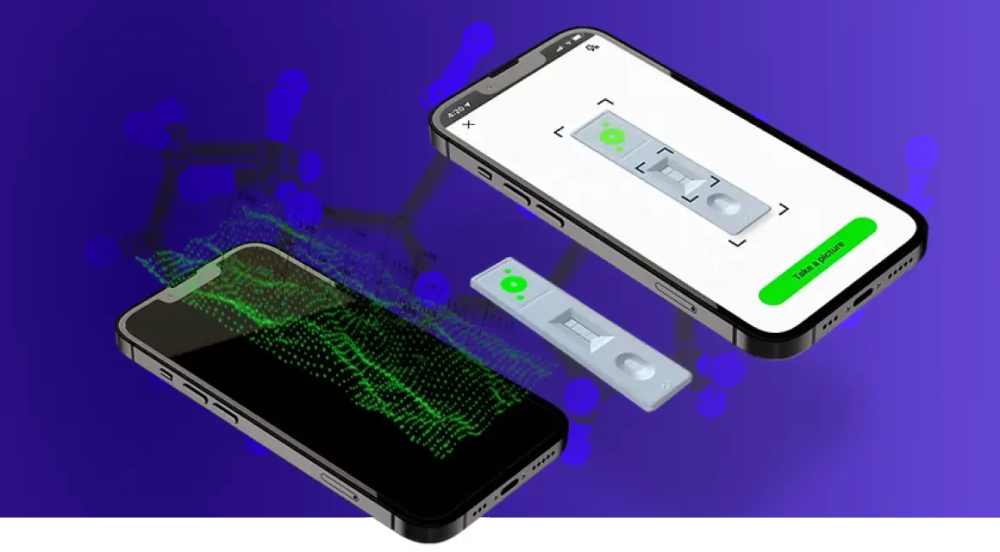
Hormone tracking application powered by Computer Vision with 93%+ accuracy in real-life conditions.

Which chip, which model, how many milliseconds. Answered before you order a thousand boards.
Our edge AI consulting services exist because shrinking a model is the easy part. From a distance, running artificial intelligence on a device looks like compression: take the model that works in the cloud, quantize it, load it onto the board. In practice, the outcome is decided earlier, by the processor you pick, the runtime that compiles the model for it, and how much accuracy your task can spare at reduced precision. We learned this by shipping models to NVIDIA Jetson boards, iPhones, Raspberry Pi, and the browser itself. It-Jim works across that whole stack, starting from your latency, memory, power, and unit cost limits and working backward to the model and hardware that satisfy them. And when the honest verdict is that the cloud serves your case better, you will hear it from us first.
Some clients arrive with a model that has never left the server; others with a device fleet that needs intelligence added. Our consulting team covers both ends of that spectrum.
We map your product goals and business processes against what current edge hardware can actually deliver, and put numbers on the trade-offs. You get a technology roadmap with costs attached, so AI adoption becomes a budget line instead of a bet.
This is the question an edge AI consulting firm should answer before anyone writes production code: can your model, or any model, hit your accuracy and latency targets on the intended device? We test it on your data and the target board. The verdict is honest, even if it's "don't build this."
We design how the system divides work between edge computing and the cloud: what runs on the camera or an industrial IoT gateway to deliver real-time insights, what synchronizes, and what happens when the network disappears. Deployment planning starts on day one, so the result degrades gracefully instead of failing outright.
A model that performs in the data center rarely fits an embedded board as it is. Model optimization here means quantization, pruning, and knowledge distillation, applied until inference fits your memory and latency budget, with the accuracy cost of every step measured on your own validation data.
Edge AI processors range from sub-watt microcontrollers to Jetson-class modules with specialized compute for vision, and the price of a wrong pick is a redesign. We benchmark candidate boards, runtimes, and AI frameworks on your actual workload before you order a single unit.
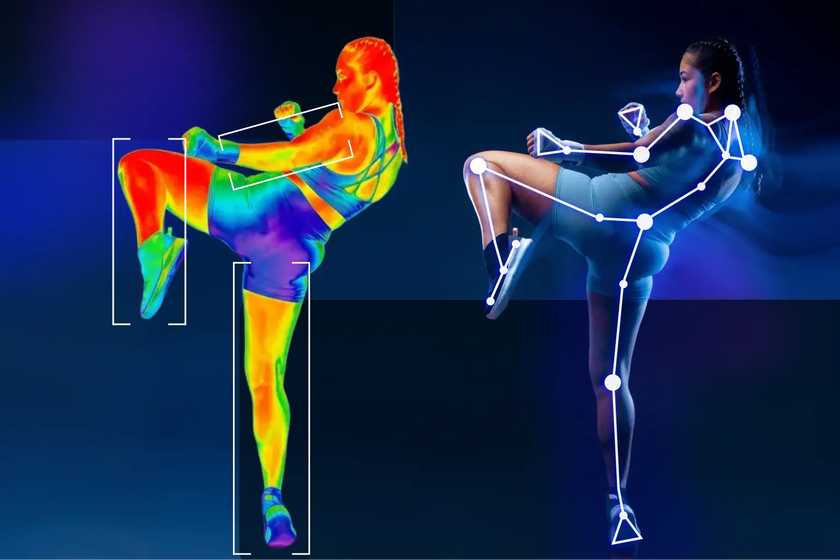
Vision is where edge constraints bite hardest: video is heavy, and frame budgets are unforgiving. We have put object detection models, tracking, and pose estimation on smartphones and single-board computers, including a cortisol test reader that works offline on an ordinary phone camera. Our edge AI consulting company grew out of that kind of delivery work, so the advice comes from shipped systems.
A deployed model is not a finished one. We design the pipeline that runs real-time monitoring of field accuracy, retrains on new data, and rolls model updates and device configuration changes out to the fleet without breaking what already works.
Edge AI projects tend to stall on the same few problems. These are the ones clients bring to us most often:
Modern architectures, generative AI and language models included, assume memory that edge devices do not have. We compress AI models through INT8 and INT4 quantization and distillation into smaller architectures, typically cutting size by a factor of four to ten while tracking accuracy at every step.
When a model misses its latency target, the model itself is rarely the only cause. We profile the whole pipeline, from preprocessing to the operator your runtime quietly pushed back to the CPU, and fix where the milliseconds actually go. Where real-time response shapes the customer experience, every user feels that difference.
Embedded AI lives with the compute that shipped, whether the device is a phone or an industrial controller. You cannot add a GPU to hardware already in the field, so we restructure models and pipelines to fit what exists, which is usually more than a stock model manages to use.
Compression always costs something; the job is deciding where the loss is allowed to land. We use quantization-aware training and model tuning on your own data, and keep sensitive layers at higher precision. Accuracy checks on your validation set are part of all our edge AI consulting services, because a faster model that raises your defect rates is not a saving.
On battery-powered hardware and smart sensors, every inference draws from a fixed energy budget. We reduce consumption through lower precision, gated inference that runs only when a cheap trigger fires, and workloads matched to the efficient cores.
A demo on a workstation proves little about a product in the field. An edge AI consulting company should run proofs of concept on the target hardware from day one, and we do, so the figures you take to investors still hold once implementation starts.
What works on ten devices can break on a thousand. Across an Internet of Things fleet, updates, monitoring, and hardware revisions all compound. We audit the system and redesign the parts that block growth, usually without starting over.
When inference runs in the cloud, every new user adds to the bill, forever. Moving inference onto the device removes that cloud dependency: in one of our sports projects, edge deployment targeted a 90% cut in cloud costs. Cost modeling of that kind is part of our edge AI consulting services from the first call.

Bring in an edge AI consulting partner while the expensive decisions are still open. Hardware ordered for a fleet, a board layout, or a cloud contract each lock in constraints that no amount of later model optimization can undo.
These situations make an early review cheaper than a late fix:
Edge computing is the wrong home for some workloads:
A wrong architecture multiplies its cost with every unit shipped. A processor one size too small forces a model compromise; one size too large adds its price to every device you sell. Get the decision right, and the same choice keeps factory automation and predictive maintenance running through network outages and makes the intelligent edge a competitive advantage for your product.
A typical consultant hands over a report and leaves. Our work starts before the hardware is chosen and, if you want it to, continues through development and past launch.
A decade of machine learning work and 200+ delivered projects, much of it on hardware that fights back. Edge computing projects fail in ways cloud projects don't, and we have already seen most of those ways.
Our team comes from academia, with advanced degrees in AI and physics. When an optimization problem has no textbook answer, that depth is what produces one.
Our edge AI consultancy services end with software running on the actual device, tested under the conditions it will meet in the field.
We design models around the silicon they will run on. That protects you from buying hardware your task doesn't need, and from models your hardware can't run.
Every recommendation comes with its cost and its alternative, whether the goal is operational efficiency on a factory floor or battery life in a consumer product. You decide with the numbers in front of you.
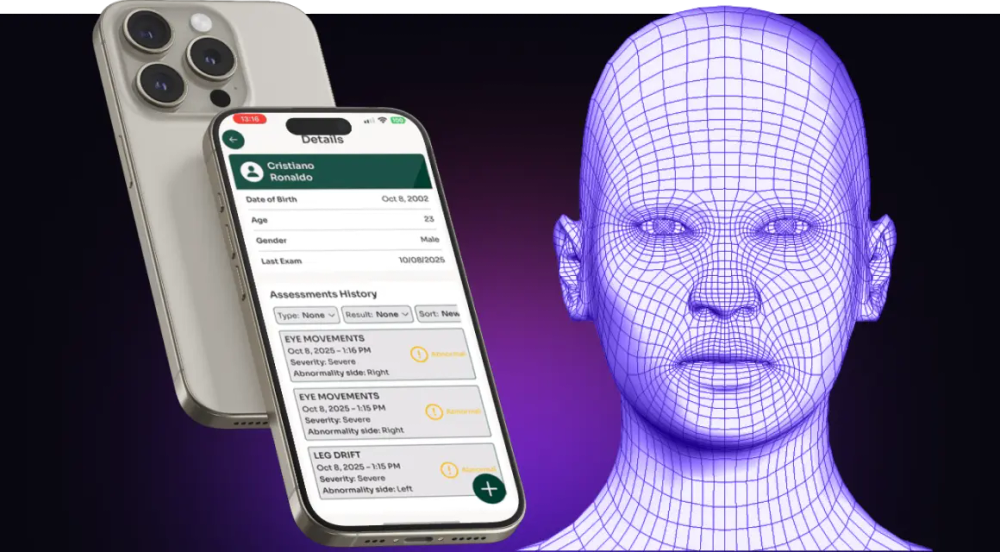
Hormone tracking application powered by Computer Vision with 93%+ accuracy in real-life conditions.
The solution assists medical practitioners with neurological patient diagnostics; it automates, records, and secures neurological test results within an iPhone app
Different industries point cameras at very different problems, and the ones below are where our systems work most often. Find yours to see what visual data can do for it.
Catch defects and process drift before they reach your customers.
Frequently
Asked
Questions
Edge AI consulting is expert guidance on running AI directly on devices such as phones, cameras, and embedded boards instead of in the cloud. A consultant helps you pick the hardware, fit the model to it, and design the architecture around latency, power, and privacy constraints. The goal is a working product on your device, and the engagement is shaped around getting there.
Edge computing wins when latency, privacy, connectivity, or per-user cloud costs are the binding constraint. If your product needs decisions in milliseconds, handles data that cannot leave the device, or runs where networks are unreliable, smarter devices usually beat a server round-trip. When none of those apply, the cloud's flexibility often serves better, and we will tell you so.
Yes. We have shipped systems that run entirely on the device, including a medical test reader and an on-device neurological assessment app for iOS, with no connection required. Vision, audio, and compact language models can all operate this way on current hardware.
Cost depends on scope, which is why It-Jim offers entry points of different sizes. A consultation session costs a fraction of a full build, and a two-week research sprint prices the rest of the project before you commit to it. Contact us with your task, and you'll get a concrete estimate in one day.
A typical edge AI proof of concept takes two to three months, preceded by a two-week research sprint. You will know the timeline and the main risks before development starts.
Yes. Consulting is one entry point; the same team delivers full products, from the optimized model to the application around it. Because we have our own engineering team, the people who ran your feasibility study stay on through development and deployment.
Computer vision (CV) and machine learning (ML) algorithms solve a tremendous amount of problems. However many businesses often do not understand what…

Human pose estimation has emerged as a cornerstone technology in next-gen fitness and video analysis applications. For sports startups and developers…


Segmentation has quietly become one of the most useful tools in modern tech. Whether it's helping doctors analyze medical images , powering AR…

Have a challenge in mind or just exploring? Talk directly with an engineer. No pitch. No fluff.