Audio Processing Solutions Development Services

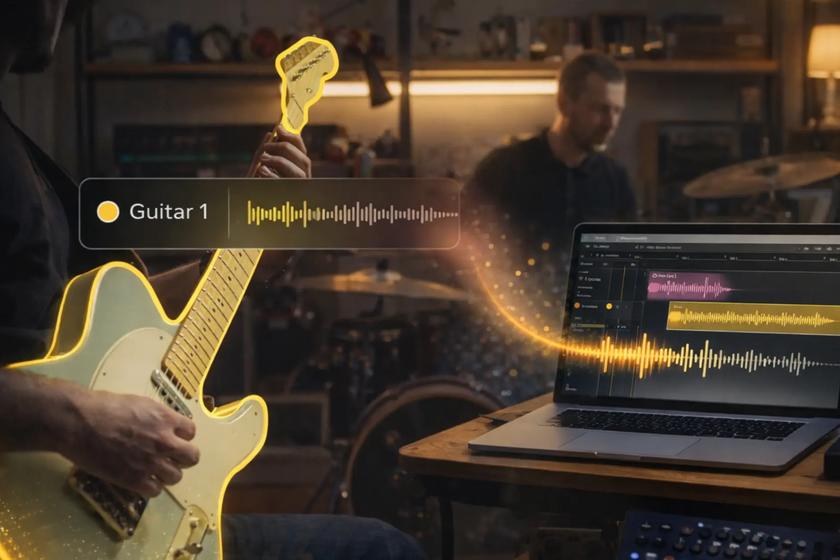
Noise removed, stems split, voices reshaped. Fast enough to run live on stage.

Wireframe horn speaker

Custom Audio Processing Solutions for Complex Signal Processing

From the outside, audio processing solutions development services look like a model-selection problem: pick a strong network, feed it recordings, ship. In practice, the result is decided by the signal chain around the model: the microphone, the room, the sample rate, and the latency budget your product can afford. We learned this building systems that reshape vocals live on stage and mute single words inside finished songs, where a filter tuned on studio tracks fails on a phone recording made next to traffic. Solutions for complex audio signal processing need both halves of the craft. It-Jim covers the whole span, from classical digital signal processing to deep learning models trained on your recordings and deployed on the hardware you ship.

Our Audio Processing Development Services

Some clients arrive with an idea and a folder of test recordings, others with a production pipeline that missed its quality or latency targets. Our engineering services cover both ends.

  1. 01

    Custom Audio Processing Software Development

    Our core: full-cycle development from the first signal chain to a system in production, with support after launch. We combine classical DSP with machine learning and keep whichever holds up on your recordings, so you get audio software built around your constraints, not a wrapper around someone else's API.

  2. 02

    AI Solutions for Audio Processing

    Where explicit filters reach their limit, AI audio processing takes over. We handle model training on your own recordings, augmentation with room impulse responses and noise mixes when data is scarce, and evaluation against the metrics your product depends on: POLQA or DNSMOS for speech quality, SDR for separation. If a pretrained model already solves part of the task, we fine-tune it instead of starting from zero.

  3. 03

    Audio Noise Reduction and Enhancement

    We build AI-powered noise reduction, dereverberation, and echo cancellation for calls, field recordings, and the input to speech recognition, in batch or live. Every pipeline passes a listening test as well as a metric, because a clean score can still sound processed.

  4. 04

    Audio Classification and Sound Recognition

    Classification models label what a microphone hears: a genre, a mood, a spoken command, a motor starting to fail. Many audio processing development services stop at a public tagger with generic classes. We train on the categories your domain needs and tune thresholds for the error you can least afford: a missed event or a false alarm.

  5. 05

    Audio Source Separation

    Separation takes a mix apart: vocals from instruments, dialogue from sound effects, one speaker from another. Remixes and licensing edits in music production start here. For a US music tech company, our stem decomposition pipeline finds and mutes single explicit words inside finished tracks, which made censoring 15x faster than manual editing.

  6. 06

    Speech and Voice Processing

    Listeners notice every artifact in a modified voice. We build voice activity detection for speech-to-text front ends, pitch shifting and correction, voice conversion and cloning, and time stretching that keeps intonation intact, including a browser-based speech acceleration engine that lets learners watch lectures up to 40% faster.

Audio Processing Solutions We Develop

Clients rarely need one technique on its own. These are the audio AI products we build most often, each combining several.

01

Intelligent Audio Analysis Systems

Audio analytics turns a waveform into data a product can act on: tempo, key, structure, mood, instrumentation. Music processing works best when audio features meet text, so we pair them with language models where lyrics carry part of the answer. For a US music promotion company, that pairing forecasts where a release will perform.

Use cases
  • Music catalog tagging and similarity search
  • Release forecasts for promotion planning
  • Lyrics analysis for mood, themes, and explicit content

Ideal forMusic Tech, Streaming, Advertising, Media

02

Audio Monitoring and Detection Solutions

Detection is the most time-critical of the audio signal processing solutions we build: the system runs real-time analysis on a continuous stream and has to react to one specific event. We develop sound event detection that separates that event from the acoustic background it hides in.

Use cases
  • Alarm and glass-break detection in smart home devices
  • Wake word detection for voice interaction on the device
  • Event markers in broadcast and streaming audio

Ideal forSmart Home, Consumer Electronics, Media, Manufacturing

03

Audio Enhancement Solutions

Enhancement rescues recordings that will never be made again: a keynote with a humming projector, an interview taped in a café. Our denoising and loudness pipelines let platforms and content creators process thousands of hours of audio content without manual cleanup.

Use cases
  • Podcast and interview cleanup
  • Noise cancellation for customer calls and conferencing
  • Restoring archival and user-generated recordings

Ideal forMedia, EdTech, Communications, Broadcasting

04

AI-Powered Acoustic Monitoring

Machines announce faults in sound before they show up in output. Acoustic models learn the normal sound of machinery and flag deviations early enough to schedule a repair instead of a shutdown.

Use cases
  • Predictive maintenance from equipment sound
  • Anomaly detection on production lines
  • Environmental noise measurement and reporting

Ideal forManufacturing, Energy, Logistics, Smart Cities

05

Embedded and Edge Audio Processing

A server round-trip costs latency and sends the user's voice off the device. Model compression brings our models to edge devices: phones, the browser through WebAssembly, and embedded boards, with cloud services kept for workloads that need a GPU. In our audio processing software development, edge deployment starts at the first architecture sketch, not as a port at the end.

Use cases
  • On-device voice features that keep audio private
  • In-browser processing with no upload
  • Always-on listening within a battery budget

Ideal forConsumer Electronics, EdTech, Healthcare, Mobile Apps

Can't Find the Right Solution You Need?

Maybe you're validating a first idea on a few test recordings; maybe you're replacing a pipeline that stopped keeping up. Either way, one conversation with our engineers will show you the shortest path to a working audio system.

How Much Do Audio Processing Software Development Services Cost?

The honest answer is a range, and most of its width comes from technical uncertainty, not feature count. Whether a model reaches your quality target at your latency stays unknown until someone measures it.

What Drives the Cost

The factors that set most of the budget:

  • The quality target and how it is measured
  • Real-time or batch processing
  • Target hardware: server GPU, phone, browser, or embedded board
  • Whether the task needs a custom-trained model
  • Volume and condition of your audio files, and any labelling they need
  • Integration with your product and cloud infrastructure

Where to Start

Each entry point matches one stage of certainty:

  • Strategic consultation
  • Research sprint (two weeks)
  • Proof of concept (two to three months)
  • Full product or MVP
  • Post-launch optimization

Why Staged Budgets Protect Your Product

A single quote for an unproven audio pipeline either pads for every unknown or breaks at the first one. We price audio processing solutions development services in stages, with the riskiest question first: does the model reach your quality target, on your recordings, within your latency budget? If it does, the next stage is priced against measured results. If not, you find out for the price of a sprint, not a finished build.

Our Audio Processing Software Development Approach

Typical vendors start once the recordings are ready. We start earlier, at the microphone and the room it sits in, and stay after the model ships.

  1. Stage 1

    Task & Acoustic Environment Analysis

  2. Stage 2

    Signal Chain & Capture Setup

  3. Stage 3

    Data Collection & Preparation

  4. Stage 4

    Model & Algorithm Development

  5. Stage 5

    System Integration & Deployment

  6. Stage 6

    Post-Launch Optimization & MLOps

Audio Processing Technology Stack

Digital Signal Processing (DSP)
Short-Time Fourier Transform & Spectral Analysis
Mel Spectrograms & MFCC
Digital Filtering & Equalization
Noise Suppression & Speech Enhancement
Acoustic Echo Cancellation
Dereverberation (WPE)
Voice Activity Detection
Source Separation & Stem Extraction
Sound Event Detection & Audio Classification
Speaker Diarization
Pitch Detection & Pitch Shifting
Time Stretching & Time-Scale Modification
Voice Conversion
Voice Cloning & Text-to-Speech
Audio Embeddings (CLAP)
Audio Language Models
Generative AI for Audio & Music
Neural Audio Codecs
Room Impulse Response Augmentation
On-Device Inference (ONNX Runtime, Core ML, LiteRT, ExecuTorch, TensorRT)
WebAssembly for In-Browser Audio
GPU Acceleration & Cloud Autoscaling

Why Choose It-Jim as Your Audio Processing Development Company

200+

projects delivered

Our record as an audio processing solutions development company spans music AI, speech, and media, with systems running in production, on stage, and on device.

10+

years of expertise

A decade of machine learning and signal processing work, alongside our computer vision practice, from published research to shipped audio products.

  • Built by engineers, not hype

    Engineers founded this company, and engineers run it today. Every promise we make has passed through someone who will personally build the thing.

  • Problem-Solving Obsession

    The projects other teams turn down are the ones we ask for. Noisy recordings or a latency budget nobody has met before means the problem is finally interesting.

  • PhDs on the Team

    Our team comes from academia, with advanced degrees in physics and signal processing. When an audio system hits a problem without a textbook answer, that deep tech expertise is what produces one.

  • Innovation-Ready Mindset

    We treat every project as applied research, which shows in how fast our prototypes appear. The architecture we propose is often one nobody has tried before, because your problem usually hasn't been solved before.

Case Studies

Audio Processing Development for Different Industries

Different industries point microphones at very different problems, and the ones below are where our systems work most often. Find yours to see what audio data can do for it.

Tools that artists and labels use on real releases, not demos.

  • Live vocal effects at stage latency
  • Stem separation and lyrics cleanup for music production and licensing
  • Generative soundtracks matched to video

Music Technology

FAQs

Audio processing solutions development is the engineering of software that cleans, separates, analyzes, transforms, or generates sound. It spans classical signal processing and trained neural networks, and it covers the cases no off-the-shelf product fits: your acoustics, your latency budget, your hardware.

Digital signal processing applies explicit mathematical rules, which keeps it predictable and cheap to run. Artificial intelligence learns the transformation from data, which handles noise and variability no rule can describe. Strong products combine both, and deciding where that split goes is most of the engineering.

Yes, and some of it has run live on stage. Our vocal performance system for a US music startup reshapes a singer's voice in real time on a consumer GPU and has carried streamed live shows. ITU guidance keeps a comfortable voice call under 150 milliseconds one way; live music needs a small fraction of that, which takes runtime optimization as much as a fast model.

Yes, within limits we measure before promising anything. Deep learning models denoise speech and music buried in background noise that classical filters cannot recover, and we test them on your own recordings. If a recording is beyond rescue, we say so.

Yes. When no pretrained model fits, we design the algorithm itself: custom filters, feature extractors, time-scale methods, or a neural architecture sized to your device. Our physicists work from the acoustics up, which matters most when your sound has no public dataset.

A research sprint takes two weeks, and a proof of concept typically takes two to three months. Full product development varies with scope, but you'll know the timeline before development starts. Contact us with your task, and you'll get a concrete estimate in one day.

Let's Talk About Your Project!

Have a challenge in mind or just exploring? Talk directly with an engineer. No pitch. No fluff.

Tell us about your project
Chat on WhatsApp
File upload (optional, up to 15 MB)

By submitting this form, you agree with our Privacy Policy

What Happens Next?
  1. Your message goes straight to our core team – not a sales department.
  2. You’ll talk directly with our CEO, CTO, or a domain expert for a consultation-style first call.
  3. We’ll ask the right technical questions to understand your challenge and scope.
  4. If we’re a fit, we’ll follow up with a proposed path forward.