Hockey tracking camera
Computer Vision
Sports Tech
Player tracking and a virtual camera that frame a live amateur hockey game with no one filming, on one desktop per rink, within a 30 ms frame budget.

Vastmindz
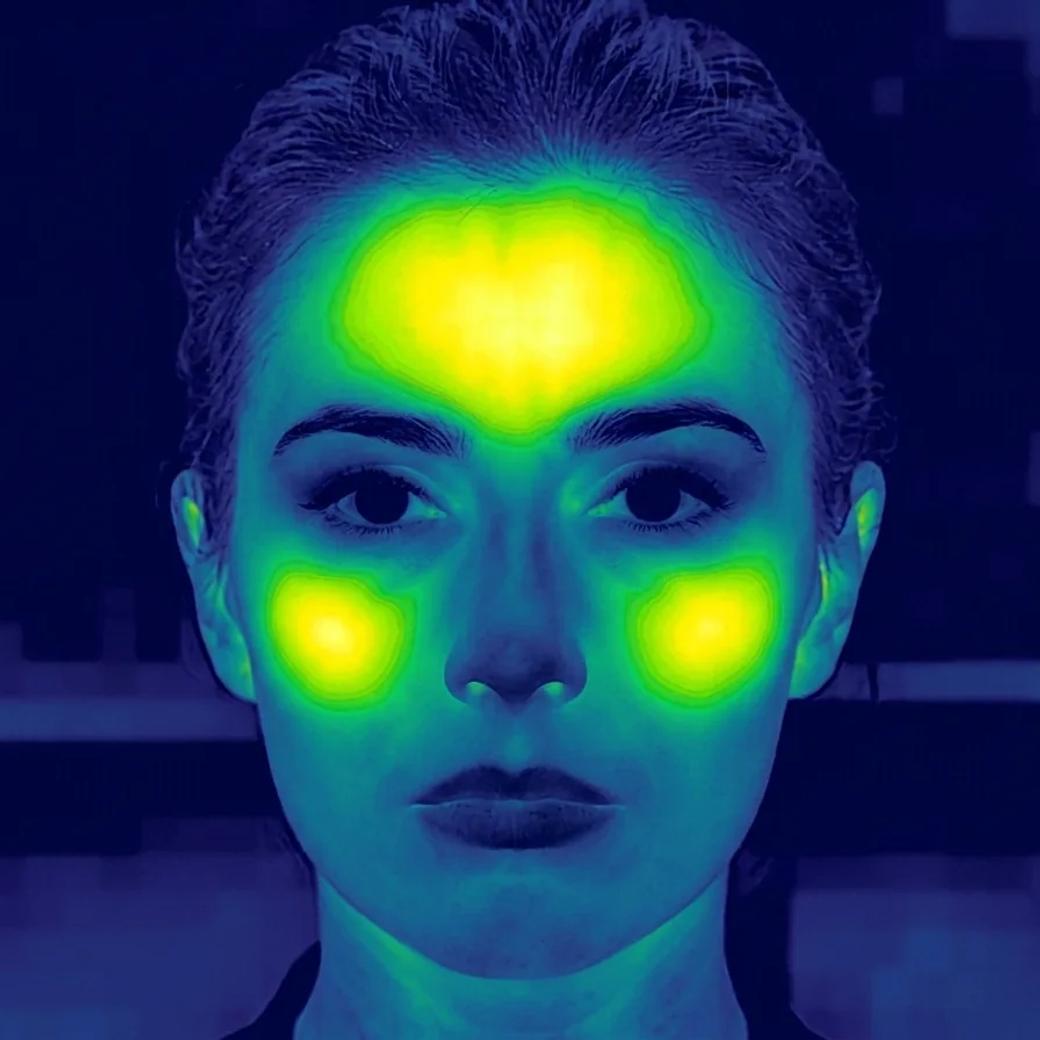
For Vastmindz, a 15-person It-Jim team built rPPG (remote photoplethysmography) technology: it reads the pulse from tiny colour changes in the skin of the face, filmed by the phone's selfie camera. Vastmindz sells it as an SDK that insurers, telemedicine and corporate wellness apps build into their own products.
In short
In 2020, telemedicine needed patients' vitals without shipping a device to every home. Vastmindz, a London health-tech startup, bet on the camera already in their pocket. The hard part: the pulse in a face video is a colour change smaller than the camera's own pixel noise, and every phone, room and lamp makes it worse. Over 31 months, a 15-person It-Jim team turned that signal into rPPG (remote photoplethysmography) technology: one C++ library that reads heart rate, SpO2, respiration, HRV and stress on iOS, Android, server and web.
Remote photoplethysmography (rPPG) measures the pulse with a camera. Each heartbeat changes how much light the skin of the face reflects, and an algorithm reads that rhythm from the colour of the skin in a video. On a phone, it needs no extra hardware: only the front camera and software.
We start with a two-week technical research on your data and tell you whether it will work on your hardware. Shall we look at your case?
About the client
Vastmindz is a London health-tech startup founded in 2019 by Nikhil Sehgal, with a team of fewer than ten people. Its goal is to cut the cost of healthcare and make good diagnostics available to anyone with a consumer device. The product: a vitals check with the phone's camera, with no cuff, finger clip or wearable. Insurers, telemedicine providers and corporate wellness programmes embed it in their own apps. It positions the scan as a wellness tool and does not market it as a medical device.
The company has since raised $2 million, partnered with AirAsia and the reinsurer Gen Re on health assessments, and received a Microsoft for Startups Partner of the Year award in 2022.
Main challenges the customer faced
Vital-sign checks usually need dedicated hardware: a pulse oximeter, a chest strap, a smartwatch. Vastmindz wanted a check that needs nothing beyond the phone a person already has.
The timing was set by 2020. COVID-19 moved consultations online, and telemedicine providers needed a way to check a patient's vitals without anyone in the room. Vastmindz was also researching how to spot COVID-19 noninvasively with a smartphone. It needed the technology itself, good enough for partners to put their name next to it.
rPPG reads the pulse from tiny colour changes in facial skin as blood volume shifts with each heartbeat. That signal is far weaker than pixel noise. The public datasets the team started from used lab cameras and seated subjects, but Vastmindz needed the same accuracy on consumer phones in ordinary rooms, where a weak signal gets weaker:
The library also had to tell a live face from a photo held up to the camera.
Vastmindz needed a working product for partners and investors while the method behind each vital was still a research question. SpO2 had to be ready for an investor demo in month 9. Each number in the demo had to match a contact sensor recorded at the same moment as the video.
What we did
Vastmindz came to It-Jim for computer vision and signal processing at research level, combined with the ability to ship code that runs on a phone. The founder worked directly with our CEO, Ievgen Gorovyi, who holds a PhD and leads an R&D team that works from published research to production code.
The project started with a technical baseline. Within a month the team had tested several face detectors, tracking approaches and channel-mixing methods against a public benchmark with contact-sensor ground truth. The work then ran in sprints, with a written report for every research step: over 200 pages by month 7.
Solution
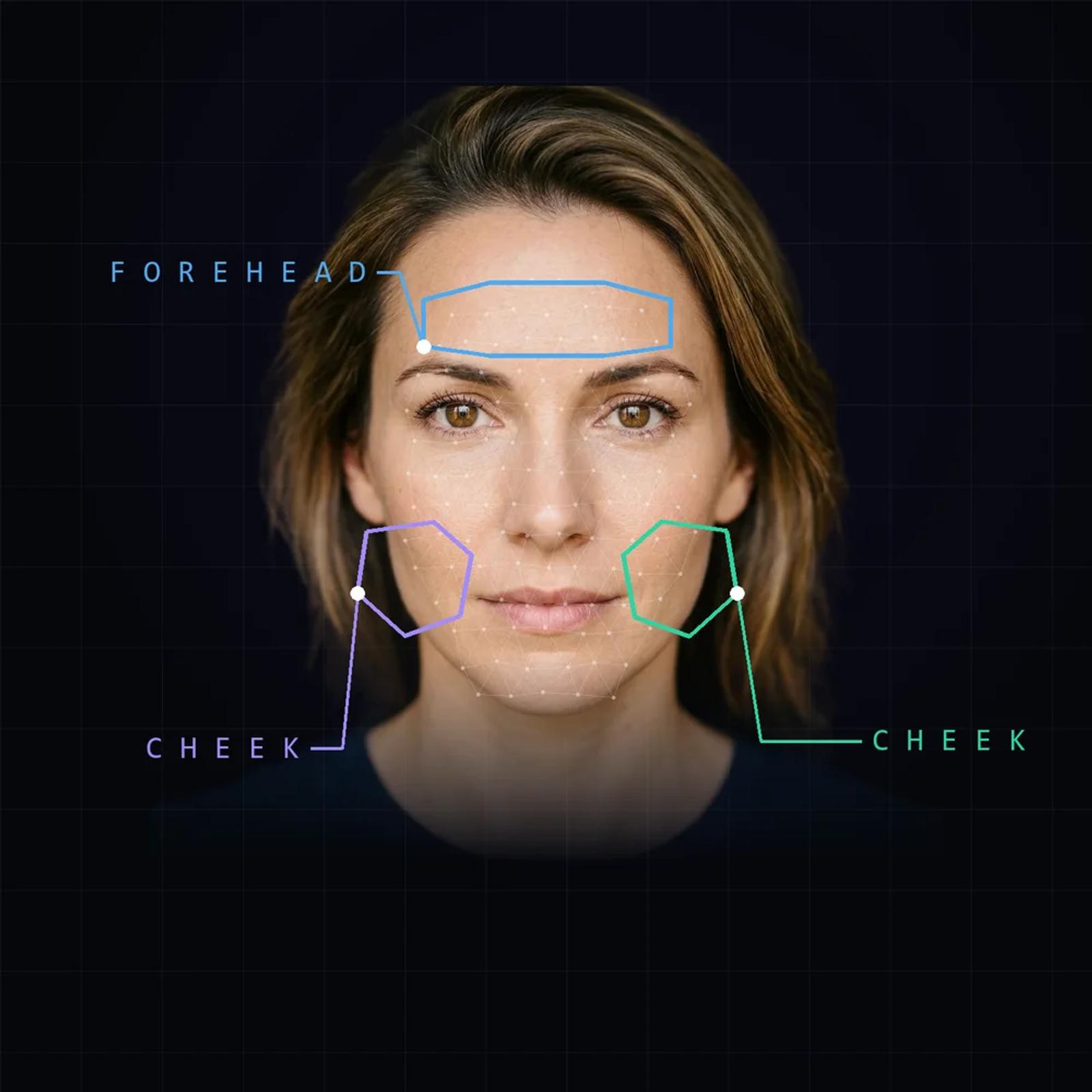
With each heartbeat, blood volume in facial tissue changes, and so does the light the skin reflects. We built the pipeline in four steps and compared competing approaches at each one.
Solution
We sorted every failed scan in client iPhone 11 recordings by cause: bright light in front, backlight, artificial light. Those causes became quality metrics. The library measures illumination, sharpness, face size and orientation, and the signal-to-noise ratio of the pulse itself. When the instant SNR drops below about 5 dB, that stretch of the reading is marked unreliable and left out of the result.
Phones deliver frames at uneven intervals, so the library stopped assuming a fixed frame rate. It reads the real timestamp of every frame and computes the vitals from the actual timing.
In side-by-side testing, both Vastmindz and the market-leading rPPG app returned a heart rate for a photo held in front of the camera. We added liveness detection based on eyelid motion: the library detects blinks from the speed of eye-landmark changes and rejects a static photo.
Each real-world problem and its fix:
Solution
The measurement runs on the phone's front camera, and partners can embed it in their own products. The first production pipeline processed video on the server: a Java service with our C++ library inside Docker, on Kubernetes in AWS, with monitoring and load tests.
Later we split the library in two. On the phone, it tracks the face and extracts the colour signal; Android used Google ML Kit landmarks. Only that compact signal goes to the server, which computes the vitals, so the video never leaves the device and the server load stays small as users grow. In the final year, the same C++ library was compiled for the browser as a web SDK.
Front camera, face tracking, colour signal from forehead and cheeks. Swift on iOS; Java with JNI and ML Kit landmarks on Android.
Java service with the C++ library inside Docker, on Kubernetes, with monitoring and load tests.
Solution
The team collected its own data where public datasets fell short: recordings with a DSLR and an iPhone filmed in parallel, with a finger oximeter and a blood pressure cuff as reference; a controlled desaturation test for SpO2; recordings at rest, after exercise and in different poses.
Before the investor demo in month 9, a 10-day SpO2 sprint ran experiments daily on two datasets: one recorded in near-ideal conditions to validate ideas, one from real users to show results.
Key results
We checked the camera against the devices doctors and athletes already trust: a finger pulse oximeter, medical monitors in hospitals, smartwatches and the market-leading camera app. Each test was harder than the one before. The camera kept up.
In the lab, the camera read the pulse almost exactly like a sensor attached to the skin: less than one beat per minute apart. Its blood-oxygen reading followed a finger oximeter closely too.
We ran 24 face scans on an iPhone 11 with a finger pulse oximeter on at the same time. Three of them side by side:
Green band: the error a medical heart-rate monitor is allowed under the ANSI/AAMI EC13 standard (±5 BPM at these rates). 22 of 24 scans landed inside it.
Both apps measured at the same time as a finger oximeter. At rest, 18 of 20 readings from each app matched the oximeter. In a dim room, Vastmindz failed 1 scan in 6, the leader failed 3 in 6. The leader coped better when people moved, which set our next round of work.
In a peer-reviewed clinical study, patients aged 18 to 83 in hospitals in India and at Leeds Teaching Hospitals in the UK took a 60-second scan next to standard medical monitors. The readings stayed within about 3 beats per minute and 1 point of oxygen of the hospital monitors, on iPhone, Android, iPad and a laptop webcam.
Business results
Vastmindz does not sell to patients directly. It licenses the vitals scan as an SDK: insurers, telemedicine providers and corporate wellness programmes build it into their own apps, so their customers and employees can check their vitals with the phone they already have.
In its Clutch review, Vastmindz says the work let it accelerate and scale: the platform can now handle millions of users, and the company consistently sees accuracy rates of 98% or above on its own metrics.
The technology also moved into clinical and enterprise use. The Canadian public company Ehave licensed it for G20 countries. Leeds Teaching Hospitals NHS Trust began a study of the Vastmindz app on adult and child in-patients, and Vastmindz launched Visix inside Microsoft Teams, where employees check their vitals with the laptop camera in under a minute.
Features delivered
The technology we used

No vague promises. No pressure. Just a real conversation with our technical leadership to understand your needs and explore the best next steps.
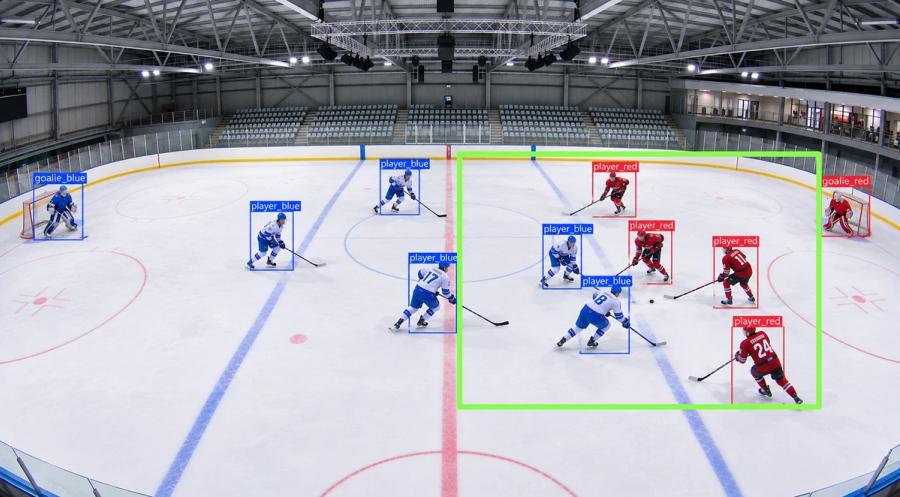
Player tracking and a virtual camera that frame a live amateur hockey game with no one filming, on one desktop per rink, within a 30 ms frame budget.

A C++ stitcher that joins two sideline cameras into one full-pitch 4K panorama at 30 FPS on a CPU, after a consultation that made Fanaty’s processing eight times faster.
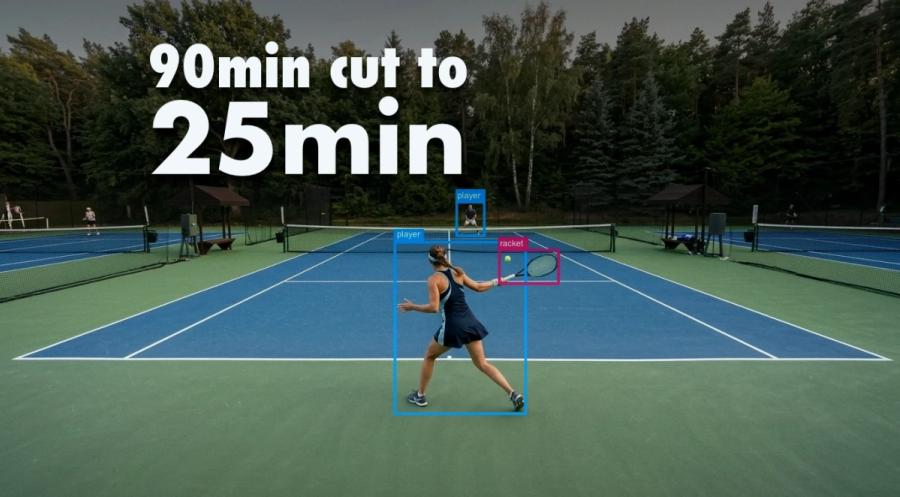
Computer vision that finds the rallies in amateur tennis matches and cuts the video by about 70%, on a cloud server with no GPU.
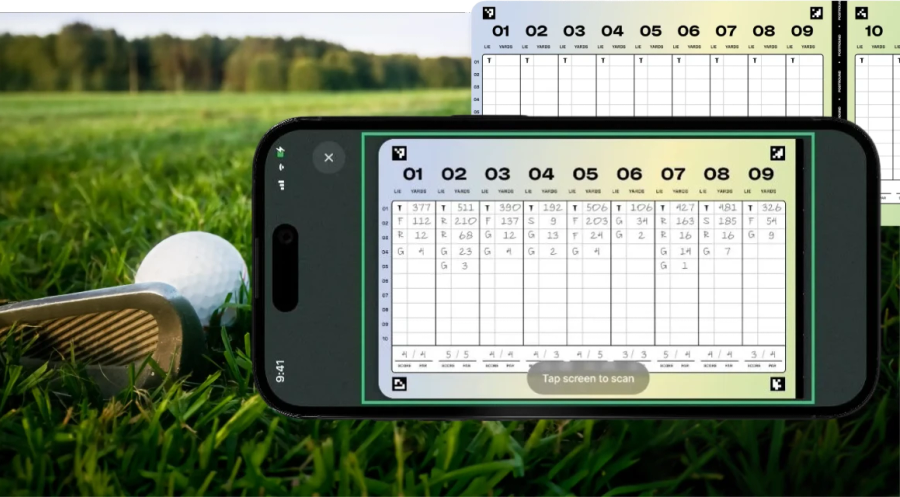
It-Jim built a cross-platform mobile app for Postround that detects and reads golf scorecards to keep player statistics
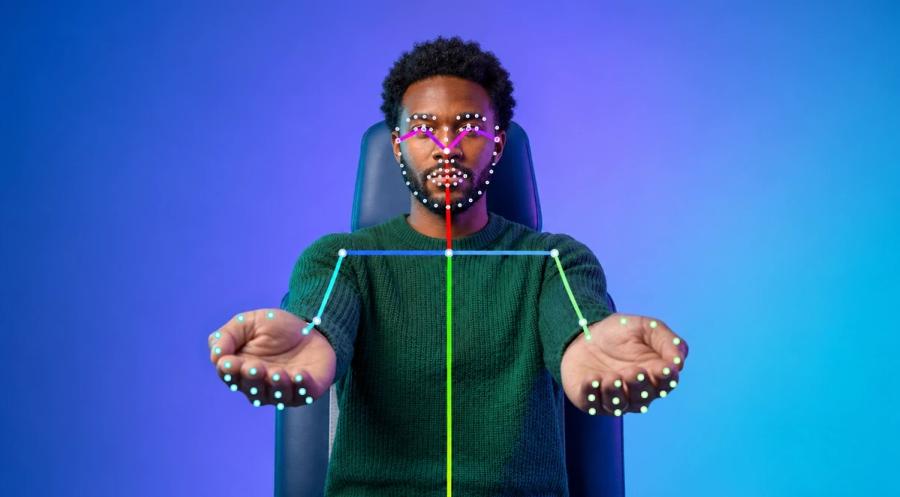
The solution assists medical practitioners with neurological patient diagnostics; it automates, records, and secures neurological test results within an iPhone app

A custom speech recognition system for children’s therapy, built with phoneme-level modeling, fine-tuned datasets, and production-ready deployment.