

Computer Vision Technology Costs: Key Factors & Use Cases

Computer Vision Cost: Understand Your Budget to Build Powerful Vision AI Solutions
How much does computer vision technology cost?
To make a long story short, the rough cost of the basic AI vision software or pilot project starts at $30,000. The more advanced computer vision solution costs around $100,000 or higher.
The overall cost of the computer vision project depends on its complexity, data acquisition processes, integration requirements, compliance and security matters, as well as specifications of hardware and software components. Additionally, consider price variations concerning industry-specific use cases, annual maintenance costs, and the selected team of CV experts working on the project. For accurate budgeting, it is essential to evaluate all these factors.
Thus, many unknown aspects make it challenging to calculate the precise development costs of R&D projects. This aspect leads to unpredictability and imprecision in estimates, particularly in the early stages.
In this comprehensive guide, our team will examine the cost of computer vision software and help you plan your investment accordingly. You’ll discover:
- Key factors influencing the final cost of a computer vision project.
- Understand if computer vision is indeed expensive.
- Specifics of software and hardware costs involved.
- AI vision pricing options on the selected infrastructure setup.
- Computer vision development cost breakdown for each project phase.
- Use cases and cost of computer vision across industries.
- Strategies to optimize your computer vision model costs.
Let’s start by exploring the specifics of computer vision technology.
Is Computer Vision Expensive to Implement?
The global AI vision market is estimated to be worth $15.85 billion and projected to reach $108.99 billion by 2033, representing a 24.1% annual growth rate.
Such an incredible demand for innovations is also supported by government initiatives that promote digital transformation and sustainability. As a result, entrepreneurs in various fields utilize modern technologies, including deep learning models and computer vision, to enhance their operations.

The primary goal of the technology is efficiency, as it converts raw footage into informed business decisions. At the same time, economic feasibility plays a critical role; if the implementation costs of computer vision are too high, the business case falls apart.
“CV is expensive. – Yes, if you’re solving the wrong problem or building the wrong solution. But when designed right, it replaces hours of manual work, reduces human error, and delivers long-term savings”.
Ievgen Gorovyi, PhD in Computer Vision & Founder at It-Jim
Thus, the investment in AI vision projects can be substantial, but it offers significant benefits. Emerging AI technology and computer vision aid in process automation, accuracy improvement, cost optimization, and enhanced efficiency.
Computer vision is a relatively new AI technology that needs a skilled pool of talent. It may be challenging to find genuine professionals with relevant expertise. Top-notch technicians, AI consultants, and solution architects are in high demand, and even a small team can be costly, becoming the project’s most significant expense.
Other challenges may lie in lighting, motion, hardware limitations, deployment environments, computational burden, and, most importantly, user experience and business optimization. If one piece is missed, the business ROI crumbles. As a result, even a highly experienced team needs to invest significant effort and time to turn a computer vision software idea into reality.
To conclude, computer vision algorithms are costly and require a significant amount of technical expertise to implement effectively. On the other hand, it doesn’t mean that computer vision implementation is out of reach for smaller businesses; it simply means that companies must be cautious when deciding how to deploy computer vision technology.
“Here’s my take: the biggest cost in computer vision isn’t the tech. It’s the gap between assumptions and reality.”
Ievgen Gorovyi, PhD in Computer Vision & Founder at It-Jim
Save time and connect with our experts by sharing your computer vision software idea.
Factors Influencing Computer Vision Costs
When estimating the cost of a computer vision project, you must consider several key aspects. Let’s outline each of them one by one.
1. Project Scope & Complexity
The scope of the AI vision project directly influences cost. The solution may include advanced functionalities such as real-time processing, image recognition, object detection, multi-camera support, 3D modeling, and similar capabilities.
These computer vision tasks require a higher number of necessary resources (hardware and technical expertise) compared to simpler functions. As a result, this aspect drives the need to incorporate machine learning models and establish a high-performance computing infrastructure.
Additionally, software complexity isn’t just about algorithms. It encompasses the overall scale, interdependencies, and advanced technologies required to develop practical computer vision applications.
For example, basic object detection projects can range from $10,000 to $30,000, while custom model development can start at $50,000 and increase in cost depending on complexity.
Real-time video analysis projects typically cost between $40,000 and $100,000, while advanced 3D computer vision solutions can exceed $100,000. These figures clearly indicate that the price of computer vision projects varies significantly.
2. Data Amount & Quality
Gathering the necessary data helps train AI vision software to complete tasks with higher accuracy. The proper amount and quality of data are critical factors influencing the success of machine and deep learning models.
Obtaining high-quality, annotated data from a large dataset requires time and resources. You can either use applicable data from in-house sources (e.g., video footage, images) or public databases, or purchase it from a third-party provider.
The price of computer vision can vary depending on the chosen data acquisition method and the required quality. High-quality data annotation costs more, but it leads to better model accuracy and performance. Achieving higher accuracy often requires more complex algorithms and increased development costs and time.
3. Hardware Investments
The price of hardware components can also become a significant factor in the overall project cost, particularly for those with an edge-based approach.
It is necessary to invest a substantial amount of money in high-quality cameras, processing capacities, and other equipment that support the project objectives to capture and process visuals.
Some typical hardware components of vision AI systems include:
- Industrial cameras or other types of sensors.
- Graphics Processing Units (GPUs) for parallel image processing and network training. Access to sufficient GPU resources is essential for running deep learning models efficiently, especially when processing images or video frames on remote data center servers.
- Edge devices for real-time processing, such as mobile devices, cameras, robots, or embedded IoT systems.
- High-performance CPUs and RAM for complex tasks of image preprocessing and data augmentation. Powerful processors are essential for handling resource-intensive image processing tasks, directly impacting the efficiency and cost-effectiveness of computer vision.
It is crucial to capture and handle data accurately, with high security in mind. This element is essential, for instance, in healthcare projects, where privacy and data concerns are vital.
Additionally, factors such as environmental conditions and camera placement may impact the total investment in hardware. Sufficient physical space is necessary to accommodate hardware and ensure proper integration, especially in cluttered environments.
Regarding investment in camera equipment for computer vision projects, the price ranges from just $30 to $3,500 per unit. The cost varies depending on resolution, transfer speed capabilities, and other features.
| Camera type | Price range | Features |
| Basic | $30 – $200 | Standard resolution, basic transfer speeds |
| Professional | $200 – $1,500 | High-resolution, advanced features |
| Enterprise | $1,500 – $3,500 | Premium specs, industrial grade |
4. Software Frameworks & Tools
Software costs in computer vision projects can differ substantially, especially when comparing proprietary and open-source options. The general advice is to look beyond the initial subscription or licensing fees. Take into consideration ongoing costs associated with hosting, software updates, and any necessary customization or integration.
Open-source tools such as TensorFlow, PyTorch, and OpenCV provide a robust and adaptable foundation for developing custom computer vision software. Integrating various machine learning platforms within a project can significantly impact system complexity, maintenance, and overall implementation costs.
These tools give access to source code and community resources, which are ideal for teams that need customization and budget management. However, developing and maintaining custom computer vision software can be resource-intensive, requiring significant processing power and specialized expertise.
In comparison, off-the-shelf AI vision solutions, such as MATLAB, offer better support and easy-to-use interfaces. Yet, these services come together with substantial licensing fees, extra costs for support, and unsuitable functionality.
Thus, many companies opt to develop custom AI vision solutions, as they offer improved accuracy and performance.
“Off-the-shelf models might get your 60-70% accuracy. Sounds fine until you realize that in production, 70% of the time, it fails. When a business problem is specific, your solution has to be too”.
Ievgen Gorovyi, PhD in Computer Vision & Founder at It-Jim
5. Integrations with Internal Systems
Integrating with existing systems or databases increases the total cost of building computer vision solutions. For seamless communication, we need custom API development, data mapping, and thorough testing to ensure that the AI vision service functions correctly.
In addition, architectural design choices and infrastructure setups have a significant impact on integration and costs. Complex architecture can raise costs. This is particularly true when adding advanced features or ensuring the system integrates smoothly with existing workflows. We will elaborate on the specifics of infrastructure costs further in detail.
Using standard interfaces and protocols can facilitate seamless integration. Organizations should be cautious of technology lock-ins when utilizing computer vision systems. Relying on off-the-shelf solutions can limit flexibility and make future upgrades more challenging.
6. Personnel Expertise & Team Location
Top computer vision engineers earn high salaries since they offer a top level of expertise and knowledge. This adds to the costs of computer vision projects, especially for advanced solutions.
Additionally, the costs of implementing computer vision vary depending on the selected development model. Companies can choose from an in-house model, hiring an individual AI consultant, or working with a remote team (IT outsourcing).
In-house development often requires additional equipment and increases staffing costs. Additionally, the location of an AI and CV software development company influences project pricing, as labor salaries can vary significantly across different regions. Hourly rates of CV professionals on the local market can be 30-50% higher than addressing a team of CV specialists from Eastern Europe, for example.
Therefore, delegating computer vision software development to a remote team of professionals, such as It-Jim, is a wise decision. This way, you save on your budget and receive top-quality expertise.
Our team has developed various business solutions that utilize computer vision technology for object detection, productivity monitoring, visual search recommendations, and more.
Our team has developed various business solutions utilizing computer vision technology for object detection, productivity monitoring, visual search recommendation, and more.
Reach out to our CV experts and discuss the project from both technical and business perspectives to ensure a high ROI in your business case.
Infrastructure Computer Vision Costs: Cloud vs. Edge Computing
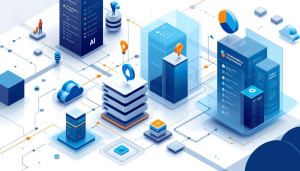
Infrastructure choices, including the need for cloud storage and processing resources, primarily drive software development costs. Choosing between cloud-based and edge computing has implications for project cost, efficiency, and latency.
Many overlook the architectural design when estimating the costs of computer vision.
Computer Vision Cost: Cloud-Based Solutions
Cloud-based solutions utilize popular systems such as AWS Rekognition, Azure Cognitive Services, or Google Cloud AI Vision. These services connect via APIs that send every image or camera frame (data) to a cloud server for processing. The API response usually includes detected classes or OCR data. These details are key for grasping API performance and cost.
These cloud services have flexible pricing. They charge based on units, detection, labels, or frames per second (FPS). For most CV projects, you need a mix of these services to cover all AI vision tasks and boost output accuracy. A plate recognition system needs three services: car detection, plate number identification, and plate reading. Thus, estimating the cost of cloud-based computer vision with precision may be challenging.
As a result, a cloud-based method offers flexibility and a lower initial investment. These solutions offer free trials for small PoC projects with low-volume testing. However, the price can rise significantly due to latency issues, higher processing volumes, or scalability needs. There is also a risk of bottlenecks. These can raise costs since the system requires a constant internet connection to work well.
Computer Vision Price: Edge Solutions
Edge computing enables rapid data processing, removing the need for data transmission to a central server. The system operates on physical computers and servers with direct network connections. This decentralized method is very scalable. You can add or remove edge endpoints without affecting the others. Edge AI is crucial for real-time processing and privacy protection, and it works well in settings such as smart factories.
This method requires a larger upfront investment in hardware, such as local processors or AI accelerators. Despite high investment, edge computing can cut costs over time and improve efficiency. It processes data locally, which is especially helpful for large projects.
Here’s a comparison table showing the main differences between cloud-based and edge-based AI:
| Factor | Cloud-Based AI Vision | Edge-Based AI Vision |
| Latency | Higher latency due to network transmission | Low latency with real-time processing on-device |
| Connectivity | Requires a stable internet connection | Works offline or with intermittent connectivity |
| Processing Location | Data is sent to the cloud for processing | Processing occurs locally on the edge device |
| Bandwidth Usage | High, as raw or semi-processed data is transmitted | Low, since data is processed and filtered locally |
| Hardware Requirements | Lightweight devices: heavy lifting is done in the cloud | Requires powerful edge devices (e.g., GPUs, TPUs) |
| Scalability | Easily scalable; resources can be added in the cloud | Scaling may require deploying and managing more edge devices |
| Security & Privacy | More risk; data is transmitted and stored remotely | Improved privacy; data remains local |
| Maintenance & Updates | Easier to update centrally | More effort is needed to update distributed edge devices |
| Cost Model | Ongoing costs for cloud services and data transfer | Higher upfront hardware cost but lower long-term cloud fees |
| Use Cases | Ideal for batch processing, analytics, or centralized monitoring | Best for time-sensitive tasks like real-time detection, control |
In conclusion, a good infrastructure choice lies somewhere in between, and many adopt a hybrid approach that balances cost efficiency and system performance. The optimal option depends on project size, performance requirements, and long-term scalability needs.
Computer Vision Cost Breakdown per Project Phase
Dividing software development into phases helps manage the project budget efficiently. You can break down the cost of a computer vision project into the following stages:
- Planning the project.
- Preparing the data.
- Developing the computer vision model.
- Implementing and deploying the system.
- Testing and quality assurance.
- Maintaining and updating the solution.
In this part, we will elaborate on these steps of developing an AI vision solution in greater detail.
1. Project Planning and Scope Definition
Clear goals and careful planning help companies establish a strong foundation for their software development projects. This stage typically accounts for approximately 10% to 15% of the total cost of the computer vision project. It may produce the following deliverables:
- Defined project goals and success metrics.
- Defined project functionality and scope.
- Established agreements among stakeholders.
- Allocated budget and personnel.
- Estimated a rough project cost and timeline.
- Set realistic milestones and deadlines.
- Ensured adequate data availability for the CV model.
Early project discussions with clients are crucial for gathering information and requirements, establishing a clear roadmap, and preventing scope changes. With clear objectives, you can boost project success and get the expected results. The approach helps manage the development costs of a computer vision solution and optimizes the budget.
Ironically, skipping early scoping is what usually delays the project later. We’ve learned that the best way to speed things up is to slow down just enough at the start.
Ievgen Gorovyi, PhD in Computer Vision & Founder at It-Jim
2. Data Preparation & Model Creation
For the project to succeed, it is necessary to have sufficient, high-quality data (e.g., relevant images, video materials) for the system to analyze and learn from. Depending on the problem you want to solve, you can utilize public datasets, synthetic data, or custom image capturing.
Once there is enough data pool, the next step is to label it correctly (e.g., segmentation masks, classification tags, or bounding boxes). Proper labeling ensures that the computer vision model knows what to search and what results to provide, thus directly influencing the system’s accuracy and performance. The choice of AI model architecture also plays a crucial role, as it can significantly affect both the accuracy and cost of the computer vision system.
Thus, data acquisition, annotation, and computational resources for model training can vary widely depending on the specific use case, ranging from 20% to 50% of the budget.
3. Project Implementation & Deployment
The development phase typically incurs the highest costs of a computer vision project, accounting for more than 50% of the total budget. This step corresponds to the need for engineering expertise, system integrations, and security matters.
Agile development approaches (e.g., Scrum and Kanban) help minimize costs by aligning implementation with project needs. Focusing on critical functionality can streamline timelines and prevent budget overruns.
Architectural design choices and infrastructure setups have a significant impact on the integration process and associated costs for computer vision. It is vital to deliver system compatibility with the existing workflow and ensure seamless integration of CV models into production. At this stage, MLOps becomes crucial. It aids in version control, CI/CD, performance monitoring, and scaling computer vision models for deployment in real-world settings.
Also, security is vital for protecting sensitive image data and intellectual property. If you need this functionality, be aware that it can be costly and requires investment in infrastructure hardening, data encryption, and continuous monitoring.
“Accurate cost estimation starts with understanding the unique data and infrastructure challenges of each business. Missing these details can lead to underestimations of 70%.”
Ievgen Gorovyi, PhD in Computer Vision & Founder at It-Jim
4. Testing & Quality Assurance
The testing and QA stage is crucial to ensuring the reliability and accuracy of AI vision systems. Rigorous testing methodologies and tools are used to identify issues early and provide scope for improvement.
Computer vision costs can increase due to custom API developments, data mapping, and extensive testing when integrating with existing systems. It is a wise strategy to initiate QA in the early development stages, as it enables refinements based on user feedback, ensuring a high level of accuracy and performance.
5. Ongoing Support & Maintenance
Maintaining the latest functionality and high security level of computer vision solutions can be achieved through regular updates and improvements. These updates typically incur an annual cost of approximately 20% of the original computer vision project cost.
Ongoing monitoring and technical support guarantee optimal system performance. Technical support helps resolve issues quickly, ensuring the system operates smoothly and efficiently. Monitoring helps identify problems early and prevent significant downtime, ensuring steady performance.
The table below provides a rough cost allocation for each project phase.
| Project Stage | Typical Cost Share (in %) | Key Considerations |
| Project Planning | 10% – 15% | Define project scope, functionality, integrations, and infrastructure setup |
| Data Preparation & Model Creation | 20% – 50% | Data collection, cleaning, and annotation.
Algorithm selection, training, and validation. |
| Implementation & Deployment | 40% – 60% | System integration and deployment. |
| QA & Testing | 15% – 20% | System testing, scope for improvements, and quality assurance |
| Ongoing Support & Maintenance (annually) | 10% – 20% | Ongoing support, updates, and scalability enhancements. |
Estimated Timeline & Cost of a Computer Vision Project
As mentioned, the key drivers of computer vision cost include software complexity, industry requirements, integrations, data testing and annotation processes, deployment method, and the selected team of AI developers.
Taking all these cost factors into account, the total budget for developing a solid computer vision solution is within the $100,000 to $350,000. But if you want to test the technology or implement a system with prioritized functionality, the cost starts at $60,000 for an MVP project.
The table below provides rough estimates based on the type of computer vision project.
| Project Complexity | Development Cost | Development Timeline | Specifications |
| Pilot, Simple Project | $10,000+ | 1-2+ months | PoC project to test the hypothesis |
| Basic AI Vision Software | $30,000+ | 2-3+ months | MVP project with basic features (e.g., OCR, simple classification) |
| Moderate CV-based Project | $60,000+ | 3-5+ months | mid-level complexity
1-2 complex features (e.g., object detection) |
| Complex Visio AI
Software |
$100,000+ | 6-12+ months | advanced functionality (e.g., custom ML models, real-time tracking), enterprise-level |
The basic computer vision solutions cost around $30,000 and last 2-3 months. Designing and building solutions of medium complexity typically begins at $60,000, with a 3-to 5-month timeline. The pricing for advanced systems with increased precision can exceed $100,000 and last for more than 6 months. Logically, the more complex the system is, the longer it takes to implement.
Important Note on Proof of Concept
Proof of concept (PoC) is a strategic step and one of the best ways to start with vision AI projects. Since there is a significant number of unknown elements, through pilot testing, it is possible to elaborate on the project’s feasibility and refine the solution using real-world feedback.
A PoC project typically takes 1 to 3 months and costs only 10-20% of the computer vision budget. Here are the benefits you can expect:
- Identify potential challenges before the project launches.
- Understand methods to overcome burdens or limitations encountered.
- Update the project scope based on feedback from real-world settings.
- Validate performance standards and system metrics.
- Reduce risks associated with full-scale vision AI implementation.
Want to estimate the cost of implementing your custom vision AI idea?
Contact our experts, and they can help analyze your project requirements and outline an initial budget.
Computer Vision Price Across Industries
According to the recent McKinsey report, organizations are increasingly utilizing AI and computer vision technology across multiple business functions, including product and service development, service operations, and software engineering.
Computer vision enables organizations to automate tasks, reduce costs, enhance accuracy, and increase productivity. For instance, artificial intelligence and computer vision in healthcare are utilized to enhance diagnosis and reduce operational expenses.
New capabilities enabled by computer vision technology allow organizations to develop innovative solutions for operational challenges. The ROI of computer vision can differ by industry, use case, and implementation.
Many are already seeing impressive results with the following functions:
- Manufacturing & Industrials: visual inspection, predictive maintenance, defect detection, quality control, safety, and workforce monitoring.
- Logistics & Warehousing: package tracking, inventory detection, storage optimization, goods counting, object detection, automation.
- Healthcare: medical imaging, segmentation, diagnostics support, patient monitoring.
- Sports & Fitness: pose estimation, real-time movement tracking, athlete analysis.
- Retail & E-commerce: shelf monitoring, customer behavior analysis, product recognition, visual search, optical character recognition (OCR), inventory management.
- Real Estate & Construction: 2D and 3D modeling, layout recognition, property measurements, virtual tours.
Computer vision costs vary across industries due to differences in data complexity, infrastructure requirements, system integration challenges, and regulatory demands.
Key cost drivers include the need for high-precision models, real-time processing, specialized hardware, and compliance with sector-specific standards such as HIPAA in healthcare or GDPR in retail. The scale of deployment and the solution’s integration with current systems also greatly affect the total investment.
At It-Jim, we don’t just build things that operate; instead, we create things that continue to work even when reality gets messy.
We deliver tailored, cost-effective CV solutions across various industries, including manufacturing, sports, healthcare, and retail. If you’re building a new AI product or struggling to get an existing one to perform, let’s talk.
How to Cut Down Computer Vision Software Development Costs
Employing cost-effective strategies maximizes the return on investment in computer vision projects. Focusing on key features, utilizing open-source tools, and rolling out updates in phases can help reduce costs.
Here’s a helpful list of tips to save money on your next computer vision project:
Advice 1: Prioritize the functionality
To effectively manage and optimize your development budget, elaborate on the essential and secondary functionalities of your solution. Such prioritization helps launch a project within a defined timeline and start testing it in a real-world setting more quickly.
Advice 2: Plan the data collection process
The issue with the data lies in the quality of relevant use cases and correct data labeling so that the system achieves a high accuracy level. Therefore, ensure that you delegate this process to a reputable team of professionals, such as It-Jim.
Advice 3: Consult with experts before investing in hardware or software
Before purchasing hardware or other sensors to collect and process data, you’d better consult with experienced CV professionals like It-Jim to avoid pitfalls. Even high-quality cameras and hardware components may not be suitable for a project’s needs, and investing in them may result in a waste of money.
Choose the software to be used in the CV project carefully. Consider your team’s tech skills and the project’s long-term maintenance needs. Open-source tools can save money and provide flexibility. However, they may require additional resources for management and updates.
Advice 4: Leverage open-source technologies
Using open-source frameworks for computer vision projects provides flexibility, cost-effectiveness, and access to extensive community resources. Open-source tools can increase development speed and reduce resource needs, thereby enhancing efficiency.
Proprietary software often incurs licensing fees and limits customization options, leading to higher ongoing costs. Thus, leveraging open-source tools can lead to significant cost savings.
Advice 5: Follow a step-by-step implementation
Breaking down computer vision projects into manageable stages makes the process less overwhelming and more flexible. The phased implementation enables organizations to allocate their budgets more effectively and avoid significant upfront investments.
This method facilitates continuous learning, enabling businesses to adapt their strategies based on early-stage results and feedback. The gradual approach not only minimizes risks but also enhances overall project efficiency and effectiveness.
Advice 6: Start with PoC
Proof-of-concept projects help businesses improve their computer vision solutions. Many unknown factors exist in projects that use AI and computer vision technology. Pilot projects help refine solutions by using real-world feedback and data. This method reduces risks and enhances the system before full deployment.
Advice 7: Choose an IT outsourcing model
If you’re on a tight budget, consider remote or outsourced development as an option to lower your computer vision costs. Reach out to experts in Eastern Europe, who possess a high level of education and technical experience, with rates ranging from $100 to $150 per hour, compared to $300 in the USA.
Conclusion on Computer Vision Cost Estimation

Measuring the return on investment (ROI) for computer vision projects can be tough.
In terms of immediate benefits, you can expect lower operational costs from automation, improved accuracy in quality control, and faster detection of defects or errors. Regarding the longer-term benefits, computer vision technology may lead to enhanced customer satisfaction, a stronger brand reputation, and access to new revenue streams with improved capabilities.
Thus, starting a computer vision project can be challenging, but it can also transform your business for the better. Success needs more than just technical skills. You also need clear goals, good data, and a solid plan from the start.
To sum things up, the key ideas derived from this extensive evaluation of computer vision pricing are as follows:
- Understanding key cost drivers, including project complexity, data collection, and integration needs, is essential for effective budget planning.
- The main cost drivers of a computer vision project include the complexity, industry-specific requirements, data acquisition, annotation, training, integrations, software and hardware specifications, and potentially other unknown factors.
- Step-by-step implementation, prioritization of essential features, and leveraging open-source tools are proven strategies to minimize computer vision costs.
- The costs associated with computer vision vary significantly across different industries, depending on the specific application requirements.
- Real-world examples demonstrate the practical benefits and cost savings of computer vision technology.
- Starting a project with proof of concept is a wise strategy to ensure feasibility and project effectiveness.
Why Choose IT-Jim for AI & Computer Vision Development?
Partnering with IT-Jim for AI and computer vision development offers several competitive advantages, namely:
- Multidisciplinary team with 10+ Ph.D. holders across multiple scientific domains (Physics, Mathematics, Biophysics).
- R&D company with a portfolio of 100+ successful projects in computer vision, image and signal processing, machine and deep learning.
- Offers intellectual processing of visual information for advanced tech applications.
- Delivery of tailored, cost-effective solutions that align with your business needs.
According to Clutch and our client’s feedback, “It-Jim provides competitive pricing and good value for cost, as highlighted by clients who appreciated their budget fit and quality deliverables. Project investments ranged from $10,000 to $100,000, with a strong emphasis on cost efficiency and effective resource management.”
To finalize, by leveraging the expertise of It-Jim, businesses can optimize their costs for computer vision projects and achieve their desired outcomes.
When you’re ready to move forward, we can help bring your vision to life. We ensure your computer vision projects deliver maximum value and long-term ROI.
