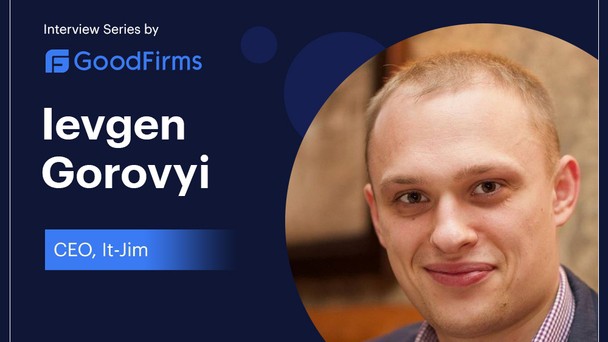
In a candid conversation that traces the amazing journey of It-Jim from its beginnings to its current status as a leader in the field of artificial intelligence and computer vision, our CEO shares a fascinating story of innovation, growth, and relentless passion for his work. From a graduate student who ventured into freelancing to the team that eventually laid the foundation for It-Jim in 2015, the journey has not been easy. It-Jim has evolved, overcoming challenges and seizing opportunities to push the boundaries of technology. This interview offers an in-depth look at the company’s inception, its dynamic growth, the day-to-day of the CEO, and the values that drive us forward. Join us as we dive deeper into the insights and lessons learned along the way, showcasing how It-Jim continues to innovate and inspire in the ever-evolving world of artificial intelligence.
Q1: Could you introduce yourself, touching on your key achievements and journey, for those meeting you for the first time?
Ievgen: My self-description varies based on the listener’s background. In a nutshell, I started as a scientist, earned a Ph.D., and evolved into a founder. Currently holding the roles of both founder and CEO, I’m not just an executive director – I’m deeply involved. Whether I remain solely a founder or not in the future is something I find intriguing. I’m also a speaker, invited to share insights with diverse audiences, from schoolchildren to corporate leaders. As a mentor, I guide others’ growth, and seeing them flourish is incredibly rewarding. Beyond that, I’m an avid news reader, particularly in artificial intelligence. While I can’t keep up with everything, I believe that’s perfectly okay. In a nutshell, that’s me.

Q2: How long have you been in this industry?
Ievgen: Ah, that’s a story we’ll dive into. It all kicked off around 2011. So, in the grand world of R&D, we’re talking a solid 15 years. When it comes to the AI realm, let’s say around 11-12 years. It started with my discovery and love affair with Computer Vision, and it hasn’t let go since. I can’t predict when it will! But let’s clarify – the duration is one thing, and the experiences, events, challenges, and the sheer variety of them, that’s another ball game. Some folks might repeat a one-year experience twenty times, while others boast a solid 20-year run. I’d say I’ve got over 10 years of hands-on AI experience.
Q3: Describe the origins of It-Jim and the challenges you faced along the way.
Ievgen: Oh, that’s an interesting story. I was a Ph.D. student at a research institute when a friend of mine, looking to earn extra money, introduced me to freelancing. While I enjoyed my Ph.D. journey with aspirations to defend it, my friend opened my eyes to freelancing websites. At that time, freelancer.com was the buzz. So, I decided to give it a shot, and surprisingly, it worked out well.
My friend quickly secured his first client, but it took me a bit longer. Oddly, my first freelancing gig was in engineering rather than the typical Data & IT tasks. He remarked, “Ievgen, that’s a good sign.” I thought, “Alright, cool.” I started working independently, navigating the freelance world, securing orders, and delivering them. I found it exhilarating. Despite being young and working long hours, sometimes up to 20 hours a day, with minimal sleep, I had the energy. I could skip social media, receive project offers after a sauna session with friends, and work through the night.
In essence, I was a solo freelancer with fellow Ph.D. students and colleagues. During a meeting with Ph.D. students, I casually suggested, “Want to try something with me?” I had a project idea for a diploma in Signal Processing, and they were on board. We completed the project, and despite the low budget, it was a fantastic experience. Inspired by this, I thought, “Let’s create something, maybe a brand.” Initially, I named it IT Team, but then, for a unique touch, I thought of associating it with a gym – It-Jim. Officially, the company is considered founded at the end of 2015, but the name and logo for It-Jim were conceived in 2012.
Q4: How have the processes changed over these years? It seems like the team has been scaling every year.
Ievgen: Yes, they are always evolving. I’ve read a lot of books about business changes, how it’s necessary, how it’s challenging. But if there are no changes, it’s a sign of stagnation. Changes have been constant. In the early years, we had a small team, around 6-8 people, up to 10 contractors. Very few. We didn’t pay much attention to processes. We had orders, and I handled it all, managed everything, and essentially did everything myself. They were just developers, let’s say, computer engineers. I taught them myself, fixed bugs, and rewrote things when they made mistakes. There were hardly any processes.
Then, we got the first managers – they were, in fact, the most responsible engineers whom I could rely on. I suggested they take responsibility for projects, take on communication, and slowly started to delegate it. And then, not so long ago, maybe 3-4 years ago, we hired actual Technical Project Managers. “Technical” is an important word here, because not everyone can handle working as a manager in such a field. But everything started to become more systematic, with processes, formalized rules, and people responsible for them.
Today, everything has fallen into such a pattern that we take the best from standard things in companies but try to preserve the values of the academic world, such as freedom in research, and idea validation. So, everything went according to a plan of slow transformation towards the business side. Probably, in the first few years, I didn’t even feel that it was a business. People gathered, engaged in something interesting, and could have a drink on weekends. And this realization that it’s serious business didn’t come immediately.

Q5: You mentioned R&D. Can you elaborate on whether there’s currently more focus on research or development?
Ievgen: We try to take the filtering of projects that come to us very seriously. Fortunately, there is a high demand, we can afford to choose. There’s always an element of research in a project – something to validate, check, or test. Research contributes to about 70% of the company’s projects. Often, a project involves guiding clients, making decisions, and providing technical reports – a classic example being a project we did at It-Jim five years ago. The remaining 30% involves clients wanting MVPs, working solutions, which is interesting because without knowledge, skills, and expertise in programming languages, mobile & web development standards, and cloud infrastructures, it won’t work. Engineers at It-Jim are transforming a bit – while they are more into research, they still need to possess development and engineering skills. Often, we get paid for a research project that doesn’t yield much, except the understanding that the idea under test doesn’t work. Someone has to do it. In short, I believe the current 70-30 ratio will be maintained, and even as we scale, I hope the 50-50 spirit will remain – the spirit of someone seeking answers, a valuable component of It-Jim.

Q6: I’ve noticed that everyone on your team really knows their stuff and emphasizes expertise as a team’s core trait. That’s impressing. How do you keep this level of skill and knowledge across the team?
Ievgen: Super, thanks. And I’ll tell you, it’s not by chance. I believe in luck, in general, but it’s meticulous work. These values just exist, and we embody them every day – in our work, minimal interactions, the events we organize, and so on. It confirms that people feel it. The thing is that a mid-level employee from an outsourcing company may not match a junior position in It-Jim, especially in machine learning.
Q7: Tell us about the main achievements of 2023.
Ievgen: I won’t list them in any particular order, just provide a random list. In 2023, after wrapping up two editions of our Trainee Program, we brought on six talented engineers. This is an achievement because I’m aware of the journey they’ve undertaken – on average, the conversion is 150 applications to 1 employee.
Also, we re-opened an office in Kharkiv. We had a large one before the war, but we had to close it down. Now, we’ve reopened a smaller one, and people are genuinely happy about it. It’s an accomplishment, especially since I wasn’t even present at the time of the opening. I just arrived, inaugurated it, and left. Nevertheless, it’s a significant feat, and I can see tangible connections emerging with the advent of this offline office.
Additionally, we organized an offline corporate event. We gathered our team and had a substantial team-building event, and around two-thirds of the people attended. I believe the impact of this achievement will be profound.
As for other accomplishments, we underwent a management reshuffle at all levels; our CTO changed. The new CTO, who joined at the beginning of the year, has made significant contributions to the company throughout the year.
In late 2022, we ventured into NLP with limited initial knowledge but successfully launched it, expanding our portfolio and generating significant revenue. This proved that with a strong foundation in intelligence, we can create value and profit even in new domains. Additionally, we’ve made substantial advancements in Visual Processing, Text to Image, and Text to Video, exploring a broad array of topics and emphasizing continuous learning as a core part of our journey.
This year, we’ve seen remarkable personal and professional growth among our engineers. Many discovered their leadership abilities, taking on responsibility with excellent results in both project delivery and mentoring. This growth wasn’t limited to individual development; our ambitions soared as team members excelled in specific projects, pushing our collective expertise further.
A noteworthy aspect of our journey has been our health and safety, a credit not to us but to the brave efforts of the Armed Forces of Ukraine.
On reflection, our growth in expertise stands out. We’ve deepened and broadened our knowledge without merely increasing headcount. This qualitative improvement across various projects is something I’m particularly proud of, marking a significant achievement for us.

Q8: You mentioned the arrival of the new CTO. Tell us about the C-Level at It-Jim in general. How do they come into these roles, and who are these individuals?
Ievgen: In our tight-knit team of just under 30, we maintain a relatively flat organizational structure – it’s not entirely flat but certainly not steeply hierarchical either. Stepping into a C-Level role here is about a harmonious mix of qualities: deep expertise, rich experience, genuine human qualities, alignment with our core values, a result-oriented mindset, and an intense passion for our field. Moreover, a critical aspect is the readiness to shoulder responsibility – not just for oneself but for the team.
From my perspective, fostering these qualities is key. I strive to create an environment where leaders and individuals alike can feel their impact and significance. Regarding C-Level leadership, ambition is essential, but it’s not about seeking dominance. Instead, it’s about holding an edge in both expertise and responsibility. When I spot these attributes and a clear desire in someone, it becomes straightforward to discuss and define their role at this level.
For a company our size, the number of people at the C-Level isn’t the focus. What matters is covering our bases efficiently – our overarching strategy, business and technological directions, financial management, and operational processes, and fostering an environment of continuous development and learning. That’s the essence of our leadership structure: no more, no less.

Q9: You mentioned the alignment of values. Could you elaborate on that?
Ievgen: Aligning values is crucial, yet it’s often hard to pin down in just rational terms. To me, values resonate with a profound passion and love for research, AI, and technology. It’s about harboring a relentless desire to learn, to never settle because you think you know enough. The desire to be in the flow, so to speak. It’s focusing on what truly matters – delivering value to clients and colleagues, prioritizing these relationships and advancements over mere material gains. When this focus is right, everything else naturally aligns. A key value for me is the willingness to share knowledge, to not just walk by when you see an opportunity to help, but to stop and assist. This gesture of sharing and supporting without expecting anything in return defines the essence of the community and collaboration I cherish. We often encounter moments where someone could easily take advantage of the situation or pretend everything’s fine, but it’s those who choose to help, who go out of their way to offer support, that embody the values I look for. It’s about asking, “How can I be useful?” before wondering what you’ll get in return. Such individuals typically have a natural inclination to reciprocate, and finding ways to motivate them further is part of the journey. Reflecting on values, trust emerges as a critical, perhaps consequential, aspect. Understanding and embodying these core values is fundamental, shaping the very foundation of our team and our work.

Q10: Are you involved in the hiring process?
Ievgen: Absolutely, I take an active role in the hiring process, though not for every position. I’m involved in screening some candidates, liaising with colleagues for initial screenings, and typically, I conduct the final interview. It’s crucial to align on values, skills, and abilities, but finding that Culture Fit can be tricky. Yes, the final decision often rests with me, and honestly, I value this part of my role. I’ve become adept at navigating both hiring and letting people go, maintaining some level of control over these decisions. Especially for critical, non-linear roles, I’ll always stay deeply involved. My experience and intuition have sharpened over the years, enabling me to sense whether someone is the right fit quickly. It’s fascinating to see how often my initial feelings align with how well someone integrates into our team. So, yes, I’m actively involved, and it’s part of why we’ve managed to gather a team that shares common values, as you’ve likely noticed.
Q11: Regarding further team scaling. Will you base it on people? Is there a scaling plan?
Ievgen: For me, scaling isn’t about just increasing headcount. We might grow to around a hundred people, but what’s crucial is how we’re organized and the development of our departments. I envision each department evolving into a mini It-Jim within its specific niche, reminiscent of our structure four years back but focused on their areas. They’ll likely grow, maybe even double in size, and then we’ll evaluate our next steps.
My interest in new directions leans towards AR, VR, XR, and particularly Robotics. Our algorithms are crafted not just for data processing but to culminate in tangible mechanical actions, like those performed by robotic manipulators. Establishing a lab for continuous research in these areas is something I find compelling.
These new ventures, especially when combined with our expertise in text analysis, voice recognition, and vision sensors, position us uniquely for advancements in robotics compared to firms transitioning abruptly from different sectors.
I dream of creating a sort of “university” within our structure, not in the traditional sense given our size, but a dedicated space for educational initiatives that cater to a broad audience, from students to professionals seeking advancement. This education arm, alongside an R&D Lab that’s constantly exploring new ideas, writing scientific papers, and a core company focused on creating MVPs to fuel profit and reinvestment, forms a strategic triangle of growth.
This triangle isn’t about sheer size but about maintaining a focus on quality over quantity. It’s the concept of doing great work, creating potentially transformative products, and not merely scaling for the sake of expansion or perceived “coolness.” To me, the essence of being “cool” lies in quality, not the number of people. My goal is quality, envisioning a future where It-Jim might not just be a service company but also one with a product line capable of significant impact.

Q12: Let’s discuss the top 3 insights from the past years.
Ievgen:
Deep Learning is Inseparable from Computer Vision:
– Don’t assume that classic Computer Vision is all you need. Without Deep Learning, it’s just not possible. You cannot afford to ignore the significance of Deep Learning in this field.
Diversify Knowledge for Enhanced Vision Expertise:
– While Computer Vision is fantastic, a profound understanding of theories in other modalities like Audio, Text, and NLP can make you a stronger Vision Engineer or Specialist. Look beyond your immediate focus, and you’ll be surprised by the implicit effects it has on your work direction.
Distinctive Traits of Generation Z:
– Generation Z, those born between the mid-1990s and early 2010s, stands out significantly. Their characteristics differ greatly from those of my generation, aged 30 and above. The gap of ten years makes a substantial difference. As a conclusion, it’s essential to acknowledge and utilize these differences. I try to leverage this in my approach, recognizing that this generation is unique.

Q13: What advice do you have for aspiring tech enthusiasts and students in Ukraine, especially those just starting out?
Ievgen: I have great faith in our young minds, even high school seniors; I believe in their potential. We are fortunate to have such an intellectually developed nation.
My primary advice is not to hurry into choosing your major or specialization within the first year of your studies. Give it at least two years, allowing time for the education system, which we are actively working to improve alongside the Ministry of Digital Transformation and many others, to offer you a broader perspective.
A solid mathematical foundation is crucial – English proficiency is a given.
Resist the immediate allure of mobile or web development solely for the paycheck. There’s ample time to grow in your career and reap financial rewards. Focus on understanding the broader landscape. Fields like Research and Development might not initially seem accessible, but passion for your work brings both interest and deserving compensation.
Stay curious and eager to learn. The information age presents a vast ocean of opportunities; don’t rush to narrow down your IT specializations too soon. Your unique talents could one day lead to groundbreaking advancements in technology or steer you towards a path less traveled but equally rewarding.
Also, consider joining our Trainee Program. Even if it doesn’t work out on your first attempt, the experience is invaluable. It’s highly regarded, not just by me but by all who have participated.

Q14: What message do you have for current and potential clients of It-Jim?
Ievgen: To our existing clients, thank you for standing by us and believing in us. Your support, especially in the challenging times following the onset of the war, has been invaluable, both financially and morally, towards our company, our country, and our Armed Forces. Your choice to stand by us means everything.
To potential clients, this message is for you as much as it is for those considering the services of Ukrainian professionals: choose Ukraine. We’re resilient, innovative, and capable, perhaps more so in the face of adversity. Our strength and creativity have only grown. Choose us not because of cost but because of our unmatched skills and expertise. You might be hesitant, questioning preconceived notions, but give us the opportunity, and we’ll prove our superior performance and competence, beyond just being a cost-effective option. Work with us to experience the exceptional capabilities that make us stand out in our field.